Analysis
Formula 1
Analysis: Barcelona simulation data points to impact of F1 car changes
While Formula 1 gears up for faster cars aimed at making the sport more spectacular, one of the big concerns that has been voiced is that the end result could deliver even less overtaking than fans have seen in recent years.
Franco Nugnes Jonathan Noble
Edited: Jan 9, 2017, 10:11 PM
Copy link
Share on Viber
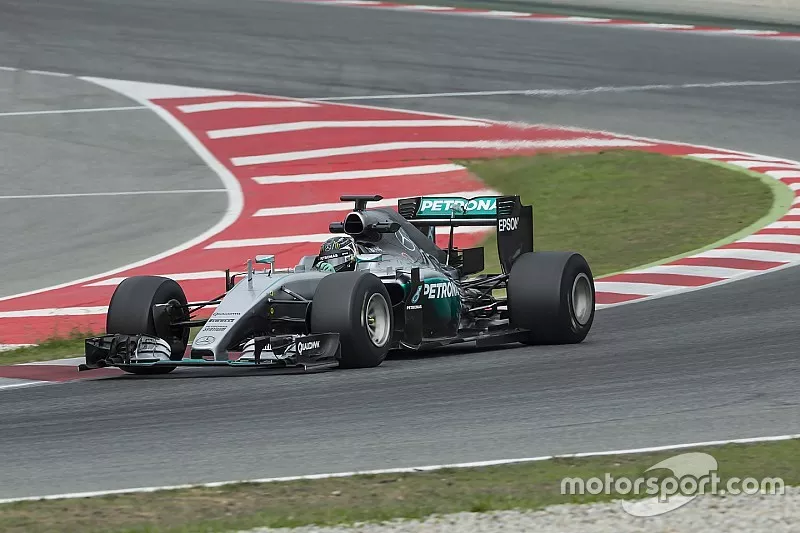

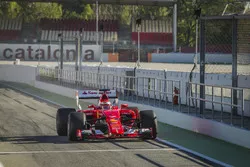


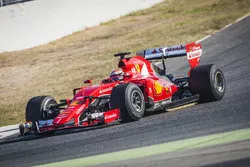

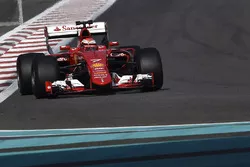

For although the cars should be harder to drive and that could lead to more mistakes – and increased opportunity for shock results – there are indications that performance improvements will rob drivers of many opportunities to get past rivals.
One interesting prediction that has come to light in recent days is that the track at Barcelona will jump from last year being full throttle for 50 percent of the lap to it being 70 percent of the lap this year.
What effect is this going to have on the racing? Could we end up in a situation where the racing is less exciting because there are no position swaps, but the races are more unpredictable because reliability has become a major headache?
Reclassifying corners
When F1 teams announced plans for a major shake-up of the regulations for 2017, it was not about making the racing better – it was about making cars faster.
An outline target of dropping Barcelona's 2015 laptime down by five seconds was set, and many expect will be beaten.
The 2015 Spanish Grand Prix pole position time was 1m24.681, meaning that the 2017 aim was to deliver cars that could lap Barcelona in under 1m20s.
Last year, Lewis Hamilton's pole position was already 1m22.000s, meaning an improvement of just more than two seconds will be enough for F1's designers to have delivered.
But perhaps the targets will be exceeded because, with early predictions suggesting that there is already a 1.5 seconds gain from Pirelli's new wider tyre alone, it is likely that cars could well go much better, especially at venues where downforce is important.
Last week, McLaren technical director Tim Goss said teams were already redefining circuits, because some corners were now being treated as straights.
"What we mean by that is that engineers define a corner as a point on the track where the driver has to lift and essentially drive and handle the car through it," he said.
"If he's going round a bend, and his foot is flat to the floor on the accelerator, we class that as a straight.
"As the new cars will be going faster, some of 2016's 'corners' will be classified as 'straights'. But because they'll be going through them faster, they'll be subjected to more g-forces – and that's still tiring on the body."
Performance lift
Until F1's 2017 cars actually run on a race track with Pirelli's bespoke tyres at the first pre-season test in late February, there is no definitive answer about how big the performance improvements will be.
But each team has been working away on their own simulations, and will have their own idea about the level of gains coming for the season ahead.
For example, early indications suggest that Turn 3 at Barcelona will be at least 30 km/h faster this year – turning it into a flat-out turn that will test drivers as their neck muscles are challenged by lateral loads higher than 5G.
According to an engineer, who did not wish his team to be identified, F1's engines will be at full throttle for 70 percent of the lap of Barcelona, whereas last year they were at the limit for only 50 percent.
At the high-speed Monza, simulation data from Magneti Marelli said that 2016 witnessed full throttle for 69 percent of the lap, whereas this year it could be as high as 80 percent.
Reliability factor
Of course fewer corners will mean fewer chances for mistakes or potential passing opportunities, but more flat-out sections means a greater strain on car and engines.
The impact of looking after engines will be doubly felt this year, though, because F1's manufacturers were already facing a tougher challenge for 2017 thanks to the reduction of power units to just four this year – down from five in 2016.
That is because the manufacturers agreed, as a cost-cutting measure, to limit the numbers of engines per year to just four - irrespective of the number of races.
It means power units are now going to have to last five full race weekends each time – and they will further be able to push a little bit harder because of the increase in fuel limit from 100kg to 105kg.
Although the focus on 2017 has been about aerodynamic development, it would be wrong to say that engine power is not going to be just as important.
With more downforce comes increased drag, plus the wider cars and tyres means a bigger hole will need to be punched through the air – so at every step of the way horsepower will be important.
We will not have any answers about the true impact of the change until Melbourne at the earliest – and even then the jury may be out on whether 2017 rules have given us better racing or the need for some soul-searching.
We want your opinion!
What would you like to see on Motorsport.com?
Take our 5 minute survey.
- The Motorsport.com Team
Read and post comments
Read also :
Share Or Save This Story
Copy link
Share on Viber
Previous article Honda set for Mercedes-style split turbine/compressor
Next article Renault progress could tip balance in Mercedes fight, says Horner
Top Comments
There are no comments at the moment. Would you like to write one?
View More & Comment

More from
Franco Nugnes
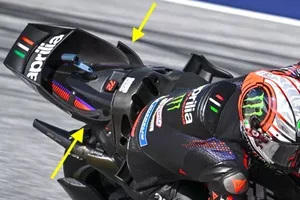
This is the new tail section that Marco Bezzecchi debuted on the Aprilia
MotoGP
MotoGP
Austrian GP
This is the new tail section that Marco Bezzecchi debuted on the Aprilia

Why Charles Leclerc isn't using latest ADUO2 engine in the Spanish GP
Formula 1
Formula 1
Spanish GP
Why Charles Leclerc isn't using latest ADUO2 engine in the Spanish GP
Charles Leclerc to avoid F1 Spanish GP engine penalty despite Monza crash
Formula 1
Formula 1
Italian GP
Charles Leclerc to avoid F1 Spanish GP engine penalty despite Monza crash
Latest news

Zane Smith fined $50,000 by NASCAR for ramming Carson Hocevar after Phoenix Cup race
NASCAR Cup
NAS NASCAR Cup
Phoenix II
6 h
Zane Smith fined $50,000 by NASCAR for ramming Carson Hocevar after Phoenix Cup race
FIA expects F1 races in Qatar and Abu Dhabi to continue as planned
Formula 1
F1 Formula 1
United States GP
10 h
FIA expects F1 races in Qatar and Abu Dhabi to continue as planned
TDS Racing doubles down on IMSA program with two-car LMP2 return
IMSA
IMSA IMSA 10 h
TDS Racing doubles down on IMSA program with two-car LMP2 return
Why Isack Hadjar doesn’t like F1 sprints anymore
Formula 1
F1 Formula 1
Singapore GP
10 h
Why Isack Hadjar doesn’t like F1 sprints anymore
Feature
Discover prime content


Subscribe and access Motorsport.com with your ad-blocker.
From Formula 1 to MotoGP we report straight from the paddock because we love our sport, just like you. In order to keep delivering our expert journalism, our website uses advertising. Still, we want to give you the opportunity to enjoy an ad-free and tracker-free website and to continue using your adblocker.
You have 2 options:
- Become a subscriber.
- Disable your adblocker.
Subscribe now Already subscribed? Sign in here
Already disabled your adblocker?
Reload page
Manage Alerts
Subscribe