Analysis
Formula 1
Analysis: How F1 is hindering fan growth
When it comes to promotion, Formula 1 subscribes to the Field of Dreams philosophy: “if you build it, they will come”.

Kate Walker
Edited: Sep 13, 2015, 9:57 AM
Copy link
Share on Viber


The adage may have worked for Kevin Costner and baseball. Wayne’s World 2 taught the world that it certainly works for Aerosmith, but for motorsport? Not so much. Just ask the masterminds behind Korea’s Yeongam International Circuit, Spain’s Valencia Street Circuit, and India’s Buddh International Circuit.
Securing the hosting contract for a Formula 1 World Championship Event is but one challenge faced by the modern race promoter.
In order to keep the Grand Prix, they must then go on to entice so many people through the gates that the race is a profitable enterprise. But how does one go about making F1 look attractive to newcomers when it’s impossible to use the sport itself in your sales pitch?
As the F1 calendar has spread out from the sport’s European heartland, the sport has been faced with the challenge of selling itself in new markets. In those, the wealthy ruling class funding the race has been made aware of the sport’s associative glamour thanks to a jet-set life spent swanning between different events on the social calendar - Cannes in May, the Cartier Queen’s Cup, Royal Ascot and Wimbledon in June, winter’s Venice Biennale, and so on.
But the ticket-buying public in these countries lack much exposure to F1, and thanks to the nature of the arrangements made between the commercial rights holder and the race promoters with whom each deal is done, the sport is missing out on a fantastic money-spinning opportunity thanks to the short-sighted desire to retain a stranglehold on every aspect of F1 broadcasting.
Promoting F1
In recent years, new entrants on the F1 calendar have been seeking out established motorsports PR agencies to help promote their event. Countries with a minor national interest in or exposure to F1 have proposed media saturation campaigns to introduce F1 to their populace, stimulating interest in the Grand Prix, which it is hoped will then lead to an increase in ticket sales. For it is only via bodies through the gates that a promoter can hope to make any form of profit from their sport.
In every instance, these campaigns, serving educate the general public on what F1 is and why they should care enough to buy a ticket, have had to be shelved when FOM’s strict controls on the use of F1 footage are explained and the estimated costs presented.
While no one expects Formula One Management to operate on a not-for-profit basis, the sport is not only denying itself potential future profits from a dedicated and passionate fanbase if such a fanbase can be established, but is also acting irresponsibly with regard to the sport’s long-term future.
F1 venturing to new places
F1 is moving ever further from its European heartland in the pursuit of the greater riches to be found in global exposure. Countries where fans used to buy GP tickets in droves - Germany, France, and the Netherlands - are falling off the calendar in favour of the big-ticket prices paid by governments in the Far and Middle East for the simple glory of holding a Grand Prix.
The knowledgeable fanbase was more valuable than the sport’s stakeholders knew, and in many territories acted as a captive audience, buying next year’s race tickets while that year’s podium ceremonies were still ongoing.
FOM's 'negative' attitude
In F1’s brave new world, however, new markets mean new fans to sell the sport to, and it is here that FOM’s attitude to broadcasting restrictions really has a negative effect on ticket sales. Off the record conversations with recent incoming race hosts reveal a GP promoter’s lot to be a challenging one, with the deck stacked against him.
When one enterprising promoter asked recently for footage of F1 cars in action for use in a national TV campaign, introducing the sight and sound of F1 to a largely ignorant viewing public ahead of that country’s first Grand Prix, he was quoted a usage fee so high as to make the concept untenable. As the material was for commercial use - even if the commercial was for FOM’s own product - commercial fees were non-negotiable.
It is irresponsible on the part of those who control the broadcasting rights not to make some concessions for the greater good - read “greater future profitability” - of the sport. As part of the hosting contract in a new territory, FOM should provide race promoters with a “F1’s Greatest Hits” highlight reel that can be used indiscriminately and without charge as long as it is being used to promote the Grand Prix and drive ticket sales.
To fail to use the sights and sounds of Formula 1 as this sport’s major sales pitch - be it daytime TV chat shows, interactive online media, or straightforward TV and radio advertising - is to fail to support those countries and promoters who have had the courage to bring our sport to their shores.
Selling F1 to an uneducated public is a risk, and it a risk that comes with a high chance of failure and an infinitesimal chance of making any profit whatsoever. To charge our supporters over the odds just so they can have a fighting chance of success is short-sighted.
If you build it, they won’t just come. You need to provide a prospective audience with a compelling reason to shell out for tickets. What could be more compelling than wheel-to-wheel battles between the world’s greatest drivers?
We want your opinion!
What would you like to see on Motorsport.com?
Take our 5 minute survey.
- The Motorsport.com Team
Read and post comments
Read also :
Share Or Save This Story
Copy link
Share on Viber
Previous article Magnussen: I wasn't ready to give up F1 dream
Next article Mercedes customers await news on upgraded F1 engine
Top Comments
There are no comments at the moment. Would you like to write one?
View More & Comment

More from
Kate Walker

How local knowledge and data are keys to F1 growth in Asia
Formula 1
Formula 1
How local knowledge and data are keys to F1 growth in Asia
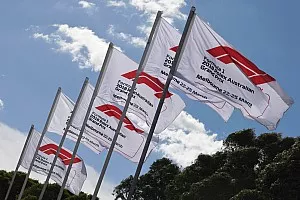
Insight: How race promoters benefit from F1’s marketing push
Formula 1
Formula 1
Insight: How race promoters benefit from F1’s marketing push

Analysis: Assessing Formula 1's financial prospects
Formula 1
Formula 1
Analysis: Assessing Formula 1's financial prospects
Latest news

Final NASCAR Cup points standings after 2026 Homestead finale
NASCAR Cup
NAS NASCAR Cup
Homestead-Miami
2 h
Final NASCAR Cup points standings after 2026 Homestead finale
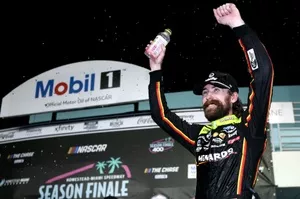
Official race results: NASCAR Cup Homestead season finale
NASCAR Cup
NAS NASCAR Cup
Homestead-Miami
2 h
Official race results: NASCAR Cup Homestead season finale

Ryan Blaney wins Homestead NASCAR Cup finale as Kyle Larson claims 2026 title
NASCAR Cup
NAS NASCAR Cup
Homestead-Miami
3 h
Ryan Blaney wins Homestead NASCAR Cup finale as Kyle Larson claims 2026 title
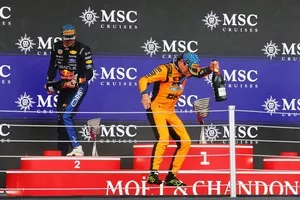
Winners and losers from F1's chaotic Brazilian Grand Prix
Formula 1
F1 Formula 1
Sao Paulo GP
4 h
Winners and losers from F1's chaotic Brazilian Grand Prix
Feature
Discover prime content
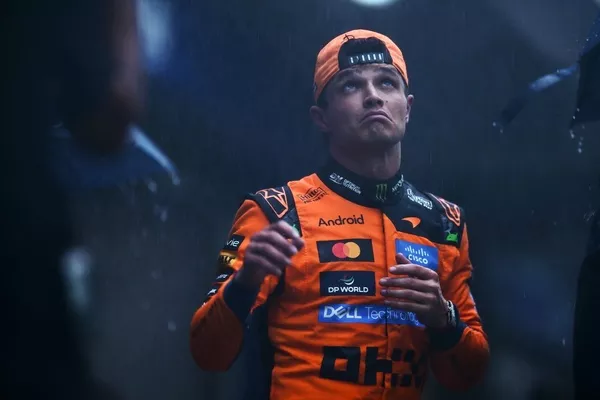

How F1’s rules got to be so complex
Formula 1
By Pat Symonds
How F1’s rules got to be so complex
Subscribe and access Motorsport.com with your ad-blocker.
From Formula 1 to MotoGP we report straight from the paddock because we love our sport, just like you. In order to keep delivering our expert journalism, our website uses advertising. Still, we want to give you the opportunity to enjoy an ad-free and tracker-free website and to continue using your adblocker.
You have 2 options:
- Become a subscriber.
- Disable your adblocker.
Subscribe now Already subscribed? Sign in here
Already disabled your adblocker?
Reload page
Manage Alerts
Subscribe