Analysis
Formula 1 Chinese GP
Analysis: The missing document that nearly stopped Alonso's F1 return
The lack of a medical certificate from the Spanish motorsport federation confirming Fernando Alonso was fully fit caused the lengthy delay in him getting the all-clear from the FIA to drive in China.

Jonathan Noble
Edited: Apr 15, 2016, 4:05 AM
Copy link
Share on Viber


Alonso had to wait more than seven hours on Thursday for the FIA to give him provisional approval to return to the cockpit following his Australian Grand Prix crash.
Read Also:
- Alonso cleared to drive in China, but faces more tests
The Spaniard still has to face a further medical check after first free practice on Friday though.
The delay in the decision, which was made shortly after 6pm on China, prompted speculation that an issue had cropped up.
And it has emerged that key to the matter was a 'certification' from Spain's ASN confirming that he was fit.
FIA demands
A clause in the FIA's International Sporting Code about medical checks for injured drivers says: "In the case of incapacity for a period of 10 days or longer, this control takes place in an identical fashion during the first competition in which the driver wishes to compete, after he has obtained certification of his recovery and confirmation of his reintegration from his ASN."
In theory, after missing the Bahrain Grand Prix it would have meant Alonso needed a certificate from the Spanish authorities prior to the FIA medical test at the circuit, something which it is understood he did not have early on but was later sourced.
However, one issue that came up was whether or not Alonso was deemed to be incapacitated for 10 days, as his injury had only come to light after the Australian Grand Prix.
In light of the uncertainty about this clause, and the fact that the FIA's doctors were satisfied that he was 'provisionally' fit, the stewards deemed that Alonso would actually be exempt from the need for a Spanish ASN certificate.
Had they not given that exemption, and had the certificate not been later sourced, then Alonso would not have been allowed to compete.
Paperwork
Instead, according to FIA documents, Alonso only needed to fulfil another clause in Appendix L, which means a driver can compete if he passes an FIA medical ahead of the event.
That in the end is what happened, and confirmed what Alonso had said earlier in the day that medical checks are sometimes not the work of the moment.
"Sometimes it is a longer process that we would like or think from the outside because there are some things behind and some procedures and some paperwork or whatever," he said.
"It is not that you arrive there, you are okay and we all feel okay. Still before it is written it takes a little bit of time and I guess it is the thing that has been happening."
What the rules say
Article 3 of Chapter II of Appendix L of the FIA's International Sporting Code deals with the recovery of drivers – and was central to the Alonso affair on Thursday.
Here is what the rules state:
Reintegration
From the date of the accident or the discovery of an illness or disability as covered in Article 1.5 of the present regulations, no driver may take an active part in sporting events entered on the FIA international calendar until they have received authorisation from the ASN.
In the event of an accident resulting in incapacity for a period of 10 days or longer, and following receipt of a document attesting that the patient is healed or recovered, or of a hospital discharge form, the National Medical Commission or the doctor approved by the ASN shall demand that the patient visits them for the reintegration or that he should undergo a complete annual medical examination procedure.
All the illnesses or disabilities mentioned in Article 1.5 of these regulations must be submitted for an opinion to the National Medical Commission, or in its absence to a doctor approved by the ASN.
Particular measures for the FIA Championships in F1, WEC, WTCC and WRC
a) in the case of no incapacity or incapacity of less than 10 days, a medical control will take place at the next competition in which the driver concerned is due to participate; this will be carried out under the authority of the FIA Medical Delegate and the Chief Medical Officer;
b) in the case of incapacity for a period of 10 days or longer, this control takes place in an identical fashion during the first competition in which the driver wishes to compete, after he has obtained certification of his recovery and confirmation of his reintegration from his ASN.
Check out our Inside GP video preview…
We want your opinion!
What would you like to see on Motorsport.com?
Take our 5 minute survey.
- The Motorsport.com Team
Read and post comments
Read also :
Share Or Save This Story
Copy link
Share on Viber
Previous article Kvyat admits Bahrain GP showing was "crucial"
Next article Button against efforts to mix up F1 grid
Top Comments
There are no comments at the moment. Would you like to write one?
View More & Comment

More from
Jonathan Noble

Brundle awarded OBE in King’s New Year’s honours
Formula 1
Formula 1
Brundle awarded OBE in King’s New Year’s honours
The new rules dilemma that will define the 2025 F1 season
Formula 1
Formula 1
The new rules dilemma that will define the 2025 F1 season
Verstappen issues Red Bull title warning in push for RB21 progress
Formula 1
Formula 1
Australian GP
Verstappen issues Red Bull title warning in push for RB21 progress
More from
Fernando Alonso

Fernando Alonso backs IndyCar Barcelona race but warns against wider global expansion
IndyCar
IndyCar 22 h
Fernando Alonso backs IndyCar Barcelona race but warns against wider global expansion
On this day: Fernando Alonso wins the world title, Michael Schumacher retires from F1
Formula 1
Formula 1
Brazilian GP
On this day: Fernando Alonso wins the world title, Michael Schumacher retires from F1


More from
McLaren
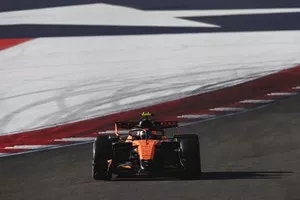
"We're just a step behind" - what McLaren is trying to solve with its final 2026 upgrades
Formula 1
Formula 1
United States GP
14 h
"We're just a step behind" - what McLaren is trying to solve with its final 2026 upgrades
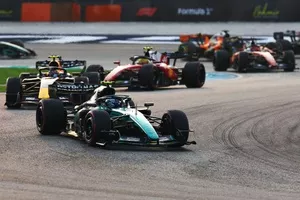
The figures that show Mercedes has lost its supremacy in F1 2026
Formula 1
Formula 1
United States GP
The figures that show Mercedes has lost its supremacy in F1 2026

Latest news
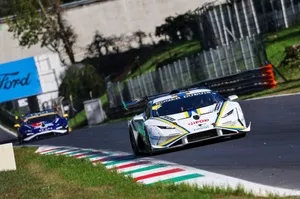
Lamborghini World Finals | PRO-PRO/AM Qualifying: Pole position for Lind, Bamber, Van der Drift and Marcelli
Lamborghini Super Trofeo
LBST Lamborghini Super Trofeo
World Finals - Monza 2026
3 min
Lamborghini World Finals | PRO-PRO/AM Qualifying: Pole position for Lind, Bamber, Van der Drift and Marcelli
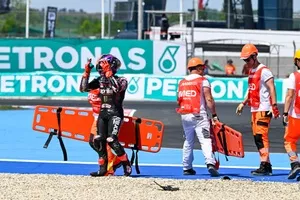
Jorge Martin's endless ordeal since signing for Aprilia
MotoGP
MGP MotoGP
Australian GP
18 min
Jorge Martin's endless ordeal since signing for Aprilia

Johann Zarco retires from Australian GP sprint: It was “dangerous” to continue
MotoGP
MGP MotoGP
Australian GP
43 min
Johann Zarco retires from Australian GP sprint: It was “dangerous” to continue
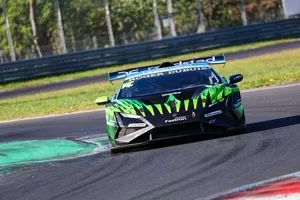
Lamborghini World Finals | AM-LC Qualifying: Lewandowski dominates, taking pole for both races
Lamborghini Super Trofeo
LBST Lamborghini Super Trofeo
World Finals - Monza 2026
1 h
Lamborghini World Finals | AM-LC Qualifying: Lewandowski dominates, taking pole for both races
Feature
Discover prime content


Subscribe and access Motorsport.com with your ad-blocker.
From Formula 1 to MotoGP we report straight from the paddock because we love our sport, just like you. In order to keep delivering our expert journalism, our website uses advertising. Still, we want to give you the opportunity to enjoy an ad-free and tracker-free website and to continue using your adblocker.
You have 2 options:
- Become a subscriber.
- Disable your adblocker.
Subscribe now Already subscribed? Sign in here
Already disabled your adblocker?
Reload page
Manage Alerts
Subscribe