Formula 1
Brazilian GP: Ferrari preview
Brazilian GP - New car faces tough challenge in Brazil From a technical point of view, the Interlagos circuit currently used for the Brazilian Grand Prix presents one of the more difficult challenges of the season. The track is situated at around ...
Edited: Apr 15, 2002, 11:45 PM
Copy link
Share on Viber

Brazilian GP - New car faces tough challenge in Brazil
From a technical point of view, the Interlagos circuit currently used for the Brazilian Grand Prix presents one of the more difficult challenges of the season. The track is situated at around 2,500 feet altitude, which means the engines produce around 5 percent less power and the thinner air makes the aerodynamics less efficient. In addition to the altitude factor, the surface of the circuit is notorious for its many bumps, particularly on the pit straight where cars are already being pushed close to the ground by their aerodynamic downforce.
"The bumps make it a 3D track when it comes to setting up the car," says Technical Director Ross Brawn. "Last year we did not find a good solution and we struggled in the race. The car was a bit too stiff, especially when it rained, which is always a strong possibility around race time in Brazil," explained Ross.
"We learned a lot from last year's race, which means we should have a better idea of what to do this year." However, the workload from this circuit will be further increased by the debut of the new 2002 car at the Brazilian GP. Having completed successful testing in Barcelona last week, including a full race distance, Michael Schumacher is scheduled to run the new car, while Rubens Barrichello will continue to run the well tried and tested 2001 Ferrari."
"Thus, the Scuderia-Ferrari Marlboro team will be covering all of its options for the last of the three early season flyaway races, as well as gaining valuable experience before the team's important home race in the San Marino GP two weeks later."
The Interlagos circuit has also proven to be tough on tyres and a careful tyre comparison program is essential before qualifying in order to select the best tyre for the race. In addition, this race will see a new tyre from Bridgestone that will aslso need to be evaluated. The altitude factor has both positive and negative effects on the cars. On the positive side, the reduced power means that the engines are not as stressed as they would be on a sea-level track, while the thinner air and reduced aerodynamic drag also tends to cancel out what is lost from the engine. However, it makes the job of optimizing both the engine and car for the different conditions a much trickier job.
On a straightforward circuit with a smooth surface, pre-race simulations at the factory mean that the team can arrive with the cars set up almost perfectly with only minor aerodynamic adjustments needed to get them performing at their best. At a track like Interlagos, there is a lot of work needed to get the best aerodynamic set up because of the bumps. This can mean running something other than the optimum ride height for the cars, something that is more easily found on a smooth track surface.
"Every year there seems to be work on the track surface to improve the bumps, but they never seem to be eliminated completely just the places changed, so it's not until we run on Friday morning that we really know the kind of problems that can be facing us," explains Ross.
There is also quite a big change to be made to the cars between qualifying and race trim. The brakes remain the same for qualifying and the race, for this track is not too hard on brakes which are only used in anger on a couple of corners with plenty of cooling off time between. However, the ride height and aerodynamics can be optimized a lot better during qualifying when the car is running a light fuel load.
The track surface often calls for a compromise set-up to give the best performance in the most important corners, all of which are in the slow to medium speed range. It is also important to monitor the 'plank' wear underneath the car, for excessive wear on the rubbing strip due to the car running too low over the bumps could lead to problems at post race scrutineering.
The heat and the anti-clockwise race direction is expected to be another challenge for the drivers at Interlagos and their cars, like Malaysia, will have a drink bottle system installed as well as extra cockpit ventilation for the for the race.
-ferrari-
We want your opinion!
What would you like to see on Motorsport.com?
Take our 5 minute survey.
- The Motorsport.com Team
Read and post comments
Read also :
Share Or Save This Story
Copy link
Share on Viber
Previous article CHAMPCAR/CART: Face to face in Montr?al
Next article Brazilian GP: Jaguar Saturday notes
Top Comments
There are no comments at the moment. Would you like to write one?
View More & Comment

More from
Rubens Barrichello
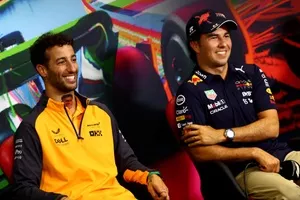
Which modern Formula 1 driver raced for the most teams?
Formula 1
Formula 1
Which modern Formula 1 driver raced for the most teams?

How ex-F1 racer Rubens Barrichello is still winning races at 52
Formula 1
Formula 1
Emilia Romagna GP
How ex-F1 racer Rubens Barrichello is still winning races at 52
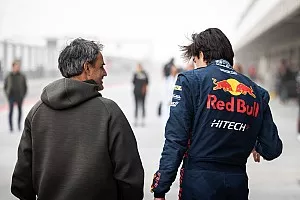
Why illustrious racing dads aren't always an advantage for F1 hopefuls
FIA F3
FIA F3
Why illustrious racing dads aren't always an advantage for F1 hopefuls

More from
Ferrari
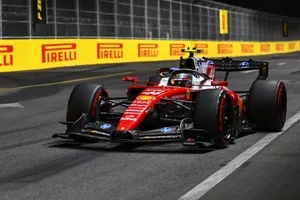
Lewis Hamilton: Ferrari’s top-speed deficit was “brutal” at F1 Las Vegas GP
Formula 1
Formula 1
Las Vegas GP
Lewis Hamilton: Ferrari’s top-speed deficit was “brutal” at F1 Las Vegas GP

Why Ferrari believes written rules won't help manage Charles Leclerc and Lewis Hamilton
Formula 1
Formula 1
Las Vegas GP
Why Ferrari believes written rules won't help manage Charles Leclerc and Lewis Hamilton

Top 10 F1 cars of the 1980s
Formula 1
Top 10 F1 cars of the 1980s
Latest news
Joe Gibbs Racing constructs timeline of Chris Gabehart's alleged theft
NASCAR Cup
NAS NASCAR Cup 1 h
Joe Gibbs Racing constructs timeline of Chris Gabehart's alleged theft
IndyCar adds Kansas Speedway to 2027 schedule in joint NASCAR weekend
IndyCar
Indy IndyCar 6 h
IndyCar adds Kansas Speedway to 2027 schedule in joint NASCAR weekend
Decision time looms for Colton Herta after 2027 Cadillac F1 snub
Formula 1
F1 Formula 1
Las Vegas GP
7 h
Decision time looms for Colton Herta after 2027 Cadillac F1 snub

Kalle Rovanpera: New 2027 WRC cars will see "everybody start from zero"
WRC
WRC WRC 7 h
Kalle Rovanpera: New 2027 WRC cars will see "everybody start from zero"
Feature
Discover prime content


Subscribe and access Motorsport.com with your ad-blocker.
From Formula 1 to MotoGP we report straight from the paddock because we love our sport, just like you. In order to keep delivering our expert journalism, our website uses advertising. Still, we want to give you the opportunity to enjoy an ad-free and tracker-free website and to continue using your adblocker.
You have 2 options:
- Become a subscriber.
- Disable your adblocker.
Subscribe now Already subscribed? Sign in here
Already disabled your adblocker?
Reload page
Manage Alerts
Subscribe