Formula 1
Canadian GP: Renault technical preview
Montreal's Circuit Gilles Villeneuve is a stop-start, temporary circuit. The long straights mean plenty of heavy braking, while numerous slow corners put the emphasis on strong traction and good engine torque to launch the cars out of them. A ...
Edited: Jun 4, 2008, 11:16 PM
Copy link
Share on Viber

Montreal's Circuit Gilles Villeneuve is a stop-start, temporary circuit. The long straights mean plenty of heavy braking, while numerous slow corners put the emphasis on strong traction and good engine torque to launch the cars out of them. A competitive car will give the drivers confidence to brake late, while also looking after the rear tyres on a circuit where teams will be running the softest of Bridgestone's 2008 compounds.
Aerodynamics
Montreal will see the team run with a 'low downforce' aerodynamic package. The circuit can be considered as including no high-speed corners, as turn 5 is taken comfortably at full throttle in fifth and sixth gears. The primary focus is therefore on minimising drag levels in order to achieve competitive straightline speeds (with a maximum of over 320 kph), while the downforce will assist vehicle stability under heavy braking. The low downforce levels mean the car feels light to drive, and nervous under braking, and so the drivers need to be more delicate with their steering inputs, and when applying the brakes and throttle.
Suspension
The cars need a responsive change of direction in the chicanes while maintaining good stability under braking and traction out of the slow corners. Brake locking must also be taken into consideration when tuning the suspension, as excessive locking at front or rear will cost lap-time.
Brakes
Along with Monza, Montreal is the most demanding circuit of the year for the brakes. Overheating is not the primary concern, as the discs and pads have ample time to cool on the straights. However, the braking energies are very high, with four braking events from over 300 kph - and the other two from above 250 kph. Basic wear is therefore our primary concern, and we monitor this in real time during the race. The driver may be asked to adjust the brake balance if wear levels become alarming at front or rear, and some of our work in practice will focus on ensuring that brake wear levels are under control on representative race fuel loads.
Tyres
The temporary nature of the circuit means that the circuit begins the weekend very 'green' and grip levels improve constantly throughout the weekend - just like we see at similar venues such as Melbourne or Monaco. The track surface is not particularly abrasive, and the absence of high-speed corners means that tyre energies are among the lowest of the season. Consequently, the teams will be using the Soft and Super-soft compounds from Bridgestone's 2008 range, as was the case for the last race in Monaco.
Strategy
Traditionally, Montreal has been a race with strategies ranging from one to three stops - although a two-stop strategy is likely to be the most competitive solution under the 2008 tyre regulations. The absence of high-speed corners means the fuel effect (the time penalty for carrying fuel weight) is relatively low at this circuit, and combined with low fuel consumption, this means there is relatively little penalty in qualifying for carrying extra fuel. Teams will also need to consider the ever-present threat of a safety car period, and so a flexible strategy could reap rewards come Sunday afternoon.
Engine Performance
The engine is used in a very stop-start fashion around the Montreal circuit, which is essentially compromised of six extended full throttle bursts separated by chicanes. The engine spends just under 60% of the lap at full throttle, which is not a particularly high percentage, but the longest full throttle section last for 14s - a more demanding value, which puts the circuit at the higher end of the scale for engine severity. Cooling is not normally a problem thanks to the long straights, but cut grass and other debris are potential hazards. We monitor temperatures closely, and debris can usually be removed at the pit-stops.
-credit: renault
We want your opinion!
What would you like to see on Motorsport.com?
Take our 5 minute survey.
- The Motorsport.com Team
Read and post comments
Read also :
Share Or Save This Story
Copy link
Share on Viber
Previous article Canadian GP: Force India preview
Next article Mosley wins FIA confidence vote
Top Comments
There are no comments at the moment. Would you like to write one?
View More & Comment
More from
Gilles Villeneuve
What Jacques Villeneuve really learned from Gilles: "I can do this, you can’t"
Formula 1
Formula 1
What Jacques Villeneuve really learned from Gilles: "I can do this, you can’t"
Who belongs on F1's Mount Rushmore? Pick your four greatest drivers
Formula 1
Formula 1
Who belongs on F1's Mount Rushmore? Pick your four greatest drivers
Gilles Villeneuve’s final F1 race helmet breaks auction record
Formula 1
Formula 1
Canadian GP
Gilles Villeneuve’s final F1 race helmet breaks auction record
Latest news
George Russell has lost 90 points to Max Verstappen in F1 2026 runner-up battle
Formula 1
F1 Formula 1
Sao Paulo GP
39 min
George Russell has lost 90 points to Max Verstappen in F1 2026 runner-up battle

Aprilia: “Marco Bezzecchi couldn’t avoid the collision; Marc Marquez moved in on him"
MotoGP
MGP MotoGP
Qatar GP
1 h
Aprilia: “Marco Bezzecchi couldn’t avoid the collision; Marc Marquez moved in on him"
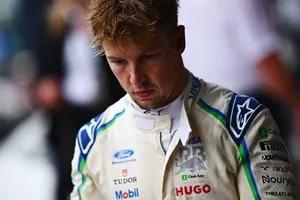
How the Racing Bulls pendulum is swinging back towards undeniable Liam Lawson
Formula 1
F1 Formula 1
Sao Paulo GP
2 h
How the Racing Bulls pendulum is swinging back towards undeniable Liam Lawson
Feature
Discover prime content

Subscribe and access Motorsport.com with your ad-blocker.
From Formula 1 to MotoGP we report straight from the paddock because we love our sport, just like you. In order to keep delivering our expert journalism, our website uses advertising. Still, we want to give you the opportunity to enjoy an ad-free and tracker-free website and to continue using your adblocker.
You have 2 options:
- Become a subscriber.
- Disable your adblocker.
Subscribe now Already subscribed? Sign in here
Already disabled your adblocker?
Reload page
Manage Alerts
Subscribe