Formula 1
F1 2026 engine regs to include 355km/h KERS-style ‘override’ boost system
Formula 1 is to revisit the driver-operated KERS boost era by allowing for a high-speed ‘override mode’ function to its energy deployment power unit map from 2026.
Matt Somerfield Charles Bradley
Published: Mar 29, 2024, 3:00 PM
Copy link
Share on Viber
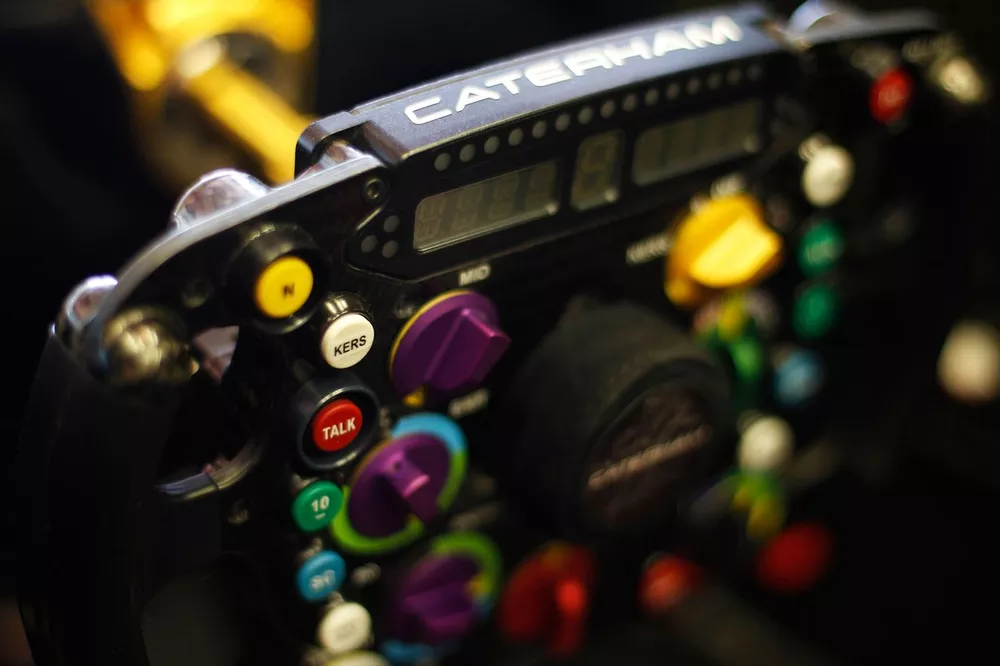
It was previously revealed that the turbocharged, 1.6-litre V6 internal combustion engine element of the power unit is being reduced from 550-560kW down to 400kW (535bhp), and that the battery element will jump from 150kW up to 350kW (470bhp) to replace that power loss – despite the eradication of the MGU-H.
The latest draft of the 2026 power unit regulations has been unveiled by the FIA and presents some new functionality for the more powerful hybrid system to help improve the wheel-to-wheel racing.
It had long been established that there was a desire to have a push-to-pass aspect with the incoming power unit, rather than all the energy being dispensed over the course of a lap by the systems themselves.
But the details of such a system had yet to be formally announced, and while this latest draft of the regulations doesn’t cover everything, Article 5.4.8 puts some of the framework in place.
The first portion of Article 5.4.8 creates a glidepath for energy deployment from the ERS-K hybrid system up to 345km/h (215mph). The second portion covers what’s being dubbed by the FIA as an ‘override mode’, whereby the driver will be able deploy additional power to infill the energy created by the glidepath and provide a further boost up to 355km/h (220.5mph).
This secondary function will provide a more strategic aspect to energy deployment and require the driver to make a decision whether or when to use it as it becomes available. It is similar in concept to the KERS function that F1 had between 2009-2013, with drivers able to use that energy allotment to attack, defend or deploy it for lap time improvement.
Given how much more reliance is placed on the hybrid aspect of the power unit from 2026 onwards, it means that drivers won’t always have the ability to use the ‘override’ function. And, if they do, they might risk putting themselves in an energy deficit under normal deployment conditions further around the lap or over the course of the next few laps.
Fighting with another driver in wheel-to-wheel combat will be just one aspect of how this new system will be employed by both drivers and their engineers, as they look to extract the best from the car during the course of a lap, during battles and over a race distance.
The 2026 engine regulations have attracted the most manufacturers on the grid since 2008, with the current four engine suppliers set to be joined by Audi and Ford (via Red Bull Powertrains).
As revealed by Motorsport.com in December, the FIA will also introduce new chassis rules in 2026 to make the cars between 40-50kg lighter.
The cars will be shorter, with the wheelbase likely trimmed down to 3400mm from the current maximum 3600mm. The cars will also be narrower by 10cm, so will be reduced from 2000mm to 1900mm.
Another step change from the current cars will be the addition of extra moveable aero to help reduce drag on the straights.
Read Also:
Formula 1Revealed: The FIA's plans for "nimble" 2026 F1 cars and moveable aero
Formula 1F1 set to abandon possible switch to 16-inch tyres for 2026
Formula 1Audi faces "huge" engine challenge for 2026, says Ferrari
We want your opinion!
What would you like to see on Motorsport.com?
Take our 5 minute survey.
- The Motorsport.com Team
Read and post comments
Read also :
Share Or Save This Story
Copy link
Share on Viber
Previous article Aston Martin makes offer to poach Newey from F1 rival Red Bull
Next article Sauber: "Important" to apologise to Bottas for F1 pitstop issues
Top Comments
There are no comments at the moment. Would you like to write one?
View More & Comment

More from
Matt Somerfield

Gallery: How F1 tech evolved during the 2024 season
Formula 1
Formula 1
Gallery: How F1 tech evolved during the 2024 season
How McLaren’s rear wing push changed the game in F1
Formula 1
Formula 1
How McLaren’s rear wing push changed the game in F1
How 2026 F1 rules will help avoid identikit designs
Formula 1
Formula 1
How 2026 F1 rules will help avoid identikit designs
Latest news
Christian Horner: Kimi Antonelli has 'earned' the right to be Mercedes' number one
Formula 1
F1 Formula 1
Singapore GP
28 min
Christian Horner: Kimi Antonelli has 'earned' the right to be Mercedes' number one


FIA ratifies key 2027 WRC sporting regulations
WRC
WRC WRC 2 h
FIA ratifies key 2027 WRC sporting regulations

Toprak Razgatlioglu to miss the rest MotoGP season due to shoulder injury
MotoGP
MGP MotoGP
Australian GP
2 h
Toprak Razgatlioglu to miss the rest MotoGP season due to shoulder injury
Feature
Discover prime content


Subscribe and access Motorsport.com with your ad-blocker.
From Formula 1 to MotoGP we report straight from the paddock because we love our sport, just like you. In order to keep delivering our expert journalism, our website uses advertising. Still, we want to give you the opportunity to enjoy an ad-free and tracker-free website and to continue using your adblocker.
You have 2 options:
- Become a subscriber.
- Disable your adblocker.
Subscribe now Already subscribed? Sign in here
Already disabled your adblocker?
Reload page
Manage Alerts
Subscribe