Formula 1
F1 begins research on wet weather racing solution
The Formula 1 organisation and the FIA are actively engaged in a project to improve the prospects of racing in the rain in the future.

Adam Cooper
Edited: Nov 5, 2021, 4:15 AM
Copy link
Share on Viber
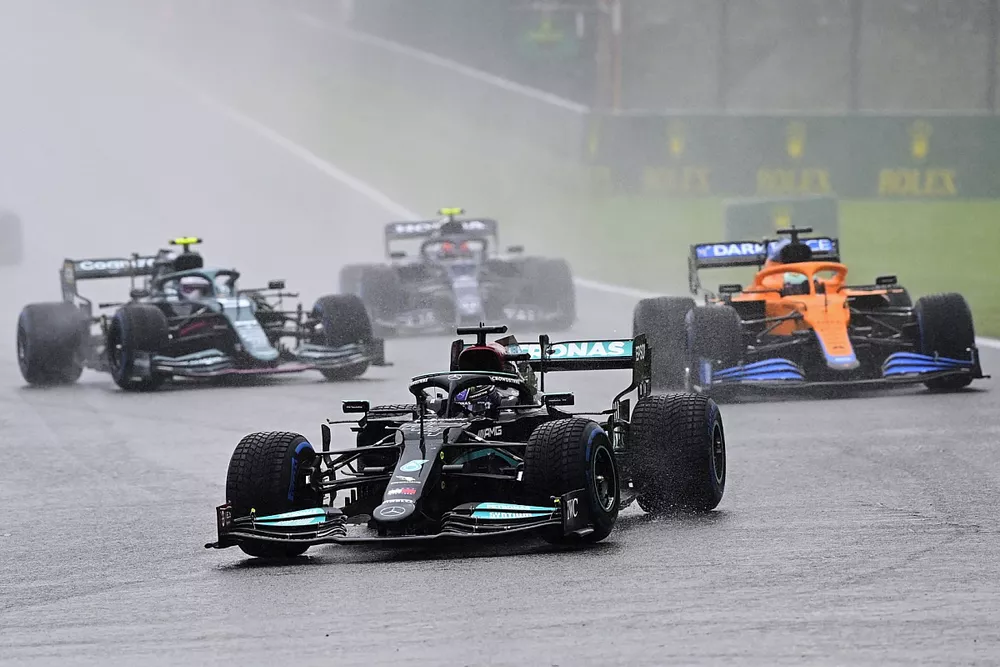
The initiative is a reaction to this year's Belgian GP, where visibility was so poor that the race could not be run under green flag conditions, and was aborted after a brief period behind the safety car.
F1's chief technical officer Pat Symonds, one of the men responsible for helping to define the 2022 aerodynamic package, is studying the impact of next year's rules on how much spray the cars will produce.
F1 managing director Ross Brawn indicated that the study is also looking at how the enclosed bodywork of WEC cars reduces spray.
"In terms of rain there's been some quite interesting work starting to be done now on the spray and the visibility," said Brawn.
"Pat Symonds and some of the FIA people spoke to some of the drivers in the last couple of races about their experiences at Spa, and their general experiences, particularly drivers who have raced other cars.
"Fernando [Alonso] was quite interesting because he said the ability to race in the rain is much better in a sportscar than it is in an F1 car.
"And in some aspects you'd think it might be quite challenging, with a windscreen and the wipers and all the rest of it, but he said the way the spray comes off the car is different."
Yuki Tsunoda, AlphaTauri AT02
Photo by: Erik Junius
Brawn indicated that there's an initial belief that the 2022 package will produce less spray.
"We're going to study the spray of the new cars. We have some thoughts that it might be a little bit improved. But it's definitely something we're going to look, to see how we change things.
Read Also:
- Ferrari: Mexico track a boost in F1 battle with McLaren
- Williams will start F1 2022 “on the back foot” by skipping test
- F1 plans 'show and tell' sessions on car updates in 2022
"The two big issues in wet racing are visibility and aquaplaning. The aquaplaning is a challenge for tyres, and beyond a certain point you can't resolve it.
"But the visibility is maybe something we can improve, and has now entered into our list of things that we're we're looking at, and seeing if we can have an influence on and make an improvement."
We want your opinion!
What would you like to see on Motorsport.com?
Take our 5 minute survey.
- The Motorsport.com Team
Read and post comments
Read also :
Share Or Save This Story
Copy link
Share on Viber
Previous article Ferrari: Mexico track a boost in F1 battle with McLaren
Next article How Mercedes revived an old F1 suspension 'trick' to boost speed
Top Comments
There are no comments at the moment. Would you like to write one?
View More & Comment
More from
Adam Cooper

RB: Tsunoda “mentally on a different level” in 2024
Formula 1
Formula 1
Japanese GP
RB: Tsunoda “mentally on a different level” in 2024

Andretti planning F2 and F3 entries to promote US talent to F1 team
Formula 1
Formula 1
Andretti planning F2 and F3 entries to promote US talent to F1 team

Andretti F1 team formally opens new Silverstone facility
Formula 1
Formula 1
Andretti F1 team formally opens new Silverstone facility
Latest news
“I couldn’t disappear” – Oliver Bearman rues “crazy” penalty for Pierre Gasly clash
Formula 1
F1 Formula 1
United States GP
56 min
“I couldn’t disappear” – Oliver Bearman rues “crazy” penalty for Pierre Gasly clash

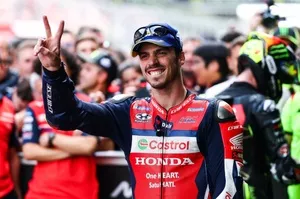
Joan Mir returns without revealing illness that kept him out for 44 days: "It hasn't been an easy period"
MotoGP
MGP MotoGP
Malaysian GP
1 h
Joan Mir returns without revealing illness that kept him out for 44 days: "It hasn't been an easy period"
Feature
Discover prime content


Subscribe and access Motorsport.com with your ad-blocker.
From Formula 1 to MotoGP we report straight from the paddock because we love our sport, just like you. In order to keep delivering our expert journalism, our website uses advertising. Still, we want to give you the opportunity to enjoy an ad-free and tracker-free website and to continue using your adblocker.
You have 2 options:
- Become a subscriber.
- Disable your adblocker.
Subscribe now Already subscribed? Sign in here
Already disabled your adblocker?
Reload page
Manage Alerts
Subscribe