Formula 1 Bahrain GP
F1 drivers accept imperfect qualifying solution despite pitlane shenanigans
Formula 1 drivers believe that pitlane shenanigans in qualifying are a price worth paying if it avoids traffic problems on track.
Jonathan Noble Ronald Vording
Edited: Mar 8, 2024, 11:11 AM
Copy link
Share on Viber

Since last season, the FIA has been making efforts to avoid dangerous scenarios of drivers coming across slow-moving cars while on flat-out qualifying laps.
Various ideas have been tried out, with an attempt at the Bahrain GP to force drivers to keep to a maximum delta time at all marshalling posts having been abandoned after it proved troublesome during trials in practice.
The solution used in Bahrain – there being a maximum time for a whole lap once cars are out of the pits – triggers drivers to try to find gaps in the pitlane, which can be a cause of trouble and complaints.
Sometimes drivers find themselves getting blocked when coming out of their garage, or they are forced to overtake on their way down the pitlane.
While such scenarios are not ideal, F1 drivers think it is much better way of doing things than risking extra danger if cars dawdle in the middle of the track at the final corners to find some clear air.
Speaking about the situation, world champion Max Verstappen said: “I think this is the safest way to go about it. I mean, it's probably not ideal, but I prefer that the cars are stopping in the pitlane than on the straight, or in the last corner.”
Read Also:
Ferrari’s Charles Leclerc added: “I think the FIA came up with a new system which I think wasn't exactly what we wanted. So we all asked to come back to the system of last year.
“It's an ongoing process where we try to find the best solution. But as Max said, I think you have to slow down at one point and it's much better to do it in the pitlane than on track. So I think it's the best solution we have at the moment.”
Sergio Perez, Red Bull Racing RB20 in the pit lane
Photo by: Simon Galloway / Motorsport Images
McLaren Lando Norris said the key thing that had to be addressed was avoiding cars going slow at the final corner, which the current system does do.
“I think is actually a pretty decent system and it kind of forces everyone to stay in order a little bit more,” he said.
“I think there's some more trick ones, like the one that they tried to introduce [in Bahrain], where if they're trying to avoid cars going slowly, it doesn't. And I think this system avoids cars going slower by the final sector.”
Norris reckoned that it was impossible to come up with a solution that avoids any risk of trouble, so it was really a case of going for the right compromise.
“You can still go slow, because you can still gain loads on your delta and then slow down at the end of the lap,” he said. “It doesn't defeat that purpose, but it definitely it makes cars go out a bit more on the road at the beginning.
“I think what they're trying to achieve is also good. It just needs refining and adjusting. Whether that is just one adjustment or just for every track, they need to optimise something new.”
Oscar Piastri, McLaren MCL38 and Lando Norris, McLaren MCL38 in the pit lane
Photo by: Simon Galloway / Motorsport Images
Norris’ team-mate Oscar Piastri reckoned it was inevitable that whatever system was introduced, teams and drivers would push things to the limit to try to gain some form of advantage.
“When we push the limits of any of the systems that they put in place, that's when it becomes tricky,” he said.
“The biggest thing for me is when things go wrong with these systems. It's not crystal clear how penalties are going to be given out and stuff like that.
“And I think with every system we have, if you go too slow with this system – we've seen in the past that if you are genuinely getting out of the way of someone, it's fine. But where do you draw the line on whether you are or you're not? Whether you've caused that situation yourself? It's quite subjective.
“For me, that's where having no system is a positive because everyone sorts themselves out and either you get screwed or you don't, and that's it. But I do, obviously, commend the FIA for trying new things.
“They were very receptive to our feedback [in Bahrain], which was really good. So I think it's good that they're trying things. But I don't think anyone's got a magic answer on how we solve it in every situation and I'm not sure you can.”
Read Also:
We want your opinion!
What would you like to see on Motorsport.com?
Take our 5 minute survey.
- The Motorsport.com Team
Read and post comments
Read also :
Share Or Save This Story
Copy link
Share on Viber
Previous article F1 Saudi Arabian GP: How to watch, ESPN Formula 1 TV times
Next article Sainz relieved to have Ferrari F1 car he can "attack" with
Top Comments
There are no comments at the moment. Would you like to write one?
View More & Comment

More from
Jonathan Noble

Brundle awarded OBE in King’s New Year’s honours
Formula 1
Formula 1
Brundle awarded OBE in King’s New Year’s honours
The new rules dilemma that will define the 2025 F1 season
Formula 1
Formula 1
The new rules dilemma that will define the 2025 F1 season
Verstappen issues Red Bull title warning in push for RB21 progress
Formula 1
Formula 1
Australian GP
Verstappen issues Red Bull title warning in push for RB21 progress
Latest news
F1 United States GP: Charles Leclerc pips Max Verstappen to top FP1
Formula 1
F1 Formula 1
United States GP
43 min
F1 United States GP: Charles Leclerc pips Max Verstappen to top FP1
George Russell reveals he lost sleep over his own driving, not the F1 championship
Formula 1
F1 Formula 1
United States GP
1 h
George Russell reveals he lost sleep over his own driving, not the F1 championship
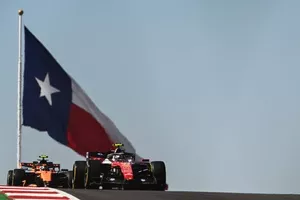
F1 United States GP live commentary and updates - Ferrari leads FP1
Formula 1
F1 Formula 1
United States GP
2 h
F1 United States GP live commentary and updates - Ferrari leads FP1

Max Papis announces departure as IndyCar chief steward
IndyCar
Indy IndyCar 2 h
Max Papis announces departure as IndyCar chief steward
Feature
Discover prime content



Subscribe and access Motorsport.com with your ad-blocker.
From Formula 1 to MotoGP we report straight from the paddock because we love our sport, just like you. In order to keep delivering our expert journalism, our website uses advertising. Still, we want to give you the opportunity to enjoy an ad-free and tracker-free website and to continue using your adblocker.
You have 2 options:
- Become a subscriber.
- Disable your adblocker.
Subscribe now Already subscribed? Sign in here
Already disabled your adblocker?
Reload page
Manage Alerts
Subscribe