Formula 1
Renault Sport using fresh engines for Belgian GP at Spa
Renault Sport press release
Published: Aug 24, 2011, 5:22 PM
Copy link
Share on Viber

After a four week hiatus the 2011 FIA Formula One World Championship restarts with one of the classic races on the calendar. The Belgian Grand Prix, held at the Spa-Francorchamps circuit is a 7.004km rollercoaster loop through the hills and forests of the Ardennes area. Over 70% of the circuit is taken at maximum throttle, making it a stiff challenge for drivers, but particularly for engines that need to deliver good top end power, driveability and responsiveness to negotiate the fast, flowing corners such as the famed Eau Rouge and Blanchimont and the tight Bus Stop chicane and La Source hairpin.

Practice action
Photo by: xpb.cc
Belgian Grand Prix facts and figures
– Spa is longest circuit on the calendar by some margin – a lap is 7.004km; the next longest is Silverstone at 5.891km. Over 70% of the track is taken at full throttle, which equates to 4.903km – longer than the entire Circuit de Catalunya!
– Over one lap the engine will have a total wide open throttle time of 43secs. There are two principle ‘straights’ – the first from Turn One, the La Source hairpin, through Eau Rouge and up to Les Combes on the Kemmel Straight. The RS27 engine will be at maximum revs (18,000rpm) for 23secs on this section. The second long straight is from Stavelot to the Bus Stop chicane where the RS27 engine will be at max revs for 20secs
– The track goes downhill from La Source before climbing 80m through Eau Rouge to Les Combes. This is particularly tough for the RS27 engine as there are a lot of lateral G-forces, approx +3g to -4g and then 5g to -3g going over the crest of the hill. The pressure can affect the flow of lubricants through the hydraulic and lubricant systems
– The La Source hairpin is the slowest part of the track where drivers drop to just 70kph and 8,700rpm. However the long straight afterwards requires the engine to pick up very quickly so Renault Sport F1 engineers create maps that enable the drivers to have smooth, but rapid, acceleration on the long straight

Mark Webber, Red Bull Racing
Photo by: xpb.cc
– The length of the circuit and its geographical location in the forest-clad hills means there are often microclimates over the course of a lap; it could be raining in one location but dry in another. Engine maps are therefore created to be a compromise to give as much flexibility as possible. Ironically the ban on changing engine maps between qualifying and the race is likely to have very little impact here as conditions can change so quickly
What it’s like from the cockpit: Mark Webber, Red Bull Racing
The Belgian Grand Prix is one of the toughest races of the year, but also one of the most enjoyable as it’s such a challenge to put together a perfect lap. You’ll tackle every sort of corner and weather condition over the weekend, which means you need to be on top of your game every single session. As a result you need to know that the engine is reliable and driveable so you can concentrate on getting the most from yourself. Top end power needs to be there so you can attack corners like Eau Rouge and Stavelot that you’ll be taking in top gear at maximum revs but responsiveness is also crucial to get the pick up out the slower corners such as the Bus Stop chicane and La Source. Good engine mapping and management can make a huge difference over such a long lap.
We’ll be using fresh engines for this race with each of our partners
Rémi Taffin
The engineers’ view: Head of Renault Sport F1 track operations Rémi Taffin gives his thoughts on Spa
Spa-Francorchamps is a circuit that gives us the ‘most’ of everything. It’s the longest, the most changeable weather conditions, but from an engineer’s perspective it’s the most enjoyable as it’s so much of a challenge. The driver will encounter every sort of corner possible so we, as engineers, have to consider how to get the RS27 to perform over all levels of torque and revs. We need the engine to deliver a smooth power curve through the flowing corners like Blanchimont and Eau Rouge but also to be responsive out of the slower hairpins and chicanes. There are also two notable braking zones: the first corner hairpin, made more difficult by being downhill, and then the Bus Stop where the car brakes from 310kph to just 75kph – putting the engine internals under huge pressure. The long straights and long wide open throttle times also demand a good 7th gear ratio, essential for a good lap time, so you can see we need to be completely on top of every area of performance.
Getting the mapping right, while also allowing enough flexibility to deal with the changeable weather, means it’s one of the circuits we spend the most time on in the dyno; approx 4.5 hours and a further five hours calibration. In fact we use Spa as a control circuit to test an engine’s reliability as it puts so much strain on the internal parts. With such huge demands exerted, we’ll be using fresh engines for this race with each of our partners to give them as much power as possible.
We want your opinion!
What would you like to see on Motorsport.com?
Take our 5 minute survey.
- The Motorsport.com Team
Read and post comments
Read also :
Share Or Save This Story
Copy link
Share on Viber
Previous article Schumacher would make good team boss - Ecclestone
Next article Red Bull expecting competitive fight during Belgian GP at Spa
Top Comments
There are no comments at the moment. Would you like to write one?
View More & Comment

More from
Mark Webber

Oscar Piastri splits from Mark Webber management
Formula 1
Formula 1
Sao Paulo GP
Oscar Piastri splits from Mark Webber management

Oscar Piastri shares how relationship with Mark Webber has evolved since F1 debut
Formula 1
Formula 1
Miami GP
Oscar Piastri shares how relationship with Mark Webber has evolved since F1 debut

Mark Webber’s Oscar Piastri role change was inevitable, says David Coulthard
Formula 1
Formula 1
Saudi Arabian GP
Mark Webber’s Oscar Piastri role change was inevitable, says David Coulthard

More from
Red Bull Racing
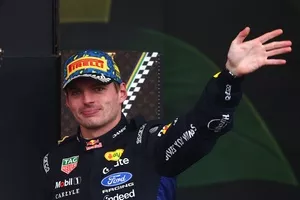
Max Verstappen on F1's WHOOP plan: "It's nobody's business, I don't even know my heart rate"
Formula 1
Formula 1
Las Vegas GP
3 h
Max Verstappen on F1's WHOOP plan: "It's nobody's business, I don't even know my heart rate"

Max Verstappen: "If they let me write the rules, F1 wouldn’t be allowed in certain places"
Formula 1
Formula 1
Las Vegas GP
4 h
Max Verstappen: "If they let me write the rules, F1 wouldn’t be allowed in certain places"
Latest news

Rafael Camara torn between his F2 title bid and more F1 races with Haas
Formula 1
F1 Formula 1
Las Vegas GP
37 min
Rafael Camara torn between his F2 title bid and more F1 races with Haas
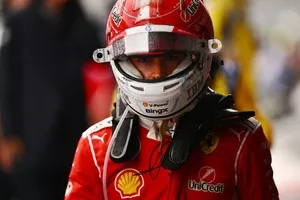
F1 Mexico GP fallout was “taken out of proportion” - Charles Leclerc
Formula 1
F1 Formula 1
Las Vegas GP
1 h
F1 Mexico GP fallout was “taken out of proportion” - Charles Leclerc
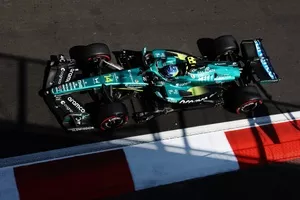
Honda reveals key F1 power unit change for 2027
Formula 1
F1 Formula 1
Las Vegas GP
2 h
Honda reveals key F1 power unit change for 2027
Max Verstappen on F1's WHOOP plan: "It's nobody's business, I don't even know my heart rate"
Formula 1
F1 Formula 1
Las Vegas GP
3 h
Max Verstappen on F1's WHOOP plan: "It's nobody's business, I don't even know my heart rate"
Feature
Discover prime content

Top 10 F1 cars of the 1980s
Formula 1
By Kevin Turner
Top 10 F1 cars of the 1980s


Subscribe and access Motorsport.com with your ad-blocker.
From Formula 1 to MotoGP we report straight from the paddock because we love our sport, just like you. In order to keep delivering our expert journalism, our website uses advertising. Still, we want to give you the opportunity to enjoy an ad-free and tracker-free website and to continue using your adblocker.
You have 2 options:
- Become a subscriber.
- Disable your adblocker.
Subscribe now Already subscribed? Sign in here
Already disabled your adblocker?
Reload page
Manage Alerts
Subscribe