Analysis
Formula 1 Singapore GP
Why extreme F1 experiments couldn't save Ferrari in Singapore GP
Charles Leclerc had hoped Singapore would be an opportunity for redemption – but on a difficult circuit, the SF-25 confounded the Scuderia again with its chronic problems and limited tolerance for set-up adjustments
Gianluca D'Alessandro
Edited: Oct 8, 2025, 3:05 PM
Copy link
Share on Viber
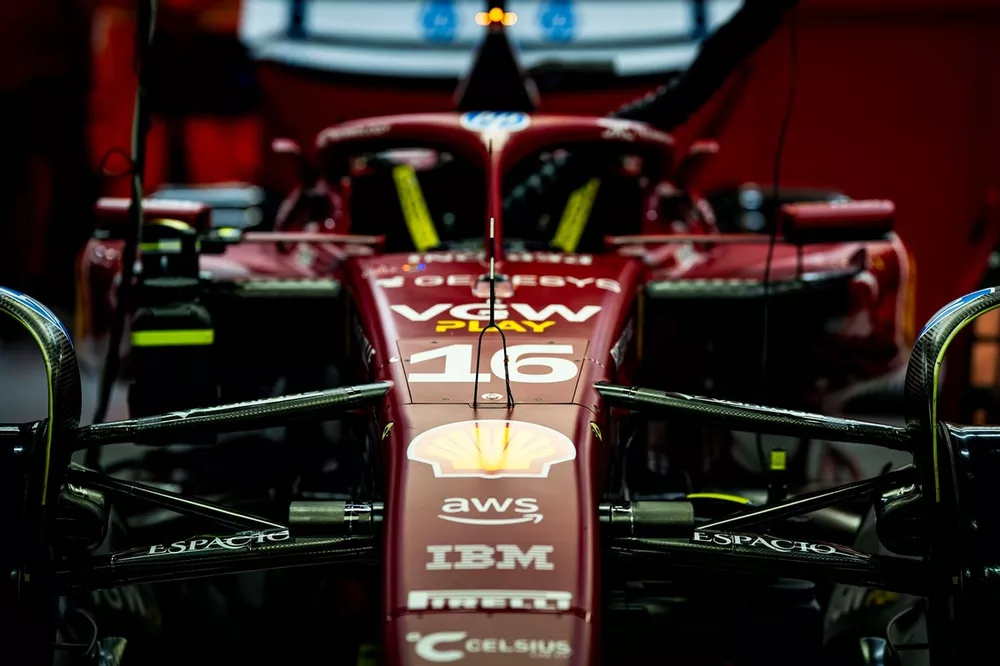
Charles Leclerc, Ferrari SF-25
Photo by: Shameem Fahath / Motorsport Network
A few weeks ago, Charles Leclerc identified Singapore as one of the few remaining rounds of 2025 where he hoped Ferrari could redeem itself and deliver a smile in a Formula 1 season lacking satisfaction – a flash of brilliance in the night of Marina Bay.
Based on the most recent races, though, Leclerc had already lowered his expectations ahead of the weekend. The reality turned out to be worse.
It was partly logical that, after disappointments accumulated in previous rounds, no one at Ferrari wanted to raise excessive hopes for Singapore. At the same time there was an awareness that the Marina Bay circuit could expose the car's weaknesses: the characteristics of this track meant Ferrari would need to excel precisely in the areas where it has struggled throughout 2025.
Low-speed corners, especially the prolonged ones requiring a sharp front end, have often challenged the SF-25, producing chronic understeer which both Leclerc and Lewis Hamilton hate. The hope for Singapore was that the uniform nature of its corners would reduce the number of compromises required and mitigate the car's inherent limitations.
Charles Leclerc, Ferrari, Lewis Hamilton, Ferrari
Foto di: Sam Bloxham / LAT Images via Getty Images
But even that hope quickly faded. Friday turned into an extended test, with constant set-up changes between and during sessions. Leclerc himself admitted that Ferrari was forced to make drastic adjustments to the car, particularly regarding the ride height.
It's well known that the SF-25 is at its best at the lower end of the ride-height spectrum, but in Singapore all teams are forced to raise their cars because the street circuit's nature and its constant bumps require a greater safety margin. There was still a logic in experimenting here, though – not only to explore the limits but also because some sections, after being resurfaced, offered smoother asphalt.
It's clear the increase in ride height played a role in Ferrari's troubles, but the difficulties encountered in Singapore go beyond this single factor. Friday's proliferation of experiments covered aerodynamic as well as mechanical configurations, all aimed at finding a balance capable of reducing understeer and making the SF-25 easier to drive.
Lewis Hamilton, Ferrari
Foto di: Simon Galloway / LAT Images via Getty Images
The decision to use a slightly lower-downforce rear wing rather than the maximum-downforce version also followed this line of thinking. In terms of pure speed, the difference between the two set-ups wasn't particularly significant, since the straights in Singapore are relatively short and don't have a decisive impact on lap time. The underlying problem, however, is that a compromise still has to be found – a balance between the two ends of the car.
Having a precise front end is essential for confidence on a street circuit and for getting the car to rotate but, at the same time, it becomes crucial to protect the rear. On a track with so many traction zones, thermal degradation has a much greater impact than actual tyre wear. This was one of the reasons leading Leclerc to try some more experiments – which he himself described as "stupid" – at the end of Q3.
Since the SF-25's chronic understeer made it difficult to get the car to turn in corners, Leclerc tried a different approach in the final moments, loading the front end as much as possible, even at the cost of dealing with an even more nervous rear end than before: "I had a lot of understeer, but for some reason the car was still unstable and unpredictable. Driving with understeer is not one of my strengths."
The choice to go for a more oversteering set-up on his final Q3 attempt was mainly due to personal driving preference, since Leclerc finds it easier to manage that kind of balance than the opposite. The problem, as he explained, is that the decision had a significant impact: the SF-25 remains a car with what's described in Italian as a coperta corta – a "short blanket", offering very little room to manoeuvre.
Charles Leclerc, Ferrari SF-25
Foto di: Shameem Fahath / Motorsport Network
Then there's the tyre problem. The SF-25 often struggles to make the most of the softer compounds compared with its rivals and, as has been observed over many race weekends this season, among the top teams the Ferrari drivers are the ones who improve the least between the second and third runs, when extracting the last tenth is crucial. The same pattern repeated itself in Singapore, to the point that the lap times between Q1 and Q3 were similar.
From Turn 1, the SF-25's demeanour showed it was having difficulty in getting the tyres up to temperature. This issue also affected the middle sector, where the drivers struggled to rotate the car and find traction on exit. The time lost in the pitlane didn't help either, since recovering temperature in the front tyres becomes complicated – but this is a chronic weakness.
Brake issues, a constant this season, became even more evident in Singapore, starting from the practice sessions. Both Ferrari drivers had to manage the braking system at various points in the race. From lap eight onward Leclerc suffered from an imbalance in temperature between the right- and left-rear brakes – an anomaly that, as the laps went on, extended to the front axle as well.
Hamilton's front brakes went entirely during the closing laps, causing him to exceed track limits so many times that he was given a five-second penalty.
This is a problem Ferrari has been dealing with for some time, but in Singapore it emerged in a more extreme form, due to the sequence of heavy braking zones and the few straights available for cooling. The fact that it affected both cars confirms there is something in the way the brakes are configured and in the design choices needed to try to make the car work – but at Marina Bay, these weaknesses became even more glaring.
Leggi anche:
Formula 1The real stress test awaiting McLaren's F1 'Papaya Rules'
Formula 1Why McLaren failed to repeat its 2024 Singapore GP dominance this year
We want your opinion!
What would you like to see on Motorsport.com?
Take our 5 minute survey.
- The Motorsport.com Team
Read and post comments
Read also :
Share Or Save This Story
Copy link
Share on Viber
Previous article Kimi Antonelli explains mistakes that cost him shot at F1 Singapore GP podium
Next article Why FIA president Mohammed Ben Sulayem looks set to win re-election unopposed
Top Comments
There are no comments at the moment. Would you like to write one?
View More & Comment

More from
Gianluca D'Alessandro
Kimi Antonelli almost had to retire in Mexico due to an oil leak
Formula 1
Formula 1
Mexican GP
Kimi Antonelli almost had to retire in Mexico due to an oil leak
The Pirelli test row shows why MotoGP riders need a stronger voice
MotoGP
MotoGP
The Pirelli test row shows why MotoGP riders need a stronger voice

More from
Lewis Hamilton
‘Lewis suspected a conspiracy’ – Nico Rosberg explains how Lewis Hamilton F1 rivalry went awry at Mercedes
Formula 1
Formula 1 18 h
‘Lewis suspected a conspiracy’ – Nico Rosberg explains how Lewis Hamilton F1 rivalry went awry at Mercedes

F1 driver contracts: How long is each driver tied down for?
Formula 1
Formula 1
F1 driver contracts: How long is each driver tied down for?

More from
Ferrari
Max Verstappen on Ferrari clashes: "I would never sign two number-one drivers"
Formula 1
Formula 1
Sao Paulo GP
Max Verstappen on Ferrari clashes: "I would never sign two number-one drivers"
Latest news
How Istanbul is revamping its F1 circuit to clinch long-term future
Formula 1
F1 Formula 1
Turkish GP
1 h
How Istanbul is revamping its F1 circuit to clinch long-term future
The ten closest finishes from the 2026 NASCAR season
NASCAR Cup
NAS NASCAR Cup 17 h
The ten closest finishes from the 2026 NASCAR season
‘Lewis suspected a conspiracy’ – Nico Rosberg explains how Lewis Hamilton F1 rivalry went awry at Mercedes
Formula 1
F1 Formula 1 18 h
‘Lewis suspected a conspiracy’ – Nico Rosberg explains how Lewis Hamilton F1 rivalry went awry at Mercedes
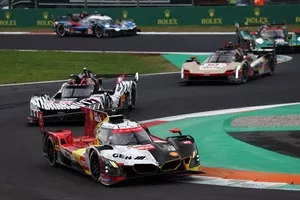
BMW "proud of what we achieved" after securing runner-up in 2026 WEC
WEC
WEC WEC
Monza
19 h
BMW "proud of what we achieved" after securing runner-up in 2026 WEC
Feature
Discover prime content

Top 10 F1 cars of the 1970s
Formula 1
By Kevin Turner
Top 10 F1 cars of the 1970s
Subscribe and access Motorsport.com with your ad-blocker.
From Formula 1 to MotoGP we report straight from the paddock because we love our sport, just like you. In order to keep delivering our expert journalism, our website uses advertising. Still, we want to give you the opportunity to enjoy an ad-free and tracker-free website and to continue using your adblocker.
You have 2 options:
- Become a subscriber.
- Disable your adblocker.
Subscribe now Already subscribed? Sign in here
Already disabled your adblocker?
Reload page
Manage Alerts
Subscribe