Formula 1
FIA approves regulation change to allow F1 2026 mule car testing
The FIA has approved new regulations to allow mule car testing, but what does that mean for Formula 1 teams?
Ewan Gale
Published: Aug 1, 2024, 2:20 PM
Copy link
Share on Viber
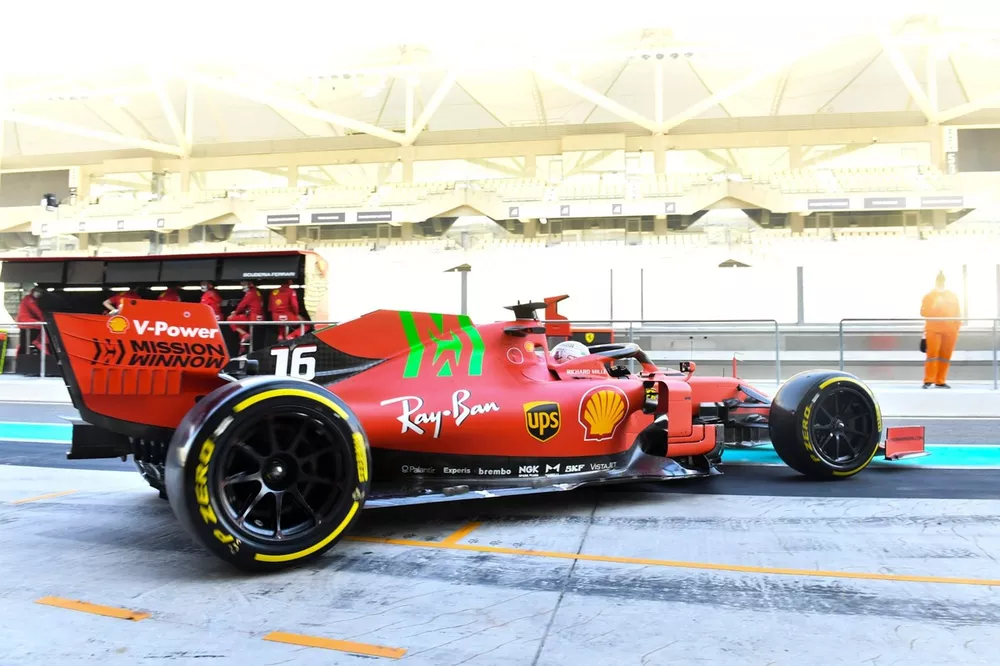
The FIA World Motor Sport Council has approved an update to F1's Sporting Regulations to allow the testing of mule cars in preparation for 2026's technical regulation changes.
An addition to the regulations allows for 10 days of mule car testing this year for teams to try and simulate the new cars that will grace the grid after next season.
But what is a mule car and how does this help teams prepare for the changes?
What is a mule car?
In F1, a mule car is the term for a chassis that has been adapted to complete test running. The car is usually updated in order to mimic upcoming regulation changes and, therefore, can differ quite drastically from the original car specification.
Rules are relaxed for the mule cars, allowing teams to update their machinery in a variety of ways in order to greater replicate the demands of any upcoming regulation tweaks.
Ahead of the 2017 technical regulation changes, teams extensively tested with mule cars, which were able to run with various aerodynamic devices to generate greater downforce, allowing data to be gathered ahead of time - which whilst not 100 % accurate, was still enough to give engineers a head start on projects.
Mule cars were also used ahead of the current generation of car, though in this case with more of a focus on helping Italian tyre manufacturer Pirelli develop its new-for-2022 18-inch wheels.
Max Verstappen, Red Bull Racing testing the new 2017 Pirelli tyres
Photo by: Pirelli
What has changed in regulations
FIA's World Motor Sport Council has approved changes to this year's Sporting Regulations that allow for 10 days of testing with mule cars, ahead of the new cars entering in 2026.
Article 10.10 regarding the 'Testing of mule cars' has been added with a number of stipulations, with the following highlights:
- b) Cars must include and are limited to the minimal modifications necessary for the purpose of testing development tyres or for testing components or systems on behalf of the FIA for future Championship seasons, as determined by the FIA.
- c) During any TMC, cars must be fitted with the FIA ECU required by Article 8.3 of the Technical Regulations.
- k) A maximum of ten (10) car days of testing is permitted between 1 January and 31 December organised by the FIA in consultation with all Competitors, and if required by the testing objectives the appointed tyre supplier, and for the sole purpose of TMC.
- i) Drivers participating in these tests must be eligible for a Full Super Licence, and must have either competed in at least one (1) Formula 1 Competition during their careers or have previously completed a minimum of 500 km of running in a current Formula One Car consistently at racing speeds.
- ii) Any such testing scheduled at a circuit hosting a Competition of the Championship may only be carried out prior to that Competition if the following conditions are met: a) The car used is a suitably modified car designed and constructed in order to comply with the Technical Regulations of any of the four (4) calendar years falling immediately prior to the year of the Championship and with the exception of changes permitted under b), i) and l) must only use components and software of a specification that have been used in at least one (1) race or TCC during any of the four (4) calendar years falling immediately prior to the year of the Championship.
- b) The driver is eligible based upon the requirements of Article 10.10 k) i) but is not entered in the current Championship.
- c) The circuit hosted a Competition of the Championship in the year falling immediately prior to the year of the Championship.
The new regulations also dictate that no test items can be used during the running, meaning teams won't be able to find any advantage in present-day competition.
Pirelli tyre on the car of Fernando Alonso, Alpine/Renault RS18 Mule
Photo by: Mark Sutton / Motorsport Images
Before Wednesday [31 July], there was no provision for the testing of mule cars in the 2024 Sporting Regulations.
What challenges do F1 teams face?
Whilst previous mule cars have been added to in order to increase dimensions and weight for impending regulations, teams now face the issue of preparing for cars that are reduced in size and weight.
Not only that, but whilst aerodynamic features were able to be added in the past to increase downforce generation, the new-for-2026 regulations feature complex active aero, which will be near-impossible to recreate with mule cars.
Then there is the issue of a heavily-revised power unit regulation set, which teams also weren't faced with in 2017, when they were able to run the same power units in the test machinery. So the dilemma is, even with mule cars to help prepare for 2026, how exactly will engineers replicate the new regulations?
With any car from the four seasons prior to the current term available for modification, teams will be given a choice.
They could select a chassis from the old generation of car pre-2022, which is smaller and therefore closer to the dimensions specified in the 2026 regulations. Whilst this is a clear advantage, a lot of the downforce generation on the 2020-21 cars was from top-face components, rather than the ground-effect philosophy of the new generation cars.
Carlos Sainz Jr., Ferrari SF90 Mule
Photo by: Zak Mauger / Motorsport Images
So how representative would any data collected with a 2020-21 car be? That depends on how each team modifies its cars within the regulations now set out by the FIA.
While the new-gen cars have the advantage of running the ground-effect aerodynamic philosophy, the greater car dimensions pose a serious issue when it comes to making worthwhile modifications. Again, the amount of usable data able to be harvested is hard to gauge.
The effectiveness of the modified mule cars could provide a first on-track chance of securing a competitive advantage when F1's next era dawns in 2026.
Read Also:
We want your opinion!
What would you like to see on Motorsport.com?
Take our 5 minute survey.
- The Motorsport.com Team
Read and post comments
Read also :
Share Or Save This Story
Copy link
Share on Viber
Previous article Wheatley to leave Red Bull for Audi F1 team principal role
Next article McLaren extends Stella’s contract as team principal
Top Comments
There are no comments at the moment. Would you like to write one?
View More & Comment
More from
Ewan Gale

Why Christian Horner banned Mercedes' name as Red Bull built its own F1 engine
Formula 1
Formula 1
Singapore GP
Why Christian Horner banned Mercedes' name as Red Bull built its own F1 engine
F1's top 10 closest finishes after George Russell holds off Max Verstappen's late Baku challenge
Formula 1
Formula 1
Azerbaijan GP
F1's top 10 closest finishes after George Russell holds off Max Verstappen's late Baku challenge

Why struggling F1 teams can't follow Ferrari's aggressive upgrade plan
Formula 1
Formula 1
Why struggling F1 teams can't follow Ferrari's aggressive upgrade plan
Latest news

Charles Leclerc reacts to Ferrari fear: 'We know what line not to cross'
Formula 1
F1 Formula 1
United States GP
2 h
Charles Leclerc reacts to Ferrari fear: 'We know what line not to cross'

Kyle Busch Remembered: Rowdy's wildest and most impressive Talladega moments
NASCAR Cup
NAS NASCAR Cup
Talladega II
2 h
Kyle Busch Remembered: Rowdy's wildest and most impressive Talladega moments
Lamborghini World Finals PRO-PRO/AM Race 2: Leitch/Stasi dominate to seal title
Lamborghini Super Trofeo
LBST Lamborghini Super Trofeo
World Finals - Monza 2026
3 h
Lamborghini World Finals PRO-PRO/AM Race 2: Leitch/Stasi dominate to seal title

Toto Wolff reveals he is actively vetting “two or three people” to replace him at Mercedes
Formula 1
F1 Formula 1
United States GP
3 h
Toto Wolff reveals he is actively vetting “two or three people” to replace him at Mercedes
Feature
Discover prime content


Subscribe and access Motorsport.com with your ad-blocker.
From Formula 1 to MotoGP we report straight from the paddock because we love our sport, just like you. In order to keep delivering our expert journalism, our website uses advertising. Still, we want to give you the opportunity to enjoy an ad-free and tracker-free website and to continue using your adblocker.
You have 2 options:
- Become a subscriber.
- Disable your adblocker.
Subscribe now Already subscribed? Sign in here
Already disabled your adblocker?
Reload page
Manage Alerts
Subscribe