Formula 1
FIA Q&A New 2014 Formula One Power Unit Regulations
FIA Explains New V6 engines
Edited: Jun 30, 2011, 11:56 PM
Copy link
Share on Viber

Power Unit Regulations Q&A 30/06/2011
1. The World Motor Sport Council voted on 29 June 2011. What did it decide?
Following consultation with the various Formula One stakeholders and the current Formula One engine manufacturers, the WMSC has ratified the adoption of a V6 turbo engine to be used in Formula One from 2014 onwards. This required changes to the regulations initially adopted by the World Council on 3 June 2011. The full regulations applicable to the 2014 season will be published in due course.
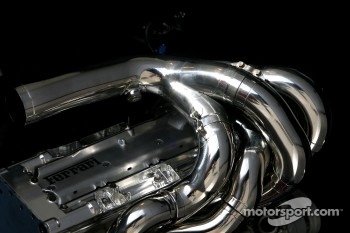
This current Ferrari engine will be replaced by a 1.6 liter V6 Turbo engines in 2014
Photo by: xpb.cc
2. Will a V6 use more fuel, or have inferior economy compared with the original proposal?
No. To push the engineers to develop engine efficiency, the technical regulation imposes a fuel flow control. When evolving the regulation to fit with the manufacturers’ new request this parameter has not been changed. Thus the efficiency requirement will be unchanged.
3. Why has the rev limit been increased from 12,000rpm to 15,000rpm. Is this purely to enhance the sound of a Formula One car?
No. This parameter has been updated from 12000rpm to 15000 rpm to allow engineers more flexibility in power and energy management. However, as a consequence of the new architecture (V6) and the change in rev-limit, the engine will sound different, but will remain representative of Formula One.
4. Will the increase in rpm alter fuel consumption?
Absolutely not. As mentioned above, the fuel flow limit will stay the same. The technologies are the same and as a consequence any increase in rpm will constrain the engineers to work harder on reducing friction and gaining on engine efficiency. The challenge will be even bigger than originally planned and will therefore enhance the technological lead of Formula One.
5. Has the FIA retained the energy recover devices originally intended to be used in conjunction with the I4 engine?
Yes, the concept initially presented is respected. All of the technology intended for the I4 is still present. This new power plant will be a dramatic step forward in both fuel efficiency and in energy management.
6. Will those manufacturers already engaged in the development of a four-cylinder engine face increased costs now they need to redirect their resources toward designing a V6?
To our knowledge, five manufacturers were working on the proposed 4-cylinder engine. They will all need to adapt their project and this will surely involve some additional costs, depending on how advanced each project was. This evolution has been proposed and supported by all four engine manufacturers currently involved in Formula One.
7. Why is the introduction of the new generation of engines now being delayed by year?
The decision to delay the introduction until 2014 comes at the request of the four engine manufacturers currently involved in Formula One. Their request for extra time is linked to the change in architecture but also to ensure their projects are more robust (one of the goals of the project is to enhance engine durability to c.4000km)
8. Will these energy recovery systems and other efficiency devices ultimately influence the development of road cars?
Yes. The clear need for the automotive industry to reduce emissions means energy management will increasingly become a key factor in the development of more efficient powertrains. Kinetic energy recovery is already applied in Formula One and the introduction of exhaust energy recovery will add another technology route to be explored. Formula One will also return to its role as a developer of turbo-charger technology. This research will have real-world benefits, contributing valuable knowledge that will be of use to future road car development.
Combustion engine specifications:
1600cc, V6
15000 rpm max
Direct fuel injection up to 500bar
Single turbocharger
Controlled fuel flow
Energy recovery and storage systems specifications:
Kinetic, 120kW on the rear wheels
Exhaust energy recovery linked to the turbocharger
By: FIA
We want your opinion!
What would you like to see on Motorsport.com?
Take our 5 minute survey.
- The Motorsport.com Team
Read and post comments
Read also :
Share Or Save This Story
Copy link
Share on Viber
Previous article Ricciardo Drives For Hispania Racing Team
Next article HRT Hopes Driver Deal With Red Bull 'Just The Start'
Top Comments
There are no comments at the moment. Would you like to write one?
View More & Comment

More from
Ferrari
Fred Vasseur reveals two costly moments that denied Ferrari US GP double podium
Formula 1
Formula 1
United States GP
5 h
Fred Vasseur reveals two costly moments that denied Ferrari US GP double podium

Charles Leclerc reacts to Ferrari fear: 'We know what line not to cross'
Formula 1
Formula 1
United States GP
Charles Leclerc reacts to Ferrari fear: 'We know what line not to cross'
Latest news

Manthey acknowledges IMSA to be "tougher than expected" despite two wins
IMSA
IMSA IMSA 5 h
Manthey acknowledges IMSA to be "tougher than expected" despite two wins
How a philosophy shift brought BMW to new heights in 2026
IMSA
IMSA IMSA 5 h
How a philosophy shift brought BMW to new heights in 2026
Fred Vasseur reveals two costly moments that denied Ferrari US GP double podium
Formula 1
F1 Formula 1
United States GP
5 h
Fred Vasseur reveals two costly moments that denied Ferrari US GP double podium

Cleetus McFarland set to compete full-time for 2027 ARCA championship
ARCA
ARCA ARCA 7 h
Cleetus McFarland set to compete full-time for 2027 ARCA championship
Feature
Discover prime content



Subscribe and access Motorsport.com with your ad-blocker.
From Formula 1 to MotoGP we report straight from the paddock because we love our sport, just like you. In order to keep delivering our expert journalism, our website uses advertising. Still, we want to give you the opportunity to enjoy an ad-free and tracker-free website and to continue using your adblocker.
You have 2 options:
- Become a subscriber.
- Disable your adblocker.
Subscribe now Already subscribed? Sign in here
Already disabled your adblocker?
Reload page
Manage Alerts
Subscribe