Breaking news
Formula 1
Formula 1 abandons idea of points system change
Formula 1 will not introduce a revised points system next season having considered the prospect of extending the number of scorers.

Scott Mitchell
Published: Oct 11, 2018, 11:22 AM
Copy link
Share on Viber

The Strategy Group had discussed awarding points down to 20th place instead of just the top 10, with a compromise of the top 15 emerging as a possible alternative.
Discussions are ongoing but any change will not be introduced for 2019.
FIA F1 race director Charlie Whiting confirmed that "it is something that if everybody had agreed to, we would look at introducing it [in] 2019".
The outcome means F1 will persevere with only rewarding the top 10 with points on a 25-18-15-12-10-8-6-4-2-1 basis, as it has since 2010.
One change that will be implemented, but for 2020 and not next season, is regarding the team's curfew.
It will be extended from eight hours to nine, meaning team members associated with the operation of the cars will have one fewer hour in the paddock overnight ahead of Friday and Saturday practice.
The curfew, originally just six hours, was introduced for the 2011 season to cut down the working hours of team personnel.
Teams are allowed two individual exceptions to this rule over the year.
The history of F1's points system
F1 has only changed the number of places that score points three times in its history, although the way it distributes points between places has been tweaked slightly more often.
The world championship started in 1950 with points awarded to the top five, on an 8-6-4-3-2 sliding scale, and with a bonus point for fastest lap.
F1 ditched the fastest lap reward for 1960, with that single point going to sixth place instead.
The following season the race winner scored nine points although the rest of the system was unchanged and remained the method until 1991, when the winner was awarded 10 points.
A double change was implemented for the 2003 season, extending the number of scorers to the top eight and making that possible by reducing the increments between each position to 10-8-6-5-4-3-2-1 scale.
This remained until 2010, when a major overhaul took place to increase the value of a win and higher positions, and gave F1 the points system that is still in place today – a 25-18-15-12-10-8-6-4-2-1 division.
We want your opinion!
What would you like to see on Motorsport.com?
Take our 5 minute survey.
- The Motorsport.com Team
Read and post comments
Read also :
Share Or Save This Story
Copy link
Share on Viber
Previous article F1’s two-move defensive rules clarified by FIA
Next article Mercedes: 2019 aero rules could shake up order
Top Comments
There are no comments at the moment. Would you like to write one?
View More & Comment

More from
Scott Mitchell
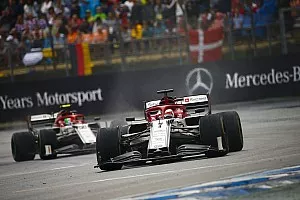
Alfa Romeo must do better in "chaotic" races - Vasseur
Formula 1
Formula 1
Alfa Romeo must do better in "chaotic" races - Vasseur

Honda: Verstappen relationship 'like a young Senna'
Formula 1
Formula 1
Honda: Verstappen relationship 'like a young Senna'

Key team personnel shouldn't be F1 boss - Ferrari
Formula 1
Formula 1
Key team personnel shouldn't be F1 boss - Ferrari
Latest news

MotoGP Australian GP: Marco Bezzecchi leads Aprilia 1-2-4-5 in Friday Practice
MotoGP
MGP MotoGP
Australian GP
1 h
MotoGP Australian GP: Marco Bezzecchi leads Aprilia 1-2-4-5 in Friday Practice
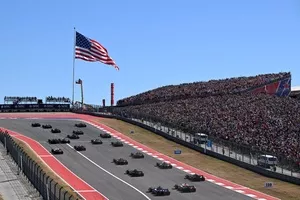
Max Verstappen slams “unacceptable” bumps at Austin F1 track: “It's out of control”
Formula 1
F1 Formula 1
United States GP
9 h
Max Verstappen slams “unacceptable” bumps at Austin F1 track: “It's out of control”

Kimi Antonelli ready to "finish the job" as first F1 title chance beckons at US GP
Formula 1
F1 Formula 1
United States GP
9 h
Kimi Antonelli ready to "finish the job" as first F1 title chance beckons at US GP

How to watch NASCAR at Talladega II: Weekend schedule, start time, entry list, TV
NASCAR Cup
NAS NASCAR Cup
Talladega II
10 h
How to watch NASCAR at Talladega II: Weekend schedule, start time, entry list, TV
Feature
Discover prime content




Subscribe and access Motorsport.com with your ad-blocker.
From Formula 1 to MotoGP we report straight from the paddock because we love our sport, just like you. In order to keep delivering our expert journalism, our website uses advertising. Still, we want to give you the opportunity to enjoy an ad-free and tracker-free website and to continue using your adblocker.
You have 2 options:
- Become a subscriber.
- Disable your adblocker.
Subscribe now Already subscribed? Sign in here
Already disabled your adblocker?
Reload page
Manage Alerts
Subscribe