Formula 1
How different will the real 2022 cars be from F1's latest model?
Formula 1 chiefs provided us with a glimpse of the sport’s new era at the British Grand Prix as they unveiled a full-scale model of a 2022 car built with the new regulations in mind.

Matt Somerfield
Edited: Aug 6, 2021, 11:37 AM
Copy link
Share on Viber
Giorgio Piola's F1 technical analysis
Giorgio Piola is the preeminent Formula 1 technical journalist. View our full selection of Giorgio's technical illustrative content
That said, it’s important to remember that this is just one interpretation of the future, as the teams themselves still have the freedom to develop their own aerodynamic concepts, albeit with more restrictions placed on them than they’ve had in the past.
The switch to a more ground effect-focused car certainly poses new and interesting challenges for the design teams, but it is inevitable they will also find their current knowledge invaluable in eking out pockets of performance too.
So, let’s take a closer look at some of the areas where we know teams will be keen to inject their own DNA and where the show car design doesn’t delve too deeply into the possible outcomes.
The 2022 Formula 1 car launch event on the Silverstone grid. Front detail
Photo by: Charles Coates / Motorsport Images
The front wing and nose cone are incredibly important on an F1 car, as they offer the first point of contact for the airflow.
The front wing will have a maximum of four planes in 2022, as shown on the prototype. However, the performance objective will override the aesthetic, as teams will not only be able to have adjustability in the upper two profiles (see below, right), but there will undoubtedly be differences in their shape too, especially their connection at the endplate and to the nose.
The two different renders produced by F1 also highlight how teams might make different design decisions regarding the shape and length of the nose, with the structure incredibly important in striking an aerodynamic accord with not only the front wing but also the surfaces downstream.
Note how the combined front brake duct fence and wheel wake deflector is shaped both to accommodate the upper blade, which also has a slot in it (we’ll see much more of this from the teams when they optimise their designs, along with different contouring and flow conditioning surfaces, where possible), and also to have a lower tail section to help disrupt the wake created by the squish of the tyre’s sidewall.
These will obviously become an area of intense development for the teams as they optimise the flow and turbulence around the front wheel, with the lower skirt winglet, also pictured, able to offer assistance alongside the usual aerodynamic surfaces that teams use to smooth and manipulate the airflow.
This includes, but is not limited to, the brake duct inlet, winglets and the fairings on the suspension and steering arms.
2022 F1 car
Photo by: Formula 1
This top down view gives us an appreciation for the length of the floor edge wing and the fences used to help guide the airflow into the underfloor’s throat section. This itself is raised considerably when compared with the current generation of cars to help maximise flow into the underfloor tunnels.
Above that we have the sidepods, which feature a very sculpted inlet on the show car and is an area that will likely be very different for the teams as they look for ways to trade off aerodynamic efficiency with the cooling demands of their power units.
The same can be said for the rest of the sidepod bodywork, the transitional bodywork around the halo and the shape of the airbox - all of which have potential in regards to customisation for the teams.
The floor edge treatment on the show car is a little different from the scale model that F1 presented in 2019, highlighting an area where we should see some development work by the teams, especially as it’s already a developmental hotbed for the teams, with them often seen tinkering with this area of the car.
Some of that knowledge will be transferable and they’ll try to use that in order to improve the flow conditions ahead of the rear tyre, along with the potential for floor shaping just beyond too.
There was plenty of additional design maturity shown in the full-size show car when compared with the scale wind tunnel model when we look at the rear of the car too, indicating how much design divergence will be possible.
The beam wing has been split into two elements, and the twin mounting pylons have become more stylised, whilst also remaining purposeful, as they adopt the swan-neck shape that many teams have already.
F1 fell short of including the DRS actuator pod or the flap mechanism on the full scale show car, but the system does remain in place for 2022 to aid overtaking, with the hinges visible on the wind tunnel model that was showed off in 2019.
The rear brake duct winglets that hang beside the diffuser will also be an interesting avenue in terms of development for the teams, not only due to their proximity to the diffuser wall but also owing to them having been clipped back for 2021, proving their worth in influencing flow around the rear of the car.
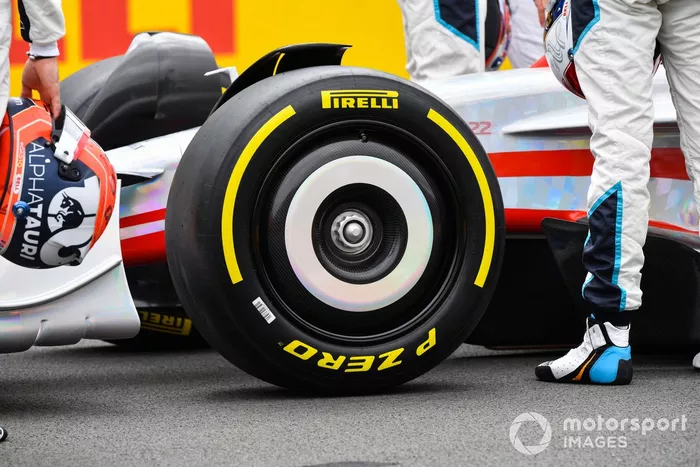
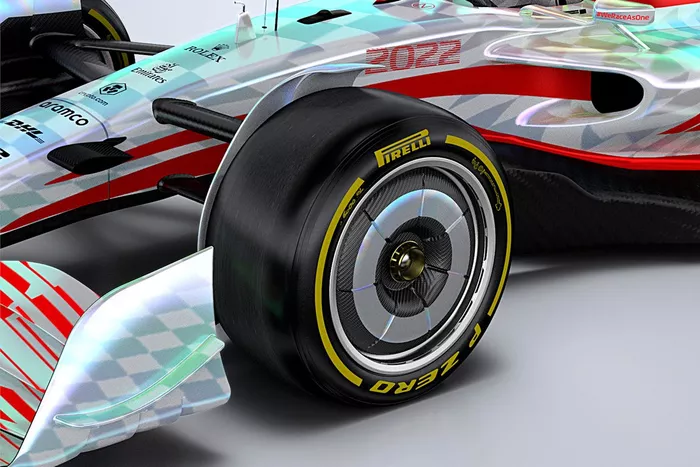
Wheel covers will return to F1 too, having been consigned to the scrap pile following the 2009 season when teams previously had them statically mounted within the wheel rim. This time, however, they must rotate with the wheel.
Their design is more restrictive too, although as we can see in the difference between the full-size show car, with its dustbin lid-like design and the wind tunnel model, with its flat panel design, there will be ways in which the teams can customize them to suit their own requirements, including the segmented version shown in the render.

3
So while the real 2022 cars may not prove to be radically different from what we’ve seen so far, it’s in the details that teams will still be able to do their own thing.
And, in a sport where marginal gains are the key to success, it is these subtle differences that could prove key in the fight for glory next year.
We want your opinion!
What would you like to see on Motorsport.com?
Take our 5 minute survey.
- The Motorsport.com Team
Read and post comments
Read also :
Share Or Save This Story
Copy link
Share on Viber
Previous article Wolff: Mercedes FE drivers "deserve to be in F1" amid Williams links
Next article Russell: Too many penalties will force F1 drivers to be cautious
Top Comments
There are no comments at the moment. Would you like to write one?
View More & Comment

More from
Matt Somerfield

Gallery: How F1 tech evolved during the 2024 season
Formula 1
Formula 1
Gallery: How F1 tech evolved during the 2024 season
How McLaren’s rear wing push changed the game in F1
Formula 1
Formula 1
How McLaren’s rear wing push changed the game in F1
How 2026 F1 rules will help avoid identikit designs
Formula 1
Formula 1
How 2026 F1 rules will help avoid identikit designs
Latest news
Jesse Love barely holds off Sam Mayer for NASCAR O'Reilly win at Phoenix
NASCAR O'Reilly
NOAP NASCAR O'Reilly
Phoenix II
29 min
Jesse Love barely holds off Sam Mayer for NASCAR O'Reilly win at Phoenix
Lando Norris faces anxious wait as F2 prepares to decide future of his racing team
Formula 1
F1 Formula 1
Singapore GP
3 h
Lando Norris faces anxious wait as F2 prepares to decide future of his racing team

NASCAR Cup Phoenix starting lineup: Blaney earns pole as Larson struggles
NASCAR Cup
NAS NASCAR Cup
Phoenix II
4 h
NASCAR Cup Phoenix starting lineup: Blaney earns pole as Larson struggles

Ryan Blaney kind of faces a must-win scenario this weekend at Phoenix
NASCAR Cup
NAS NASCAR Cup
Phoenix II
5 h
Ryan Blaney kind of faces a must-win scenario this weekend at Phoenix
Feature
Discover prime content




Subscribe and access Motorsport.com with your ad-blocker.
From Formula 1 to MotoGP we report straight from the paddock because we love our sport, just like you. In order to keep delivering our expert journalism, our website uses advertising. Still, we want to give you the opportunity to enjoy an ad-free and tracker-free website and to continue using your adblocker.
You have 2 options:
- Become a subscriber.
- Disable your adblocker.
Subscribe now Already subscribed? Sign in here
Already disabled your adblocker?
Reload page
Manage Alerts
Subscribe