Formula 1
How McLaren adapted to life post ‘mini-DRS’
The Las Vegas Grand Prix was the first time McLaren was without its 'mini DRS' rear wing concept
Matt Somerfield Giorgio Piola
Edited: Nov 27, 2024, 5:27 PM
Copy link
Share on Viber

McLaren MCL38 rear wing detail, Las Vegas GP
Photo by: Giorgio Piola
McLaren’s rear wing choice for the Las Vegas Grand Prix was always going to be interesting, because it was the first race where it could no longer count on its previous ‘mini-DRS’ solution.
The Woking-based outfit had pulled a masterstroke after the summer break after introducing a flexible rear wing design that fully complied with the regulations, but cleverly opened the slot gap under load to help reduce drag.
With what became known as the ‘mini-DRS’ design having helped Oscar Piastri win the Azerbaijan Grand Prix, complaints from rivals eventually prompted the FIA to look more thoroughly into the concept.
And following discussions between the governing body and the team, McLaren eventually agreed to make modifications that kept the FIA happy and quelled concerns of the competitors.
Had McLaren continued to use its previous design then it would almost certainly have been unleashed in Las Vegas, as the long straights are the perfect stomping ground for such a wing.
However, with that option no longer there, McLaren elected to go with the more obvious route – the lowest downforce solution it has in its pool.
It is a wing we have seen used before, as it appeared on Lando Norris’ car during the first practice day at the Italian Grand Prix before the team switched to the then more optimum ‘mini-DRS’ solution.
In terms of the design of this latest rear wing solution, it features elements which take up very little space within the allowable box region.
This means that the mainplane is more or less flat, rather than having the more generous spoon-shaped appearance that the wings of this generation usually have.
The dimensional criteria for this flatter mainplane also means the leading edge is set back more than usual, requiring the centrally mounted swan-neck style pillar be lent over more than its other designs.
Meanwhile, the semi-detached tip section has been trimmed from corner to corner across the upper edge, resulting in a triangular surface, rather than the squared-off solutions usually employed. The endplate cutout has also been adjusted to suit.
McLaren has also adopted teardrop-shaped flap pivots with this wing specification, rather than the barrel-style ones used on their other designs.
McLaren MCL38 Las Vegas GP, Italian GP comparison
Photo by: Giorgio Piola
McLaren also arrived in Las Vegas with a front wing design that we had already seen a glimpse of in free practice at the Italian Grand Prix.
The wing, which also featured a modified livery, has crescent-shaped cutouts in the upper flap’s trailing edge.
These help to reduce how much downforce is generated and will help to balance the car, front-to-rear, given the choices made by the team at the back of the car.
On this occasion those crescent-shaped cutouts have been increased in size, in order to match the decisions being made at the rear (blue arrow, yellow highlight).
Further modifications to the front wing in Las Vegas included altering the size of the outer portion of the upper flap, whilst the metal support bracket that was previously mounted there has also been deleted (red arrows).
This change might seem minor but given the locale it will have a bearing on how the flap and endplate deform, which in-turn will alter how the airflow and pressure system behaves in this region.
Watch: Max at McLaren vs Lando at Red Bull - Who Wins the 2024 Title? and More - F1 Q&A
Read Also:
Formula 1Horner: Verstappen "more sensitive" to 2024 criticism than he let on
Formula 1How the FIA and Pirelli have responded to avoid repeat Qatar tyre troubles
Formula 1Radio failure behind Stroll's Aston Martin Las Vegas pitstop shambles
We want your opinion!
What would you like to see on Motorsport.com?
Take our 5 minute survey.
- The Motorsport.com Team
Read and post comments
Read also :
Share Or Save This Story
Copy link
Share on Viber
Previous article Horner: Verstappen "more sensitive" to 2024 criticism than he let on
Next article Zhou: Ferrari is "really interested in me" for 2025 F1 season
Top Comments
There are no comments at the moment. Would you like to write one?
View More & Comment

More from
Matt Somerfield

Gallery: How F1 tech evolved during the 2024 season
Formula 1
Formula 1
Gallery: How F1 tech evolved during the 2024 season
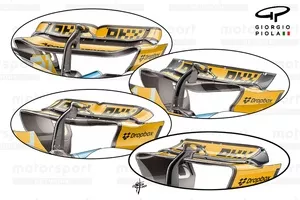
How McLaren’s rear wing push changed the game in F1
Formula 1
Formula 1
How McLaren’s rear wing push changed the game in F1
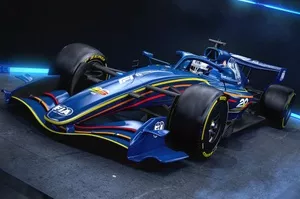
How 2026 F1 rules will help avoid identikit designs
Formula 1
Formula 1
How 2026 F1 rules will help avoid identikit designs
Latest news
Toyota’s new GR GT3 to make early debut in Japan next month
Super GT
SGT Super GT 3 min
Toyota’s new GR GT3 to make early debut in Japan next month

Max Verstappen pinpoints two recurring Red Bull problems: "We should use sign language!"
Formula 1
F1 Formula 1
United States GP
15 min
Max Verstappen pinpoints two recurring Red Bull problems: "We should use sign language!"

Fernando Alonso blasts driving standards of bottom half of F1 grid
Formula 1
F1 Formula 1
United States GP
1 h
Fernando Alonso blasts driving standards of bottom half of F1 grid
Yellow line debate divides NASCAR fans after Talladega Cup finish
NASCAR Cup
NAS NASCAR Cup
Talladega II
2 h
Yellow line debate divides NASCAR fans after Talladega Cup finish
Feature
Discover prime content

Subscribe and access Motorsport.com with your ad-blocker.
From Formula 1 to MotoGP we report straight from the paddock because we love our sport, just like you. In order to keep delivering our expert journalism, our website uses advertising. Still, we want to give you the opportunity to enjoy an ad-free and tracker-free website and to continue using your adblocker.
You have 2 options:
- Become a subscriber.
- Disable your adblocker.
Subscribe now Already subscribed? Sign in here
Already disabled your adblocker?
Reload page
Manage Alerts
Subscribe