Formula 1
How much does an F1 car weigh in 2023 and what's included in the limit?
Formula 1 cars have strict weight limits teams have to follow, but what's included in those limits and how much do the parts weigh? Find out here.
Lucy Rimmer
Edited: Jun 15, 2023, 10:56 AM
Copy link
Share on Viber
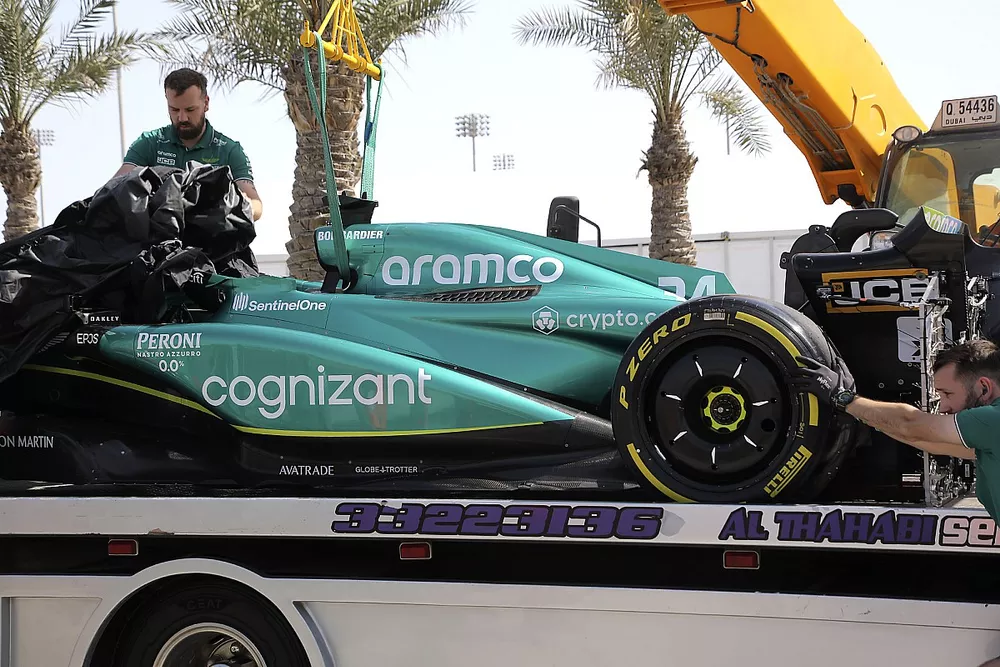
It’s no secret that weight is everything in Formula 1, but also that F1 cars have been getting heavier over time too. Since 2022 the cars are comfortably the heaviest in the championship’s history and this gain can typically be explained by increased safety features in recent years (the halo weighs 7kg, for example).
Across a grand prix weekend and even during the race alone the weight of a Formula 1 car seriously fluctuates, but the FIA sets a minimum weight for the car that teams need to hit. The FIA technical regulations are a lengthy 178 pages, but here is everything to do with the weight of a Formula 1 car.
How much does an F1 car weigh?
In 2023 the minimum weight of a Formula 1 car is 798kg (1,759 lbs). The original limit was set at 795kg, but the limit increased by 3kg as teams struggled to meet it.
There was a plan to reduce the F1 car weight by 2kg, but the plan fell through and the 798kg weight limit has been retained to factor in heavier tyres and new mandated electronic items in the car. This is for the mass of the car with the driver, fitted with dry-weather tyres, but without fuel. The minimum weight limit is set by the FIA in their rulebook.
However, each team’s car will be at varying amounts over the minimum weight depending on the team. For example, this year, 2022 has seen cars run overweight compared to this minimum value. Alfa Romeo was believed to be the only car that is not considerably overweight, hence why the team is particularly opposed to the raising of the minimum weight limit earlier in the season.
This minimum weight is measured after the grand prix, when the car has used its fuel. The total fuel capacity of a Formula 1 car is 110kg, meaning at the beginning of a grand prix with the driver and a full fuel load the car will weigh at least as 908kg, assuming they have a full fuel load.
Maintenance sign denoting that a car is fuelled in the Haas F1 garage
Photo by: Andy Hone / Motorsport Images
However, teams may choose to run with less than 110kg of fuel depending on the track - tracks with heavier braking and acceleration zones make for higher fuel consumption.
There is no upper limit in terms of the weight of a Formula 1 car, however it is highly undesirable to be overweight. Increasing the weight makes the car slower, so teams aim to get as close to that lower limit as possible. If cars are under the minimum weight limit teams will add ballast, which is extra weight to hit this minimum weight. This ballast can be placed anywhere on the car to improve balance meaning it is desirable to even aim below the minimum weight figure, and to then have extra weight in the form of ballast to play around with.
How much does an F1 driver weigh?
With the shortest, driver Yuki Tsunoda, being 5’2” and tallest drivers, Alex Albon and Esteban Ocon, both being 6’1”, there is no surprise that weight fluctuates between all the drivers. However, FIA rules state a minimum weight for an Formula 1 driver of 80kg.
If the driver weighs less than 80kg (which is the vast majority of drivers) then this difference is corrected with ballast. This ballast is added to the cockpit so it cannot be placed anywhere on the car to improve balance. This figure also includes the driver’s helmet, race suit and shoes so drivers do not aim to weigh exactly 80kg.
This 80kg minimum rule was implemented in 2019 to reduce the advantage shorter and lighter drivers had. Before this rule, the driver weight was included holistically within the overall F1 car weight rules which meant lighter drivers provided teams with more room to improve the balance of the car. Before that, it was not uncommon for drivers to be told the specific weight they were allowed to be by their teams, and this was often lower than what was healthy for the drivers.

Nico Rosberg and Lewis Hamilton, Mercedes AMG, on the scales after qualifying, 2013 Singapore GP
Photo by: Charles Coates / Motorsport Images
Why do drivers get weighed after a race?
Drivers are weighed after the race for two reasons - one is to measure how much weight a driver has lost during the race, and the other is to ensure that the driver and car still meet the minimum weight limit.
Drivers lose around 2-3kg a race, even more in hotter conditions, so they are weighed to understand exactly how much weight they have lost so fluids can be replenished and subsequent training programmes for the next week are informed by any dramatic weight loss. Secondly, as the minimum mass of the Formula 1 car includes the driver, their weight needs to be known so that when the car is weighed the two figures can be added up to ensure the teams have reached that minimum amount.
The drivers are weighed with their full race gear, including helmets, as this is included in the weight of the driver, and this means the FIA can calculate that the correct amount of ballast has been added if necessary.
How much do F1 parts weigh?
While the entire F1 car should weigh no less than 798kg, the heaviest part of a Formula 1 car is the engine which must weigh a minimum of 150kg, whereas the lightest part is the steering wheel which weighs 1.3kg. Some parts have minimum weight requirements listed in the rulebook, whereas others are free for teams to make as light as possible.
Part
Weight
Engine
Minimum 150kg
Fuel
Maximum 110kg
Front wing
Around 10kg
Chassis/Monocoque
No set weight
Halo
7kg
Gearbox
Around 40kg
Steering wheel
Around 1.3kg
Scrutineers at the weighbridge with Zhou Guanyu, Alfa Romeo C42
Photo by: Mark Sutton / Motorsport Images
F1 weight through the years
The 2022 cars are now comfortably the heaviest in the history of F1, and this is largely the result of safety regulations that have mandated the inclusion of safety features such as the halo. The banning of refuelling also contributed to larger, and therefore heavier cars.
Year
Weight
Changes
2008
585kg
2009
605kg
2010
620kg
Refuelling is banned
2011
640kg
Kinetic Recovery System (KERS) widely adopted
2012
640kg
2013
642kg
Minor changes in the weight of Pirelli’s tyre range
2014
691kg
Hybrid V6 engines introduced
2015
702kg
Anti-intrusion panels added to cockpit
2016
702kg
2017
728kg
Wider wheels and tyres introduced
2018
734kg
Halo introduced
2019
743kg
80kg driver allowance
2020
746kg
Second fuel flow meter added
2021
752kg
2022
798kg
New cars designed around ground effects aerodynamics, plus bigger wheels and wheel covers also introduced
Read Also:
- F1 reserve drivers: All the back-up racers for 2023
- How to watch and stream Formula 1 in the USA
- What is DRS in F1, how does it work and is it automatic?
We want your opinion!
What would you like to see on Motorsport.com?
Take our 5 minute survey.
- The Motorsport.com Team
Read and post comments
Read also :
Share Or Save This Story
Copy link
Share on Viber
Previous article Magnussen: 2023 a "new era" for Haas F1 thanks to fresh investment
Next article Aston Martin unveils world’s fastest SUV as new F1 medical car
Top Comments
There are no comments at the moment. Would you like to write one?
View More & Comment
Latest news

Dale Jr. explains why he doesn't use 'Earnhardt' in his signature
NASCAR Cup
NAS NASCAR Cup 1 h
Dale Jr. explains why he doesn't use 'Earnhardt' in his signature

NASCAR to allow brake rotor and pad changes after Phoenix qualifying
NASCAR Cup
NAS NASCAR Cup
Charlotte II
1 h
NASCAR to allow brake rotor and pad changes after Phoenix qualifying

Why Christian Horner banned Mercedes' name as Red Bull built its own F1 engine
Formula 1
F1 Formula 1
Singapore GP
1 h
Why Christian Horner banned Mercedes' name as Red Bull built its own F1 engine

Laurent Mekies extends contract as Red Bull's F1 team boss
Formula 1
F1 Formula 1
Singapore GP
3 h
Laurent Mekies extends contract as Red Bull's F1 team boss
Feature
Discover prime content




Subscribe and access Motorsport.com with your ad-blocker.
From Formula 1 to MotoGP we report straight from the paddock because we love our sport, just like you. In order to keep delivering our expert journalism, our website uses advertising. Still, we want to give you the opportunity to enjoy an ad-free and tracker-free website and to continue using your adblocker.
You have 2 options:
- Become a subscriber.
- Disable your adblocker.
Subscribe now Already subscribed? Sign in here
Already disabled your adblocker?
Reload page
Manage Alerts
Subscribe