Nostalgia
Formula 1
How McLaren and Ferrari went to war with the rules in '76
Formula 1’s epic battle for the 1976 world championship title between James Hunt and Niki Lauda will go down in history as one of the best ever.
Giorgio Piola Matt Somerfield
Edited: May 2, 2020, 3:26 PM
Copy link
Share on Viber
Giorgio Piola's F1 technical analysis
Giorgio Piola is the preeminent Formula 1 technical journalist. View our full selection of Giorgio's technical illustrative content
But despite their rivalry never boiling over, the same could not be said for their McLaren and Ferrari teams – who were at loggerheads many times during the fraught campaign.
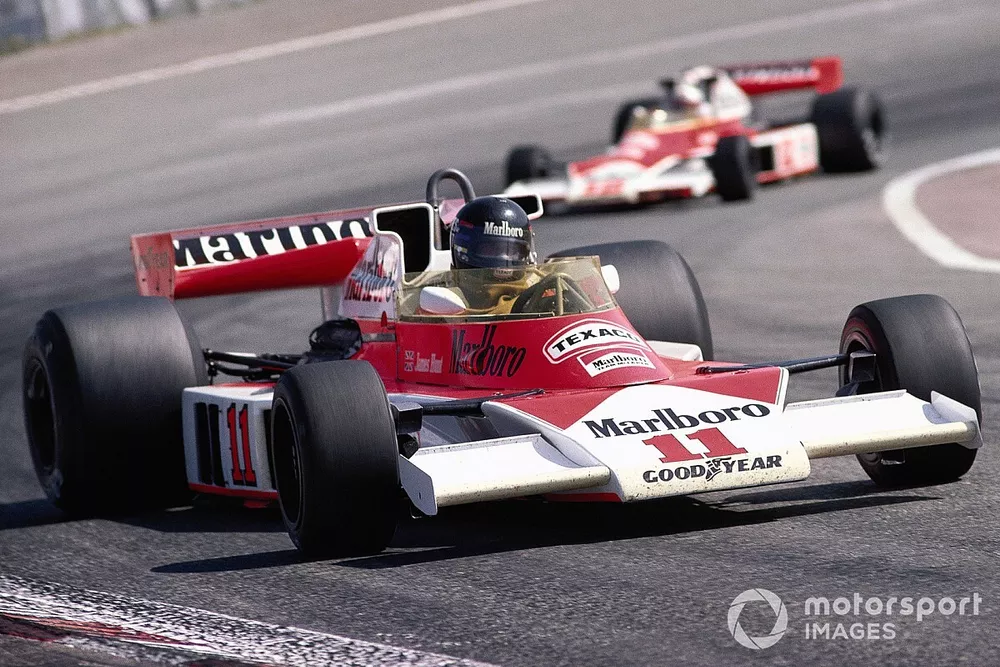
Perhaps the biggest controversy came on this day in 1976 at the Spanish Grand Prix when Hunt would be stripped of his race victory due to his McLaren M23 being deemed illegal after the race. Here we look at the background to this fascinating controversy.
Read Also:
Scrutineering
New rules had given the teams plenty to focus on ahead of the Spanish GP, but McLaren would fall foul of two design parameters that would put it in hot water during post-race scrutineering – the car’s overall width, and the position of the oil coolers and their associated pipework.
The McLaren M23 had been measured by the governing body during 1975, as it was well known to be the widest car on the grid. So its measurements would form the basis for the new width restrictions introduced in Spain.
Hunt was disqualified after the race for this, as his car had been found to exceed the new tolerance during scrutineering, the team having failed to measure the rear end of the M23 as it knew nothing had changed since its car was measured the previous year.
The problem with this thinking was that a change had occurred, just not to the car. Instead it was a new tyre introduced by Goodyear that would be its undoing, as the tyre manufacturer moved from a cross-ply to a radial construction. It meant that rather than having a flat sidewall, the tyres now featured a bulge.
McLaren M23 top view French GP
Photo by: Giorgio Piola
The difference was less than a centimetre on either side, with the car measuring 216.8mm, rather than the mandatory 215mm.
There was also a question mark over the position of the M23’s oil cooler and pipework, with the team having placed theirs at the rear of the sidepod and created a cutout to feed them cool air (right image).
Whilst the general idea was sound, it appeared it had misinterpreted the regulations in regard to how the coolers and pipework could be positioned within. The team swiftly made changes and reverted to a more conventional arrangement for the next three races.
James Hunt, McLaren M23 Ford
Photo by: Rainer W. Schlegelmilch
This hurt performance, with Hunt unhappy with how the car drove over the next few races. As such, a reworked installation appeared for the French Grand Prix, which Hunt duly went on to win with, reinvigorating his campaign.
More good news would follow, as the FIA would convene for the appeal hearing in Paris to deliberate over his disqualification at the Spanish Grand Prix. The post-race decision to disqualify the Brit was overturned and his victory reinstated, pivoting the championship on its axis with the second half of the season still to run.
The other major change to the regulations at the Spanish GP would rid the sport of the tall airboxes that had become commonplace up and down the grid.
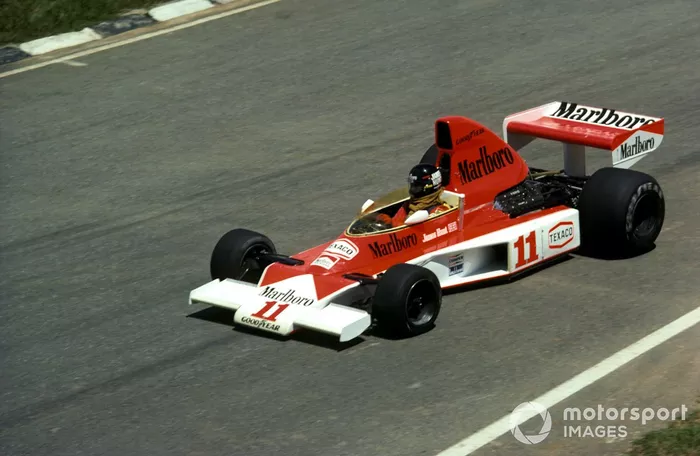
The McLaren M23 featured the tall airbox in the opening three rounds of the championship.
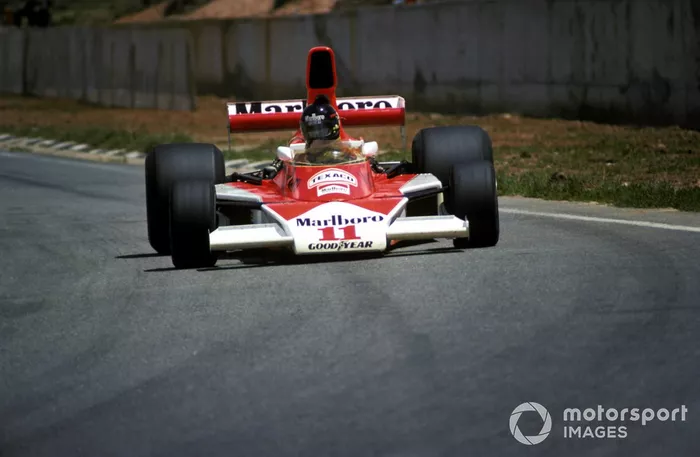
A shot of the M23 from the front reveals just how high these airboxes had become.
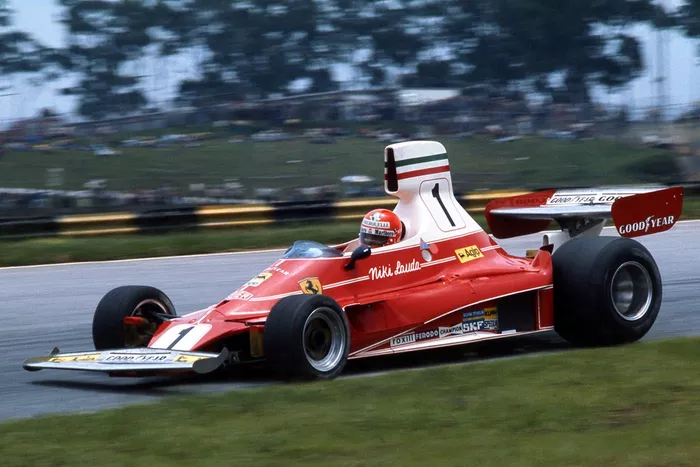
Likewise the Ferrari 312T that started the 1976 season sported the much taller airbox to take advantage of being able to get more air to the engine.
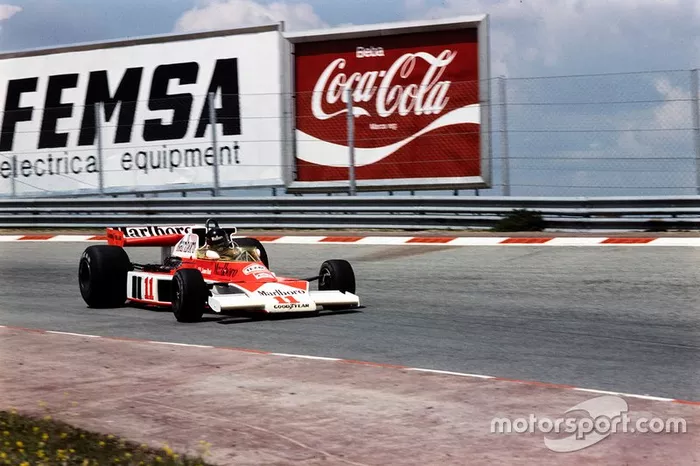
For the Spanish GP, for which the new rules were introduced, McLaren had opted to split its airbox into two L-shaped ducts mounted alongside the roll over structure.
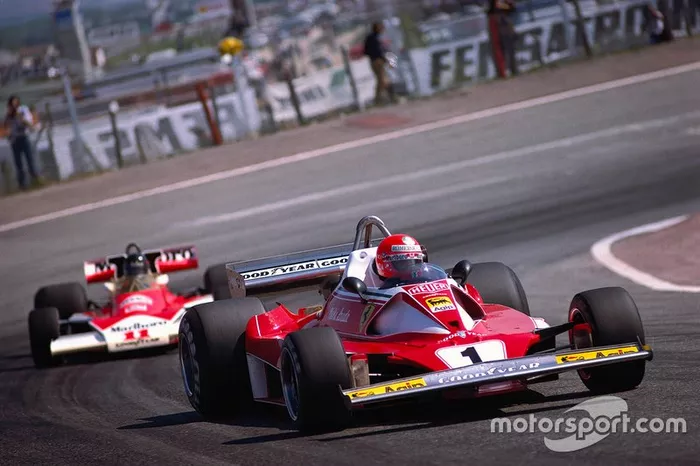
Lauda led from Hunt in the early phase of the Spanish GP, his Ferrari 312T2 ditching the tall airbox for elegant and extremely large NACA style ducts embedded within the cockpit fairing that would funnel air back to the engine.

The cutaway reveals many details about the M23 including showing how the airflow taken in by the two new airbox inlets will feed the engine with a supply of fresh air.
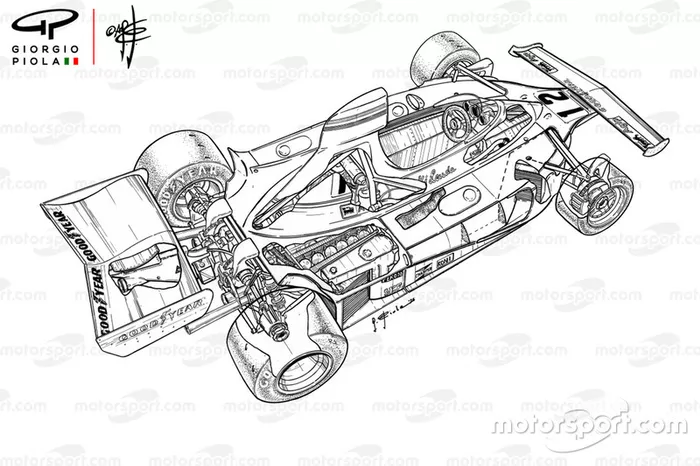
A cutaway of the 312T as used in the opening three races with its tall engine cover airbox.
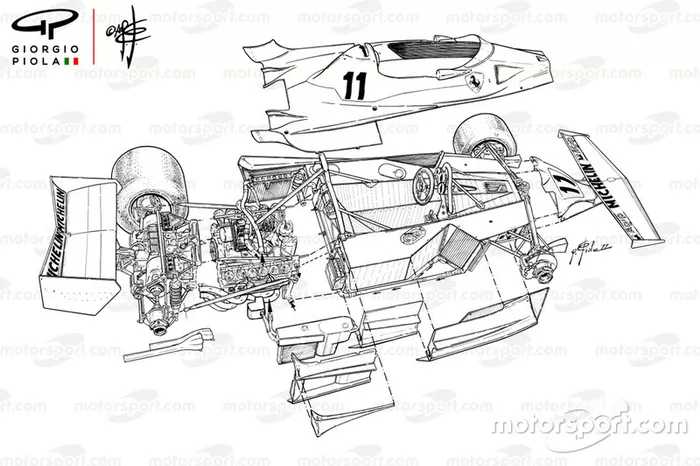
The 312T2 introduced for the Spanish GP did away with the tall airbox, utilising NACA-style ducts at the front of the cockpit fairing which would supply air to the engine.
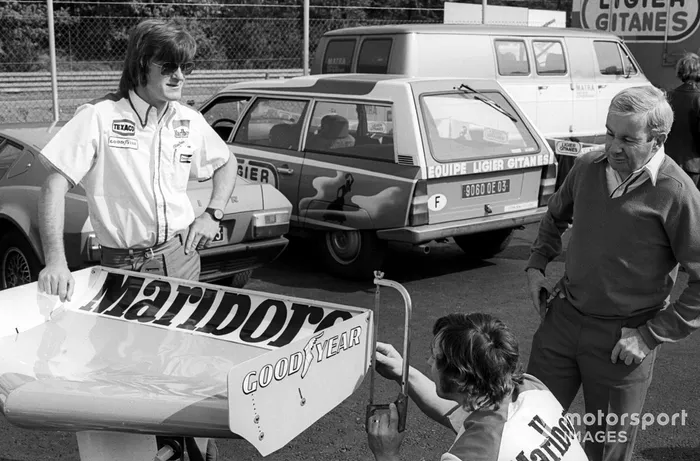
It might seem a little barbaric by modern standards, but in order to comply with the rules a mechanic is using a hacksaw here to cut a length off the metal rear wing endplate.
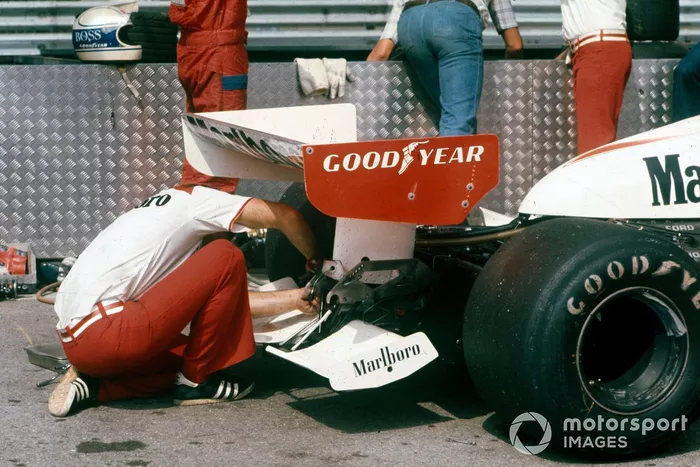
Leftfield: Experimental low mounted rear wings were installed on Jochen Mass’ car and tested for the Monaco GP but not raced.
10
Hunt would go on to win the drivers’ championship that year by just a single point from Lauda, who suffered life threatening injuries in a crash at the Nurburgring but, against all odds, returned to action just three races later at Ferrari’s home race at Monza.
Thanks to Giorgio Piola’s illustrations we’re able to break down the McLaren M23, chronicling a great deal of the car's makeup.
McLaren M23 top and side view
Photo by: Giorgio Piola
- Front wing support
- Battery
- Brake cylinders
- Front anti-roll bar
- Adjustable front wing
- Front brake ducts
- Nose support bracket
- Front suspension assembly
- Upper rocker arm attachment points
- Lower triangle connections (two possible arrangements)
- Lower front suspension wishbone
- Steering assembly
- Lockheed brake calipers and ventilated discs
- Steering arm attachment on upright
- Upper suspension wishbone
- Steering arm
- Fire extinguisher control auxiliary battery
- Instrument panel support
- Front roll bar structure
- Detachable steering wheel
- Gear shifter
- Central fuel tank that creates the seats back
- 3kg and 5kg fire extinguishers
- Side tank with deformable structure
- Bib to help create ‘ground effect’
- Cockpit fairing attachment
- Central fuel tank
- Main roll structure
- Refueling cap
- Oil tank
- Medical air cylinder
- Radiator protection net
- External fire extinguisher pull
- Water radiator
- Connection between passenger compartment and engine
- Oil cooler in regulatory position
- Ignition box
- Rear brake duct
- Air intake
- Rear shock absorber
- Starter motor (driven by compressed)
- Upper rear suspension support
- Lower rear suspension support
- Gearbox spacer flange
- Upright attachment point
- Frame for attaching the upper suspension rod and shock absorber assembly
- Adjustable top flange for camber variations
- Lower upright attachment point
- Rear anti-roll bar
- Hewland FG400 6 speed gearbox
- New wing support
- Connecting point for compressed air to engage starter motor
- Dashed line - the left shock absorber assembly
- Triangular wishbone, which is lighter than the parallel arms previously used
- Rear wing adjuster
- Rear light
- Rear wing support and oil recovery tank
- Lockheed brake caliper
- Pipework to recover oil from the tank
- Gearbox oil cooler
- Holes in the endplate to very the wings incidence
- The wing profile
We want your opinion!
What would you like to see on Motorsport.com?
Take our 5 minute survey.
- The Motorsport.com Team
Read and post comments
Read also :
Share Or Save This Story
Copy link
Share on Viber
Previous article Horner: F1 should consider short-term customer car option
Next article The secrets of Formula 1's six-wheeled racer
Top Comments
There are no comments at the moment. Would you like to write one?
View More & Comment
More from
Giorgio Piola
The fascinating story behind McLaren's most iconic F1 car
Formula 1
Formula 1
The fascinating story behind McLaren's most iconic F1 car

Emilia Romagna GP: F1 technical images from Imola's pitlane
Formula 1
Formula 1
Emilia Romagna GP
Emilia Romagna GP: F1 technical images from Imola's pitlane
The F1 downforce choices that proved key at the Saudi GP
Formula 1
Formula 1
Saudi Arabian GP
The F1 downforce choices that proved key at the Saudi GP
Latest news

Hamlin says Chevy teams 'suck at the teat' of Hendrick on superspeedways
NASCAR Cup
NAS NASCAR Cup
Talladega II
1 h
Hamlin says Chevy teams 'suck at the teat' of Hendrick on superspeedways
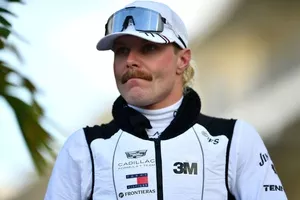
Valtteri Bottas denies he might lose his Cadillac seat for F1 2027
Formula 1
F1 Formula 1
United States GP
1 h
Valtteri Bottas denies he might lose his Cadillac seat for F1 2027

AJ Foyt Racing signs Josh Pierson to multi-year deal beginning with 2027 IndyCar season
IndyCar
Indy IndyCar 2 h
AJ Foyt Racing signs Josh Pierson to multi-year deal beginning with 2027 IndyCar season
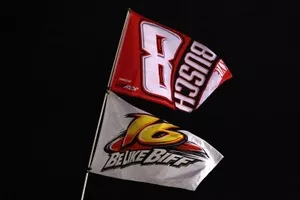
Kyle Busch and Greg Biffle named co-winners of Comcast Community Champion of the Year Award
NASCAR Cup
NAS NASCAR Cup 2 h
Kyle Busch and Greg Biffle named co-winners of Comcast Community Champion of the Year Award
Feature
Discover prime content


Subscribe and access Motorsport.com with your ad-blocker.
From Formula 1 to MotoGP we report straight from the paddock because we love our sport, just like you. In order to keep delivering our expert journalism, our website uses advertising. Still, we want to give you the opportunity to enjoy an ad-free and tracker-free website and to continue using your adblocker.
You have 2 options:
- Become a subscriber.
- Disable your adblocker.
Subscribe now Already subscribed? Sign in here
Already disabled your adblocker?
Reload page
Manage Alerts
Subscribe