Interview
Formula 1 Mercedes AMG F1 W07 launch
Mercedes: 2016 Technical briefing with Paddy Lowe
Stable regulations challenge engineers to dig deep and find "mini revolutions" for the F1 W07 Hybrid chassis and PU106C Hybrid Power Unit
Edited: Feb 22, 2016, 7:40 AM
Copy link
Share on Viber


What were the main lessons learned from 2015 and how will these help the team progress in 2016?
"After a highly successful season all round in 2015, our priority has been to identify the areas in which we were weakest and to try to improve on those. Our objective is excellence in all areas and, while we had some fantastic results last year, there are many areas in which we can still be much better. That's the kind of culture we try to instill throughout the whole organisation - one of constantly striving to reach something better. We had a number of races that didn't go to plan in 2015 - Singapore in particular - so there were a lot of things that needed improving for 2016. We are seeking optimisation absolutely everywhere."
The rules for 2016 are relatively stable - have you gone for evolution or revolution with the new car?
"It's difficult to have a complete revolution when the rules have stayed pretty much the same year on year. But we aim to make minor revolutions wherever we can - even within a small context. We may look at a completely new packaging solution or suspension concept, for instance. So, while the car may look very similar to its predecessor from the outside - as is inherent within stable regulations - underneath there are quite a lot of mini revolutions that make up an overall evolution for the new season."
Just how tough is it to find extra performance under stable regulations?
"It's very tough to find performance under a stable set of regulations and we were particularly pleased with how the car turned out in 2015 when we had the same situation. The team did a fantastic job - digging very deep to find all sorts of innovations in areas that might have been considered static. 2016 is another carry-over year from a regulatory point of view and potential gains inevitably become harder to find under these circumstances. This is what tests an engineering team the most and I must say that this team has been very good at that. It's far easier to find performance when you have a new set of rules, that's for sure."
What are the major rule changes for 2016 that the team has been responding to?
"On the mechanical side, the main rule change is around the separate ducting of exhaust tail pipe and waste gate. But, in reality, that's not had a major effect. The biggest structural change is on the chassis side, where we've raised the protection area around the driver by 20mm and increased the side impact test load from 15 to 50kN. This is a substantial increase in the load that has to be taken by the chassis as that point and will give much greater protection to the driver."
New concepts for 2016 will have minimal proving time on track with the reduction in winter testing. How big an impact will this have on preparations for the season ahead?
"The amount of testing permitted each season has been reduced progressively in recent years. We've now reached a new minimum in terms of winter testing, with two banks of four days. That's something the team has been preparing for by producing better designs and undertaking better preparation and testing in the R&D lab so that we're as well placed as possible to hit the ground running.
What's different for 2016 is actually not so much that there are only two tests - but that they're both very close to the first race of the season. This has notably reduced the extent to which we can upgrade the car from 'launch spec' to the first race spec. That window is now very narrow, which reduces the number of potential upgrades ahead of the opening Grand Prix weekend."
Tyres will be the focus of attention, with a new compound and a change in the race weekend allocation format. How will this work and will be the impact?
"Firstly, there is now a new ultra soft compound tyre which we expect to see for the first time in Monaco. Generally, we've felt that even the soft and supersoft have been too hard for this circuit, so the ultrasoft will hopefully be a good solution there. The new regulation that allows three compounds per race appears quite complicated at first - but in practice it's a lot simpler than it sounds!
The intention is to create more uncertainty in the races - and I think where we'll see that uncertainty is at those events where there is no definitive choice of compound for Sunday. We may see teams taking a gamble, which should produce more variation and some interesting races. Once again, a lot has been asked of Pirelli in terms of their contribution to the spectacle. They've done a great job in recent seasons and I'm sure that will continue with these new additions for 2016."
There has been much talk about a head protection device for introduction in the future. What is the status of this project?
"Since I first came into Formula One in the late eighties, the advancements in safety have been substantial. This has been particularly visible on the cars themselves, with the impact structures and load tests now in place - but also in other aspects of the sport, such as circuit design and facilities. However, as with every aspect of a car, there is always room for improvement. In my view, the driver's head is the major risk remaining in Formula One and other forms of single-seater racing.
We've seen quite a few near misses and, very sadly, some fatalities in recent years as a result of head injuries. A number of teams, including Mercedes, have strongly supported research into structures that could protect the drivers from such objects. This is a project which has been underway for several years and the motivation to pull this forward and reach a set of regulations as soon as possible has accelerated. There are a number of suggestions on the table and some of them look very realistic, so hopefully we may even see a solution appear for 2017."
Mercedes AMG Petronas
We want your opinion!
What would you like to see on Motorsport.com?
Take our 5 minute survey.
- The Motorsport.com Team
Read and post comments
Read also :
Share Or Save This Story
Copy link
Share on Viber
Previous article Tech analysis: The 12 key changes on the McLaren MP4-31
Next article McLaren-Honda reveals its brand-new F1 car for 2016
Top Comments
There are no comments at the moment. Would you like to write one?
View More & Comment

More from
Mercedes
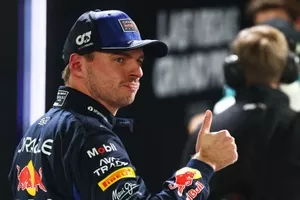
Max Verstappen responds to George Russell after Vegas clash
Formula 1
Formula 1
Las Vegas GP
54 min
Max Verstappen responds to George Russell after Vegas clash
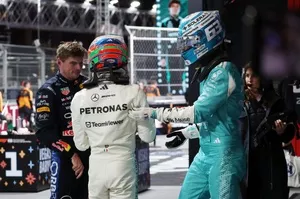
George Russell slams Max Verstappen after Las Vegas clash: ‘He walks around like he’s bigger and better than everyone’
Formula 1
Formula 1
Las Vegas GP
1 h
George Russell slams Max Verstappen after Las Vegas clash: ‘He walks around like he’s bigger and better than everyone’
Latest news
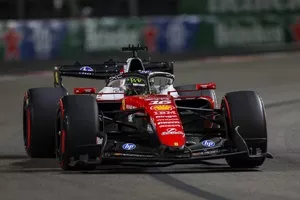
“We lost one second down the straight” – Charles Leclerc upset with Ferrari’s “crazy” Las Vegas deficiency
Formula 1
F1 Formula 1
Las Vegas GP
“We lost one second down the straight” – Charles Leclerc upset with Ferrari’s “crazy” Las Vegas deficiency
Super Formula Suzuka: Kakunoshin Ohta secures title in dramatic fashion as Ayumu Iwasa wins Race 1
Super Formula
SF Super Formula
Suzuka II
33 min
Super Formula Suzuka: Kakunoshin Ohta secures title in dramatic fashion as Ayumu Iwasa wins Race 1
Max Verstappen responds to George Russell after Vegas clash
Formula 1
F1 Formula 1
Las Vegas GP
54 min
Max Verstappen responds to George Russell after Vegas clash
Lewis Hamilton reveals Ferrari F1 car damage after Las Vegas Q2 exit
Formula 1
F1 Formula 1
Las Vegas GP
1 h
Lewis Hamilton reveals Ferrari F1 car damage after Las Vegas Q2 exit
Feature
Discover prime content


Top 10 F1 cars of the 1980s
Formula 1
By Kevin Turner
Top 10 F1 cars of the 1980s
Subscribe and access Motorsport.com with your ad-blocker.
From Formula 1 to MotoGP we report straight from the paddock because we love our sport, just like you. In order to keep delivering our expert journalism, our website uses advertising. Still, we want to give you the opportunity to enjoy an ad-free and tracker-free website and to continue using your adblocker.
You have 2 options:
- Become a subscriber.
- Disable your adblocker.
Subscribe now Already subscribed? Sign in here
Already disabled your adblocker?
Reload page
Manage Alerts
Subscribe