Commentary
Formula 1
Opinion: Why aggregate qualifying would be a disaster for F1
Somehow, Formula 1 finds itself considering an aggregate qualifying system to replace the current one – a move that would make things even worse, argues Jonathan Noble.

Jonathan Noble
Edited: Apr 5, 2016, 8:12 PM
Copy link
Share on Viber




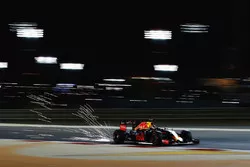


The lunatics are running the asylum. That was the only logical explanation you could come to over the Bahrain Grand Prix weekend, as F1's insanity about what to do with qualifying reached all-new levels.
For despite the teams, the sport's bosses, the fans, and the drivers all agreeing that the new elimination qualifying format does not work, F1 is now looking at a system that could be even worse.
So bad have the alternatives to the knock-out system been, and so entrenched are some of the political positions that they think going back to the 2015 format is unacceptable, F1 now finds itself looking at an aggregate system that will deliver even more negatives than what we have at the moment.
Aggregate again
Eleven years on from F1 ditching a previous two-session aggregate format that involved race fuel levels, the concept of adding drivers' two best laptimes together has gained some traction because of two key arguments.
The first is that it will ensure cars will be on track more, and the second that it increases the chances of shuffling the order because rather than three perfect laps to take pole position, a driver would need six good laps.
Those supporting the idea claim that the evidence of Bahrain – where Lewis Hamilton had a botched first lap in Q3 – shows that it would mix up the order, because his best two laps would have been good enough for only fourth on the grid.
But that argument is flawed, because Hamilton was not driving to the demands of having to do two laps. Had he needed to deliver an extra quick lap – judging by his brilliance at the end of the session – then there is little reason to think he would not have done it right at the end.
In fact, while aggregate qualifying may have some supporters who think it can serve to deliver more randomness, what is fails to take into account is that the ultra-competitive nature of F1 – allied to the technical direction it has taken – means that what we hope for and what is delivered diverge a great deal.
Economy runs
Asking drivers to deliver two laps may well throw up the idealist view of them being on the ragged edge, trying to be inch perfect for twice as long as they need to now.
But the reality is that teams and drivers will quickly work out exactly how best to maximise the life of tyres and energy recovery systems for whatever distance is called for. It will result in drivers most likely having to rein back on their performance for both laps to operate well within the limits of what the tyres and car are capable of.
Rather than being one lap flat out and the next being about keeping the tyres alive, it will probably be quicker overall to do two laps at 95 percent. That same is true of energy recovery – drivers may have to be economical with battery power to stretch out its deployment best for two laps.
We will no longer have drivers and machines at the absolute limit – as Romain Grosjean made clear on Sunday night.
"I am not a huge fan," he said when I asked him for his views on elimination qualifying. "I spoke with Jenson [Button] and said I don't mind. But yeah, qualifying is the place where in Q3 you have two sets of new tyres so you want to go for the best lap time. With this [aggregate] you can't really push.
"In the past you were doing a good lap time with the first set and then you were putting the new set that you have to give back, so you don't care about the flat spot or whatever. And it was just 'come on: let's go for it!'
"If you have to put two times together, it's not the same. You have to be consistent. The fastest lap time may not be the guy that starts on pole. So who is the lap record holder? I think every driver likes last year's qualifying. That's what we want."
Losing those balls-out laps also means there is less chance of mistakes, so actually less chance of the much-desired jumbled up grid order that prompted the mad push for qualifying changes to start with.
A complicated show
From the driving perspective it is not good, and for the fans in the grandstand and on television it will not be a positive either, and that goes beyond no longer seeing cars going flat out.
To try to follow what drivers are doing over two laps will be hugely complicated for television directors and commentators. For while an aggregate style format works at the Indianapolis 500 – it's a short lap and the cars run alone on track so it's easy to follow track graphics and timing screens – all cars together is a recipe for over-complication.
With so many cars out on track – and none of them necessarily setting best sectors – there will not be much narrative to the session. As it was in 2005, it will not be clear who is fastest or how the battle for pole is shaping up, and in the end all anyone will be watching will be the results rather than what the cars are doing.
The other huge concern is that F1 has got itself in to such a pickle over qualifying that it cannot afford for the next step to be wrong: for anything it introduces from now on will be put under tremendous pressure to produce thrills immediately.
Maximum attack
F1 has been working for more than one year now on delivering cars to make drivers' heroes again, so it seems totally counter-productive to want to take away the prospect of allowing them to push to the maximum on a Saturday.
Lewis Hamilton spoke brilliantly ahead of the Bahrain Grand Prix about the way F1 has lost one of its key elements: the need of drivers to put it on the line every time they get into the car.
At one point he gave a perfect explanation of why not being able to push flat out was not good for racing.
Reflecting on why he could not overtake Max Verstappen's Toro Rosso in Melbourne, he said: "I keep explaining it is like you have $100, and you have to spend it over 40 laps. So if you try to get past that one car and spend $90, then I am not going to make it to the end of the race.
"But people don't care about that: people want to see me race until the end of the race. They want to see me sweat my nuts off to get past and make a fantastic manoeuvre."
For the fans, and the good of the sport, we need the drivers being challenged. And F1 history has shown – especially as we are now in territory of lap records being broken again – that what happens on Saturday when they are on the edge does matter.
Making drivers spread their $100 over two laps with an aggregate system, rather than throw it on an all-or-nothing red or black bet, is not the answer.
**
And if you are interested – what is my solution? If we feel there is a need to really shake things up on a Saturday (which I'm not convinced there is, and we'd be better off going back to the 2015 format and perfecting an elimination format for 2017), then it's a 22-lap qualification race.
Reverse grid based on championship position (leader begins last), start behind safety car and away you go. Last man across the line at the end of each lap is knocked out to make up the grid from the back.
We want your opinion!
What would you like to see on Motorsport.com?
Take our 5 minute survey.
- The Motorsport.com Team
Read and post comments
Read also :
Share Or Save This Story
Copy link
Share on Viber
Previous article Haas elects for aggressive Chinese GP tyre strategy
Next article Haas now aiming to score points in every F1 race
Top Comments
There are no comments at the moment. Would you like to write one?
View More & Comment

More from
Jonathan Noble

Brundle awarded OBE in King’s New Year’s honours
Formula 1
Formula 1
Brundle awarded OBE in King’s New Year’s honours
The new rules dilemma that will define the 2025 F1 season
Formula 1
Formula 1
The new rules dilemma that will define the 2025 F1 season
Verstappen issues Red Bull title warning in push for RB21 progress
Formula 1
Formula 1
Australian GP
Verstappen issues Red Bull title warning in push for RB21 progress
Latest news
Oscar Piastri set for grid penalty at F1 Las Vegas GP
Formula 1
F1 Formula 1
Las Vegas GP
6 h
Oscar Piastri set for grid penalty at F1 Las Vegas GP
Rodney Childers pushes back on NASCAR CEO's claims about car comparisons
NASCAR Cup
NAS NASCAR Cup 9 h
Rodney Childers pushes back on NASCAR CEO's claims about car comparisons

“He’s beaten Alpine on his own” - Racing Bulls on why it kept Liam Lawson
Formula 1
F1 Formula 1
Las Vegas GP
13 h
“He’s beaten Alpine on his own” - Racing Bulls on why it kept Liam Lawson

Feature
Discover prime content


Subscribe and access Motorsport.com with your ad-blocker.
From Formula 1 to MotoGP we report straight from the paddock because we love our sport, just like you. In order to keep delivering our expert journalism, our website uses advertising. Still, we want to give you the opportunity to enjoy an ad-free and tracker-free website and to continue using your adblocker.
You have 2 options:
- Become a subscriber.
- Disable your adblocker.
Subscribe now Already subscribed? Sign in here
Already disabled your adblocker?
Reload page
Manage Alerts
Subscribe