Formula 1
Renault's Bob Bell discusses safety
Despite the universal welcoming of the proposed rule changes to Formula One, FIA president Max Mosley is unmoved in his desire to see an immediate reduction in the phenomenal lap times the sport is currently witnessing. The recent announcements ...
Published: May 13, 2004, 9:55 AM
Copy link
Share on Viber

Despite the universal welcoming of the proposed rule changes to Formula One, FIA president Max Mosley is unmoved in his desire to see an immediate reduction in the phenomenal lap times the sport is currently witnessing. The recent announcements signal a return to the less technical dependant style of grand prix racing, but fears continue to surface that something needs to be done before the lap times reach the critical point when driver safety is compromised.

Renault F1 technical director Bob Bell.
Photo by LAT Photographic.
Mosley's comments last month about the FIA possibly intervening to find a reasonable and practical set of solutions if the teams and F1's think tank, the Technical Working Group, fail to deliver, have brought the need for change into focus. Though the present cars are undoubtedly the fastest ever, questions are being raised by several members of the grand prix fraternity as to whether enforcing regulation changes in the middle of a season is the right thing to do.
Renault technical director Bob Bell believes that, for the time being, caution is paramount this year. "I think it important to avoid a knee jerk reaction to this situation," he said in an exclusive interview with Motorsport.com's Max Davies. "At the moment Formula One is displaying a very good safety record and there is a genuine concern that car speeds are increasing to the point where we need to do something to reduce them."
"There are discussions afoot within the Technical Working Group and the teams themselves to try and achieve that. It has to be something that is considered carefully because it's very easy to make a change that on the surface appears to be making an improvement, when in actual fact it could be counter productive."
While numerous ideas have surfaced to reduce car performance, many have been discarded as short-term solutions simply because they would only serve to add to the teams' immense costs. Money is tight in contemporary Formula One and thus any solution introduced this year will have to be one that does not break the bank. Reducing the width of the tyres is one possibility, and one that does not add significantly to costs, but Bell is doubtful of its effectiveness.
"It is possible to say you need to slow the cars down so let's reduce tyre width," he commented. "Well if you reduce tyre width then you probably reduce the drag of the cars which means they will be travelling faster at the end of the straight with less grip to go round the corner. Therefore you perhaps exacerbate the safety problem."
A proven format in the German Touring Car championship, and one that also adds to the unpredictability of the races, is the adding of extra ballast to the cars. For several years there has been talk of a similar system being introduced in Formula One. While many feel such a move would improve the much publicised 'show' aspect of grand prix racing, Renault's technical director is adamant that it would not be a practical solution and that, more importantly, safety could be compromised.
"I don't think it is practical to add weight to the cars," declared Bell. "It's another example of where we need to be careful about doing something that is actually counter productive because at the minute there is a very big debate within Formula One about ballast on the cars and the danger of carrying excessive weight. Several cars in recent memory have lost a substantial amount of ballast -- lumps of Tungsten weighing 10kg coming off the cars."
"Now that's not only a danger to other drivers on the circuit but also potentially to spectators and marshals and that is a very real concern for the FIA and teams alike. So the idea of adding further ballast to slow the cars down would be the wrong way to go."
In light of the current grand prix cars travelling an average three to four seconds faster than they were last year, there is concern in some quarters that a few circuits might not be safe enough to slow the drivers sufficiently before they hit a barrier in the event of an accident. Not allowing himself to be drawn into naming specific race tracks, Bell is realistic in his assessment of the increased dangers drivers face.
"I think it's probably fair to say that some circuits are going to be more of a problem with increasing speed," he surmised. "But I suppose the reality is that the cars are now so fast that even removing several seconds from the lap time still means you are going to have cars travelling at a sufficient speed with sufficient kinetic energy to completely destroy themselves if they encounter a solid object."
Since the 2004 season began, several high ranked team members have expressed concerns that while grand prix cars are undoubtedly safer than at any time before, perhaps Formula One is once again becoming complacent in terms of curtailing the speeds being witnessed. Does Bell agree with his colleagues?
"No I don't think the FIA and the teams are becoming complacent about safety," he said adamantly. "We spend and awful lot of time working on and debating what we can do to improve it, and implementing sensible and realistic changes. I think we take a very focused approach to safety. We look at various specific improvements that we can realistically implement."
The general consensus between the current F1 drivers is that while they are happy to keep the cars as they are, change is probably needed. The problem grand prix racing faces at the moment is whether these changes should be implemented mid-season -- which could increase the risk -- or keep the status quo until 2005. Bell believes the current format for implementing new regulations should not be tampered with.
"I think we need to stick to the practices and the processes that we already have in place, in terms of how we improve safety and how we implement it," he concluded. "The mechanisms we have with the Technical Working Group and the relationship between the teams and the FIA is good and it produces meaningful change and meaningful improvement in safety and more importantly, it does so in a realistic fashion. We are all receptive to anything that would make the sport safer and we're pragmatic about it -- as we have to be."
"It all needs very careful consideration and I think the most important thing to do is to set some realistic deadlines for when change needs to be introduced and to put in place a hard and fast timetable to agree these necessary changes and not just to react to circumstances. Ultimately this is still a sport that carries a risk that will always be there -- we cannot eliminate it completely and design it out. It would cease to be Formula One if. Indeed, it would cease to be motor racing."
We want your opinion!
What would you like to see on Motorsport.com?
Take our 5 minute survey.
- The Motorsport.com Team
Read and post comments
Read also :
Share Or Save This Story
Copy link
Share on Viber
Previous article Sauber interview with Rampf
Next article Royalty opens McLaren technology centre
Top Comments
There are no comments at the moment. Would you like to write one?
View More & Comment
Latest news

George Russell: F1 2026 season a test of "character and resilience"
Formula 1
F1 Formula 1
United States GP
1 h
George Russell: F1 2026 season a test of "character and resilience"
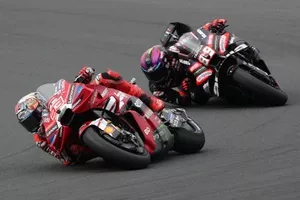
Marc Marquez: ‘Jorge Martin rides on instinct; he just attacks, and that’s his strength’
MotoGP
MGP MotoGP
Australian GP
2 h
Marc Marquez: ‘Jorge Martin rides on instinct; he just attacks, and that’s his strength’
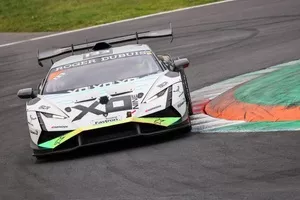
Lamborghini Super Trofeo | North America, Race 2: Bamber dominates to take the win
Lamborghini Super Trofeo
LBST Lamborghini Super Trofeo
World Finals - Monza 2026
2 h
Lamborghini Super Trofeo | North America, Race 2: Bamber dominates to take the win

Belgian firm to take over Renault/Alpine engine facility in Viry
WEC
WEC WEC 2 h
Belgian firm to take over Renault/Alpine engine facility in Viry
Feature
Discover prime content

Subscribe and access Motorsport.com with your ad-blocker.
From Formula 1 to MotoGP we report straight from the paddock because we love our sport, just like you. In order to keep delivering our expert journalism, our website uses advertising. Still, we want to give you the opportunity to enjoy an ad-free and tracker-free website and to continue using your adblocker.
You have 2 options:
- Become a subscriber.
- Disable your adblocker.
Subscribe now Already subscribed? Sign in here
Already disabled your adblocker?
Reload page
Manage Alerts
Subscribe