Breaking news
Formula 1
RML could supply independent F1 engine “within eight months”
British motorsport engineering specialist RML believes it can have a clean-sheet ‘client’ F1 engine ready within eight months – if the FIA’s vetoed proposal gets resurrected.

Charles Bradley
Edited: Nov 25, 2015, 8:21 PM
Copy link
Share on Viber

The FIA plan for the alternative engine was dismissed by the Formula 1 Commission yesterday, as the votes of the teams went against the proposal, which was jointly championed by the FIA and Bernie Ecclestone.
Instead, F1’s current engine manufacturers have agreed to address the key issues that led to the proposal of the alternative engine.
But RML’s Michael Mallock – whose firm was invited to tender by the FIA – believes the low-cost client plan could return to the table in the future, if the manufacturers cannot provide a workable solution.
Of the outcome of yesterday’s vote, Mallock said: “Obviously it was disappointing, but I’d say it’s hardly surprising that it hasn’t gone through immediately.
“The existing guys have obviously made a lot of investment and they want to maximize the return on that.
“But let’s see what happens in the coming weeks, when the discussions start about how they’re going to rejig what they’re currently doing.
“If things do change around again, we’re ready to jump straight in.”
RML poised to press green light
Mallock says that his firm – which was also invited to tender as a race team for the 2010 cost-capped entries – would be ready to supply F1 teams should the plan reemerge and should it win the FIA’s tender.
“We were very pleased to be invited into the process by the FIA, and it was something we thought was a viable proposition – both as a supplier and for the good of the championship and the teams. It was a genuine opportunity to be involved in F1.
“[In terms of timescale] we’re pretty confident. If it started now, it would be a comfortable process for us – we’d have quite a lot of time in hand.
“One of the key things from our proposal was that it was to be a clean-sheet design – a bespoke unit. That’s what we think was required to hit the targets that the FIA had set out. We’re used to getting engines together in a very short, condensed timescale and getting them on-track and reliable.
“We’ve got a nominal timeline of potentially under eight months. That’s from the start of design to something running on the dyno. Being motorsport, timelines do tend to shift.
“For example, the WTCC 1.6 GRE that we did, that was actually running on track – doing endurance testing – in under eight months from when we pressed the button on the design.”
Figures add up for supplier
Mallock believes that the client engine could be commercially viable even if only one team chose to run the engine – which would likely be a 2.5-litre V6.
“The way the FIA has drafted the regulations is really very simple,” he added. “It is cost-efficient. The costs to the teams are significantly lower than they are at the moment, because of the hybrid side.
“The framework of the regulations is a power unit that has to be efficient, reliable and hit the power targets, and tuneable as well – in line with any performance balancing measures they chose.”
We want your opinion!
What would you like to see on Motorsport.com?
Take our 5 minute survey.
- The Motorsport.com Team
Read and post comments
Read also :
Share Or Save This Story
Copy link
Share on Viber
Previous article Celis has one eye on 2017 Force India race drive
Next article FIA issues track limits warning for Abu Dhabi GP
Top Comments
There are no comments at the moment. Would you like to write one?
View More & Comment

More from
Charles Bradley

Mika Hakkinen on his darkest day in F1
Formula 1
Formula 1
Mika Hakkinen on his darkest day in F1
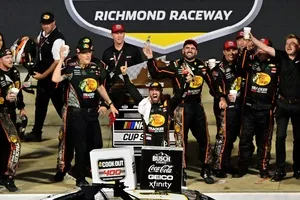
Dillon: Spotter was “wrong” to shout “wreck him!” before Hamlin clash
NASCAR Cup
NASCAR Cup
Richmond II
Dillon: Spotter was “wrong” to shout “wreck him!” before Hamlin clash
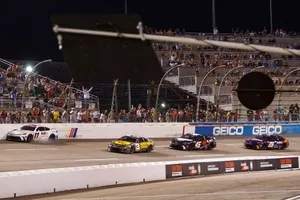
Hamlin: NASCAR stripping Dillon of win would be “warranted”
NASCAR Cup
NASCAR Cup
Richmond II
Hamlin: NASCAR stripping Dillon of win would be “warranted”
Latest news

NASCAR Cup Phoenix starting lineup: Blaney earns pole as Larson struggles
NASCAR Cup
NAS NASCAR Cup
Phoenix II
47 min
NASCAR Cup Phoenix starting lineup: Blaney earns pole as Larson struggles

Ryan Blaney kind of faces a must-win scenario this weekend at Phoenix
NASCAR Cup
NAS NASCAR Cup
Phoenix II
1 h
Ryan Blaney kind of faces a must-win scenario this weekend at Phoenix
Catching Larson in the NASCAR Chase has to start at track where 'I suck'
NASCAR Cup
NAS NASCAR Cup
Phoenix II
2 h
Catching Larson in the NASCAR Chase has to start at track where 'I suck'

Verstappen charges from 24th to ninth as GetSpeed wins Portimao GTWC finale
GT World Challenge Europe Endurance
WCEE GT World Challenge Europe Endurance 3 h
Verstappen charges from 24th to ninth as GetSpeed wins Portimao GTWC finale
Feature
Discover prime content



Subscribe and access Motorsport.com with your ad-blocker.
From Formula 1 to MotoGP we report straight from the paddock because we love our sport, just like you. In order to keep delivering our expert journalism, our website uses advertising. Still, we want to give you the opportunity to enjoy an ad-free and tracker-free website and to continue using your adblocker.
You have 2 options:
- Become a subscriber.
- Disable your adblocker.
Subscribe now Already subscribed? Sign in here
Already disabled your adblocker?
Reload page
Manage Alerts
Subscribe