Analysis
Formula 1 Monaco GP
Tech analysis: Ferrari's unrewarded Monaco updates
Ferrari had little to celebrate after the Monaco Grand Prix, an event for which the Italian squad brought updates specifically designed for the street circuit. Giorgio Piola and Matt Somerfield take a closer look at the developments.
Giorgio Piola Matt Somerfield
Edited: Jun 1, 2016, 11:31 AM
Copy link
Share on Viber

Ferrari
Ferrari's changes for Monaco were more or less circuit-specific, with only small amendments made from the configuration used in Spain.

1200 holes disc brake of the Ferrari SF16-H
Photo by: Giorgio Piola
The relatively low-speed nature of the Monte Carlo circuit means that, although braking force isn't a significant factor, heat can be. As such, the Brembo brake disc employed by Ferrari features the most drill holes available.
The disc is furnished with around 1200 holes in its face to dissipate heat generated when the brakes are in use. In order to retain structural integrity, the drill holes cannot simply be placed in a line - instead they are drilled in a chevron pattern.
You'll also note that the team added another window in the brake drum's surface, from which we can see the disc.
Furthermore, a metal insert is used (can be seen better in the illustration below, with the brake drum removed), straddling the disc and providing not only structural integrity but also a limited effect on how heat is rejected as the insert acts like a heatsink.

Ferrari SF16H brake duct, Monaco GP
Photo by: Giorgio Piola
The brake drum and internal structures are designed to help manage temperatures, with airflow channeled in several different ways not only to reject the heat but to improve tyre performance and aero.
You'll note that, in Monaco, the crossover pipework that features the teardrop- shaped outlets was used once more.

Anti-roll bar on the car of Kimi Raikkonen, Ferrari SF16-H
Photo by: Giorgio Piola
Ferrari concentrated its efforts on mechanical set-up during free practice, with Kimi Raikkonen making a concerted effort to understand how to get the best from his SF16-H on the bumpy streets of Monaco.

Ferrari SF16-H detail
Photo by: Giorgio Piola
Monaco features some of the tightest corners on the calendar and, as such, the suspension is modified (see arrow) in order to accommodate the clearance needed for the likes of Loews hairpin.
The smaller sidepod inlets introduced in Spain were retained for Monaco, and this 2D animation shows just how much smaller the inlets are and how that'll have an impact on the airflow that moves around the sidepod, too.
Toro Rosso
Toro Rosso continues to keep pace in the midfield, an admirable feat considering its budget compared to its sister team.

Toro Rosso STR11 brake duct, Monaco GP
Photo by: Giorgio Piola
Interestingly, a new fin (arrowed) that will undoubtedly be of interest to teams up and down the grid could be found hung from the underside of the lower front wishbone.
Article 11.4 (c) of the technical regulations suggests that no part of the brake duct can protrude past a point 120mm from the inner face of the wheel rim.
The fin is mounted to a section of the suspension shroud that sits within this 120mm restriction and so, whilst it isn't, strictly speaking, in the spirit of the regulations, it is actually within the dimensional constraints of the brake duct, rather than being seen as part of the suspension.
The fact that Toro Rosso doesn't use a conventional brake duct inlet to collate airflow, instead leaving space between the vertical guide vane and the tyre, will accommodate such aerodynamic trinkets.
The fin will undoubtedly change the shape of the airflow shed by the front tyre and dispatched around the floor and sidepod aft of it. However, perhaps what is more interesting is that the fin may offer a different dynamic performance attached to the wishbone than if it were attached to the brake duct.

T Tray strength test
Photo by: Giorgio Piola
The FIA discovered that Daniil Kvyat's car couldn't pass the splitter deflection test in scrutineering after qualifying. The test conducted by the scrutineers sees a 200kg load pushed up underneath the splitter to ascertain how much it moves, with a 5mm allowable tolerance.

Carlos Sainz Jr., Scuderia Toro Rosso STR11 T-Tray detail
Photo by: Giorgio Piola
The Russian was all set to get a grid penalty for this misdemeanor until the team convinced the stewards, with the use of telemetry, that a significant impact with a kerb had caused damage to the splitter and it actually compromised performance.

Scuderia Toro Rosso STR11 detail
Photo by: Giorgio Piola
The floor area ahead of the tyre is under heavy scrutiny by all of the teams at present and Toro Rosso looked to that area to improve improve performance in Monaco too.
Like Force India, it used 16 floor slots in the floor, taking note of how the slow speeds in Monaco affect airflow structures at the front of the car and moved the point at which the floor's performance forward was affected.
The slots help to marginalise the effects of tyre squirt, which is airflow pushed laterally into the diffuser's path by the deformation of the rear tyre.

Toro Rosso STR11 monkey seat
Photo by: Giorgio Piola
Toro Rosso has employed a unique design with its rear wing endplate louvres this season, with an extreme curvature displacing the leading edge. During pre-season testing, it teased us with a monkey seat design that employed a similar ethos, which was used in Monaco.
However, due to the size of the monkey seat in comparison to the rear wing, slots were used to garner a similar effect, improving flow stability and efficiency.
Haas
The projected update path for Haas will be minimal in the team's first year, especially with radical changes in 2017 likely taking up a large percentage of its resources. As such, we're unlikely to see new parts at every GP.

Haas F1 Team VF-16 monkey seat detail
Photo by: Giorgio Piola
The enlarged monkey seat (above) first tested by the team in Barcelona, with an eye on establishing a baseline for Monaco, was tested during free practice but abandoned when the drivers felt it offered little in terms of extra performance.
Sauber

Sauber C35 brake duct detail
Photo by: Giorgio Piola
Sauber's financial issues are bleeding onto the track, with its lack of funding having a serious impact on its development programme. The C35 has been devoid of major updates thus far this season and Monaco was no exception.
Performance gains in this situation have to be found through set-up improvements and one are where laptime can be found is improvements from the brakes and tyres.
As such, in Monaco, we saw the team utilise a metal panel at the bottom of its brake drum, rather than the usual blank carbon cover.
The metal panel featured several teardrop-shaped holes, to release heat from the brakes, which would then radiate into the wheel rim, changing the tyre's performance too.
We want your opinion!
What would you like to see on Motorsport.com?
Take our 5 minute survey.
- The Motorsport.com Team
Read and post comments
Read also :
Share Or Save This Story
Copy link
Share on Viber
Previous article Felipe Massa: Ready for a strong summer now
Next article Tyres "a big issue" for McLaren - Alonso
Top Comments
There are no comments at the moment. Would you like to write one?
View More & Comment
More from
Giorgio Piola

The fascinating story behind McLaren's most iconic F1 car
Formula 1
Formula 1
The fascinating story behind McLaren's most iconic F1 car

Emilia Romagna GP: F1 technical images from Imola's pitlane
Formula 1
Formula 1
Emilia Romagna GP
Emilia Romagna GP: F1 technical images from Imola's pitlane
The F1 downforce choices that proved key at the Saudi GP
Formula 1
Formula 1
Saudi Arabian GP
The F1 downforce choices that proved key at the Saudi GP
More from
Ferrari
On this day: Fernando Alonso wins the world title, Michael Schumacher retires from F1
Formula 1
Formula 1
Brazilian GP
15 h
On this day: Fernando Alonso wins the world title, Michael Schumacher retires from F1
The figures that show Mercedes has lost its supremacy in F1 2026
Formula 1
Formula 1
United States GP
The figures that show Mercedes has lost its supremacy in F1 2026

Latest news
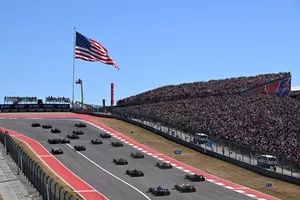
Max Verstappen slams “unacceptable” bumps at Austin F1 track: “It's out of control”
Formula 1
F1 Formula 1
United States GP
6 h
Max Verstappen slams “unacceptable” bumps at Austin F1 track: “It's out of control”

Kimi Antonelli ready to "finish the job" as first F1 title chance beckons at US GP
Formula 1
F1 Formula 1
United States GP
7 h
Kimi Antonelli ready to "finish the job" as first F1 title chance beckons at US GP

How to watch NASCAR at Talladega II: Weekend schedule, start time, entry list, TV
NASCAR Cup
NAS NASCAR Cup
Talladega II
7 h
How to watch NASCAR at Talladega II: Weekend schedule, start time, entry list, TV
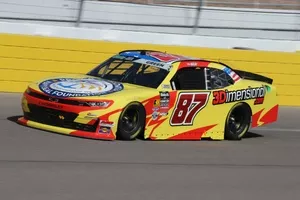
Peterson Racing addresses online abuse after parting ways with Austin Green
NASCAR O'Reilly
NOAP NASCAR O'Reilly
Talladega II
7 h
Peterson Racing addresses online abuse after parting ways with Austin Green
Feature
Discover prime content



Subscribe and access Motorsport.com with your ad-blocker.
From Formula 1 to MotoGP we report straight from the paddock because we love our sport, just like you. In order to keep delivering our expert journalism, our website uses advertising. Still, we want to give you the opportunity to enjoy an ad-free and tracker-free website and to continue using your adblocker.
You have 2 options:
- Become a subscriber.
- Disable your adblocker.
Subscribe now Already subscribed? Sign in here
Already disabled your adblocker?
Reload page
Manage Alerts
Subscribe