Analysis
Formula 1 Hungarian GP
Tech analysis: How Red Bull and McLaren showed their aero prowess
Due to its layout, the Hungaroring is most kind to Formula 1 teams that possess a very particular set of skills, or, more precisely, a specific aerodynamic and chassis philosophy.

Matt Somerfield
Edited: Aug 8, 2017, 10:42 AM
Copy link
Share on Viber

Giorgio Piola's F1 technical analysis
Giorgio Piola is the preeminent Formula 1 technical journalist. View our full selection of Giorgio's technical illustrative content
It’s easy to see then why Red Bull and McLaren had a mini-resurgence during this GP weekend, one that could have seen the ‘Bulls’ push for victory had it not been for that fateful lap-one incident and gave McLaren a glimmer of hope as Fernando Alonso secured the team's best result of the season so far.
Daniel Ricciardo relished the opportunity of mixing it with Mercedes and Ferrari come race day, having suggested that the updates represented a significant leap forward - tantamount to the introduction of a B-Spec car, given the confidence-inspiring level of grip and balance the RB13 had gained.
And while Max Verstappen, on the other hand, struggled initially and had to dial in the car with the new parts, he found his feet and outqualified his Australian teammate.
Despite the updates and a display of genuine pace throughout the free practice sessions from Red Bull, the power unit boost that Mercedes and Ferrari have during qualifying became decisive.
And the 10-second penalty incurred by Verstappen in the race ended his chances of getting involved in the action at the sharp end - but his pace on an extended first stint with the supersoft tyres had showed just how settled the RB13 was around the Hungaroring.
Piling on the pressure

Red Bull RB13 sidepods intake comparison
Photo by: Giorgio Piola
Red Bull was trying to play down the the scope of the Hungary update, but it really can be classed as a significant package, with numerous changes made around the car's midriff that should help the outfit carry performance into the second half of the season.
The sidepods, which were perhaps the largest part of the update and already pretty svelte, have been refined further, as the inlet geometry has been changed (see inset for comparison).
This not only has an effect on the aerodynamic trim of the car but also the car's cooling parameters, which can improve the power unit's output by allowing a better maintenance of temperatures.
The leading edge of the floor, which is upturned on many of the 2017 challengers, has been angled further back as part of the update, exposing three substantial strakes (arrowed) that have been added to influence the direction of airflow.
They're not unique to the Red Bull and are used to guide and straighten the airflow that’s presented to the floor, improving not only the quality of flow on the leading edge but also what is received by the diffuser, increasing total downforce.
Meanwhile, the vertical sidepod deflectors have been revised too, incrementally increased in length to suit their rearward anchoring point on the trailing edge of the bargeboards.
The floor slot just behind has also been revised slightly in order to accommodate all of these new and converging alterations ahead.

Red Bull Racing RB 13, mirrors
Photo by: Giorgio Piola
Changes were made to the RB13’s wing mirrors too, which undoubtedly have an aerodynamic impact on the sidepods as two supports are now used to place the wing mirrors in the desired position.
The mirrors, which are also shaped slightly differently, have an L-shaped support protruding from the cockpit surround and another, likely acting also as a vortex generator, can be found on the leading edge of the sidepod.

Red Bull RB13 turning vanes, old vs. new
Photo by: Giorgio Piola
The team continued to use the new turning vanes introduced at the last round of the championship, which feature a full-length slat on their outer edge (arrowed) and change the shape and direction of airflow that passes by them.
This update, although released ahead of the sidepod one, will undoubtedly have been designed to work in harmony and provide the necessary flow structures that improve performance as a whole.
Sixth degree of separation
McLaren will be pleased with its sixth- and 10th-place finishes, especially as the team has now gone well clear of Sauber in the championship standings.
That will have been good for morale, although McLaren's tally is still not even half that of the nearest team ahead in Renault.

McLaren MCL32, rear wing
Photo by: Sutton Images
McLaren’s performance, which was expected to be above-average given its chassis is more competitive than its engine, was also improved by a couple of revisions - among them a new triple-element T-wing and monkey seat.
Having utilised what has been characterised as a ‘coat-hanger’ style T-wing up until now, the Woking-based team exchanged it for a triple-element winglet.
Each of those elements was also perforated by a slot near the leading edge in order that each of the surfaces be worked harder, especially given their aggressive angle of attack.

McLaren MCL32 monkey seat comparison
Photo by: Giorgio Piola
Meanwhile, the changes made to the monkey seat enabled McLaren to maximise its operation in relation to the diffuser and rear wing.
The support was increased significantly in length, placing the winglet much further away from the exhaust plume, which it is looking to interact with.
The winglet itself was all new too, with a much more extreme curvature present in the central portion and trailing edge, whilst its predecessor had been much flatter.
Other midfield updates
Sauber installed a substantial update package on the C36 in Hungary, as the team endeavors to improve its performance before heading into the summer break.
The Hinwil-based outfit has already been relatively busy from an aerodynamic development point of view this season but the latest aerodynamic upgrade package not only helps in that respect but also maximises the power unit's output and overall efficiency.
The single most important part of the new package is the updated sidepods, with which the designers have made an effort to improve flow through the bodywork by changing the shape of the inlet.
This will undoubtedly improve cooling efficiency, changing the performance window and allowing the team to run the power unit at higher settings for a longer period of time.

Sauber C36, sidepod
Photo by: Giorgio Piola
As part of the revision, it has also taken the opportunity to make some external modifications, with a substantial chunk of bodywork removed from the sidepod's shoulder, so much so that a blister is now used to cover the side impact protection spar (arrowed).
This crash diet changes the airflow's behaviour in quite a critical part of the car, with flow ordinarily looking to move off in an undesirable direction.

Sauber C36, bargeboards
Photo by: Giorgio Piola
Just ahead of the sidepods, the team has made further changes to its bargeboards, an item that has already seen its attention in recent races, as five vertical slots have now been added - reducing the chance of flow separation and redistributing the pressure from one side of the surface to the other.

Sauber C36, rear
Photo by: Sutton Images
The team has already utilised numerous T-wing configurations throughout the first half of the season, but as part of its higher-downforce package for Hungary it made further revisions.
The twin-element winglet is now home to full-length leading edge slots, as it looks to make more downforce from the highly efficient surfaces, whilst the team also ran the looped lower T-wing used earlier in the season (arrowed).
**Toro Rosso'**s season hasn't really kicked into the same kind of gear we've come to expect from the small Italian team, but it is still mixing it in the midfield and updates introduced in Hungary look set to help consolidate its championship position at least.

Scuderia Toro Rosso STR12 side detail
Photo by: Giorgio Piola
The turning vanes that can be found hung from the underside of the chassis have been revised and now feature a plethora of slots in the footplate, as the designers look to improve flow to the sidepods, bargeboards and floor downstream.

Scuderia Toro Rosso, bargeboards
Photo by: Sutton Images
The bargeboards have also been revised with a slot added midway along the length of the second surface (white arrow).

Scuderia Toro Rosso, cockpit fin
Photo by: Sutton Images
The team also decided to work the flow over the top surface of the sidepods a little harder, introducing another pair of chassis winglets, this time just ahead of the wing mirrors (red arrow).

McLaren MCL32 and Mercedes W08 diffusers comparison
Photo by: Giorgio Piola
The outer section of the diffuser was also adjusted as Toro Rosso introduced the tail-style gurney extensions that we've seen the likes of Mercedes and McLaren use for some time now.

Carlos Sainz Jr., Scuderia Toro Rosso STR12 rear wing detail
Photo by: Sutton Images
Lastly, the rearward control flap on the monkey seat was revised with the overall shape broadened, while a central notch was also added.
We want your opinion!
What would you like to see on Motorsport.com?
Take our 5 minute survey.
- The Motorsport.com Team
Read and post comments
Read also :
Share Or Save This Story
Copy link
Share on Viber
Previous article Red Bull: Catching Mercedes, Ferrari down to Q3 engine modes
Next article Kubica a rival for Renault F1 2018 seat - Rowland
Top Comments
There are no comments at the moment. Would you like to write one?
View More & Comment

More from
Matt Somerfield

Gallery: How F1 tech evolved during the 2024 season
Formula 1
Formula 1
Gallery: How F1 tech evolved during the 2024 season
How McLaren’s rear wing push changed the game in F1
Formula 1
Formula 1
How McLaren’s rear wing push changed the game in F1
How 2026 F1 rules will help avoid identikit designs
Formula 1
Formula 1
How 2026 F1 rules will help avoid identikit designs

More from
Red Bull Racing

Max Verstappen "needs to understand what happened" after "night and day" F1 comeback in Brazilian GP
Formula 1
Formula 1
Sao Paulo GP
9 h
Max Verstappen "needs to understand what happened" after "night and day" F1 comeback in Brazilian GP
‘I’ll try to win, somehow’ – Can Lewis Hamilton and Max Verstappen fight back for F1 Brazilian GP victory?
Formula 1
Formula 1
Sao Paulo GP
17 h
‘I’ll try to win, somehow’ – Can Lewis Hamilton and Max Verstappen fight back for F1 Brazilian GP victory?
Latest news
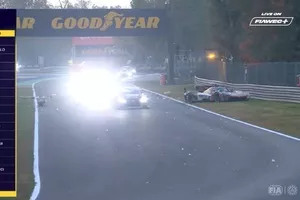
WEC drivers question lack of full-course yellow after heavy Monza crash
WEC
WEC WEC
Monza
29 min
WEC drivers question lack of full-course yellow after heavy Monza crash

Kyle Larson, Cliff Daniels and the Hendrick 5 are who we say they are
NASCAR Cup
NAS NASCAR Cup
Homestead-Miami
2 h
Kyle Larson, Cliff Daniels and the Hendrick 5 are who we say they are

Final NASCAR Cup points standings after 2026 Homestead finale
NASCAR Cup
NAS NASCAR Cup
Homestead-Miami
6 h
Final NASCAR Cup points standings after 2026 Homestead finale
Feature
Discover prime content

Subscribe and access Motorsport.com with your ad-blocker.
From Formula 1 to MotoGP we report straight from the paddock because we love our sport, just like you. In order to keep delivering our expert journalism, our website uses advertising. Still, we want to give you the opportunity to enjoy an ad-free and tracker-free website and to continue using your adblocker.
You have 2 options:
- Become a subscriber.
- Disable your adblocker.
Subscribe now Already subscribed? Sign in here
Already disabled your adblocker?
Reload page
Manage Alerts
Subscribe