Analysis
Formula 1 Spanish GP
Technical analysis: Ferrari ramps up development push
Ferrari hopes of victory at the Spanish Grand Prix were dashed by a poor qualifying, but a raft of car updates and strong race pace means the pressure is still on Mercedes
Edited: May 19, 2016, 1:45 PM
Copy link
Share on Viber

Giorgio Piola's F1 technical analysis
Giorgio Piola is the preeminent Formula 1 technical journalist. View our full selection of Giorgio's technical illustrative content
For Barcelona, the team introduced a number of developments to help close the gap and, having already focused its attention on it front wing in Russia, the Scuderia have made a concerted effort further down the car in Spain.
Front brake duct

Ferrari SF16-H front detail
Photo by: Giorgio Piola
Brembo categorises Barcelona as medium on its scale, a view shared by Ferrari which ran the disc equipped with 850 cooling holes, rather than the high use 1250 hole disc.
But there was still a concerted push to improve performance in this area, with an asymmetric brake drum layout used to radiate heat into the wheel and then tyre differently.

Ferrari SF16H brake duct, Barcelona
Photo by: Giorgio Piola
At the front of the SF16-H, a new brake duct inlet was employed. Whilst it might immediately seem logical that this was to improve brake cooling, as we can see above, it seems it was primarily focused on providing more airflow to the blown axle.
The blown axle is used to shape the air as it moves around the tyre. Changing the shape of the wake it creates can offer a performance benefit downstream and reduce the effort required by the front wing to turn the airflow around the tyre.
Sidepod

Ferrari SF16-H detail
Photo by: Giorgio Piola
For Spain the sidepod inlet was reduced in size, as can be seen by the height of the yellow marking on the comparison above (Inset: old specification). The team was clearly happy that it was able to deal with the temperatures at the opening few races and set about making aerodynamic gains.

Ferrari SF16-H detail
Photo by: XPB Images
The reduction in size and change in geometry of the inlet means that the sidepod's undercut can be optimised further, improving airflow to the rear of the car, which hopefully improves the performance of the floor and diffuser too.
Rear wing and monkey seat
The rear wing is new too, although the team briefly tested it in Russia before issues with the DRS mechanism curtailed running after Friday practice there.

Ferrari SF16-H detail
Photo by: Giorgio Piola
The changes are fairly subtle but skewed toward creating more downforce, with the mainplane and upper flap both revised. The mainplane's leading edge is tightly rolled forward, with the central portion that meets with the mounting pylon taller in comparison.
The upper flap bows in the opposite direction, with a shorter chord length in the central section. Meanwhile, both the mainplane and upper flap have a much steeper angle of attack which is perhaps most obvious towards the upper flap's trailing edge.
Supplementing the wing's steeper angle of attack, the endplates now have two gradient slots placed under the mainplane, with airflow allowed to move from outside the endplate and energise the underside of the mainplane and top flap.
To add further balance the team utilised a Y150 winglet, which encourages the exhaust plume and surrounding airflow to wash upward, providing assistance to the rear wing.
We want your opinion!
What would you like to see on Motorsport.com?
Take our 5 minute survey.
- The Motorsport.com Team
Read and post comments
Read also :
Share Or Save This Story
Copy link
Share on Viber
Previous article Alonso's engine went into fuel cut-off mode in Spanish GP
Next article Barcelona F1 test: Verstappen quickest on second morning
Top Comments
There are no comments at the moment. Would you like to write one?
View More & Comment
More from
Ferrari
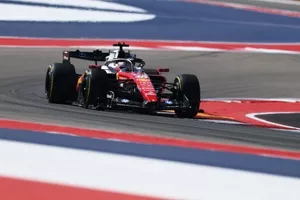
F1 United States GP: Charles Leclerc pips Max Verstappen to top FP1
Formula 1
Formula 1
United States GP
43 min
F1 United States GP: Charles Leclerc pips Max Verstappen to top FP1

Lewis Hamilton: Kimi Antonelli “deserves to be the champion”
Formula 1
Formula 1
United States GP
4 h
Lewis Hamilton: Kimi Antonelli “deserves to be the champion”

Latest news
F1 United States GP: Charles Leclerc pips Max Verstappen to top FP1
Formula 1
F1 Formula 1
United States GP
43 min
F1 United States GP: Charles Leclerc pips Max Verstappen to top FP1
George Russell reveals he lost sleep over his own driving, not the F1 championship
Formula 1
F1 Formula 1
United States GP
1 h
George Russell reveals he lost sleep over his own driving, not the F1 championship
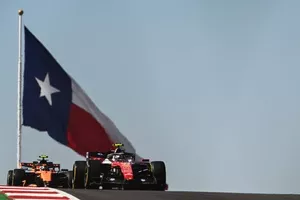
F1 United States GP live commentary and updates - Ferrari leads FP1
Formula 1
F1 Formula 1
United States GP
2 h
F1 United States GP live commentary and updates - Ferrari leads FP1

Max Papis announces departure as IndyCar chief steward
IndyCar
Indy IndyCar 2 h
Max Papis announces departure as IndyCar chief steward
Feature
Discover prime content



Subscribe and access Motorsport.com with your ad-blocker.
From Formula 1 to MotoGP we report straight from the paddock because we love our sport, just like you. In order to keep delivering our expert journalism, our website uses advertising. Still, we want to give you the opportunity to enjoy an ad-free and tracker-free website and to continue using your adblocker.
You have 2 options:
- Become a subscriber.
- Disable your adblocker.
Subscribe now Already subscribed? Sign in here
Already disabled your adblocker?
Reload page
Manage Alerts
Subscribe