Formula 1 Hungarian GP
Why it took so long for Mercedes to expose failed F1 car upgrade
Poor correlation with simulation tools is just part of the explanation for why Mercedes took four grand prix weekends to realise its new rear suspension was a bust

Stuart Codling
Published: Aug 6, 2025, 1:19 PM
Copy link
Share on Viber
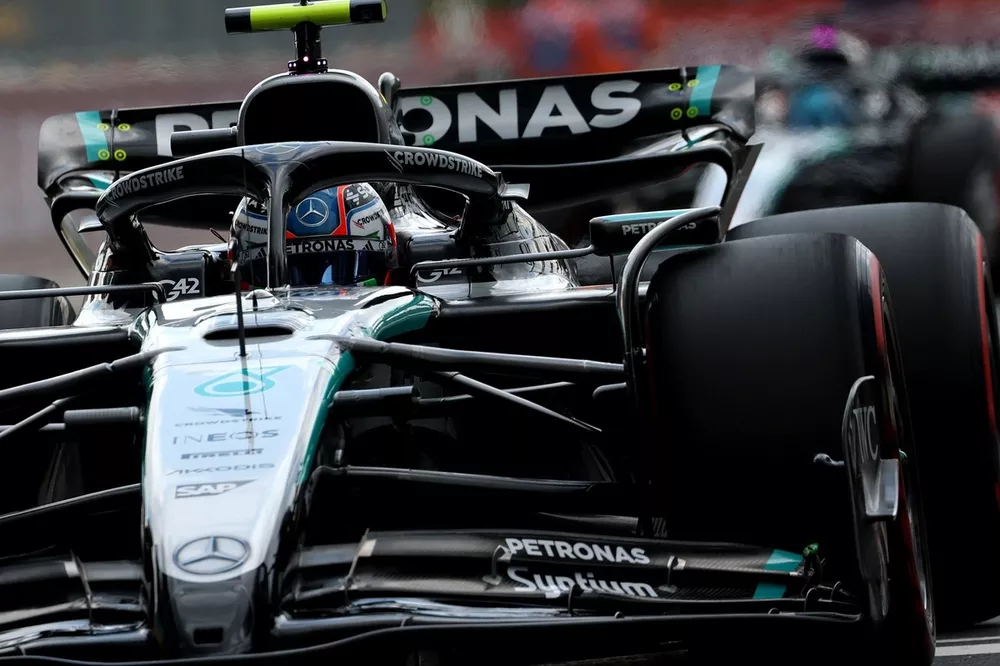
Andrea Kimi Antonelli, Mercedes
Photo by: Sam Bloxham / LAT Images via Getty Images
Mynt
Bitcoin e criptomoedas? Invista na Mynt.com.br, a plataforma cripto do BTG Pactual
“Well,” Mercedes F1 boss Toto Wolff told reporters after the Hungarian Grand Prix, “that rear axle will be ending up in a bin somewhere, I guess…”
The trend line of Mercedes’ mid-season slump in performance is more obvious if you discount the outlier result of the Canadian Grand Prix, where George Russell won and Kimi Antonelli became the youngest-ever driver to stand on a grand prix podium.
Russell claimed four podiums in the first six races, including a remarkable second place in a failing car in Bahrain. But, Canada aside, qualifying and race performance has been problematic since the team introduced a new rear-suspension configuration at Imola – then dropped it, only to put it back on the car in Montreal.
It reverted to the previous spec for Hungary after a poor weekend in Belgium, and both drivers reported greater confidence even if it was only Russell who came away with any points.
This decision-making inertia in recognising and addressing the problem is complex to unpick. The evidence points not only to Mercedes’ simulator tools still failing to correlate with real life, but also differing track configurations and weather conditions adding to the uncertainty.
Feeding into that uncertainty is the human element of engineers being reluctant to let go of a design philosophy they genuinely believe to be beneficial, despite increasing evidence to the contrary.
“Upgrades are here to bring performance, and there's a lot of simulations and analysis that goes into putting parts in the car, and then they're just utterly wrong,” said Wolff in Hungary.
Toto Wolff, Mercedes
Photo by: Sam Bloxham / LAT Images via Getty Images
“And you need to go back to the analogue world and put it in the car and see what it does, and if it doesn't do what it should do – and that's a tricky bit, I guess, for everyone in Formula 1. How do you bring correlation from what the digital world tells you into the real world?
“This is the [latest] example of how it tripped us over.”
Mercedes’ Imola suspension is understood to have been intended to increase the anti-lift properties of the rear end under deceleration, in theory bringing benefits in the form of a more stable aerodynamic platform, and making the rear wheels less inclined to lock as weight transfers forwards. A known consequence of introducing this kind of geometry is that it reduces feedback to the driver.
It also seems to have made the car less rather than more stable, which was unforeseen and therefore took longer to recognise and understand given the very different nature of the tracks and ambient conditions in Canada, Austria, Britain and Belgium. Success in Montreal, where all the braking is done in a straight line and there are no real high-speed corners, effectively fooled the team into persisting with the new rear end.
“We tried to solve a problem with the Imola upgrade, a mechanical upgrade,” said Wolff.
“And that may or may not have solved an issue, but it let something else creep into the car, and that was an instability that basically took all confidence from the drivers, and it took us a few races to figure that out. Obviously, also misled a little bit by Montreal; you think maybe that's not so bad.
“And we came to the conclusion that it needs to go off, it went off, and the car is back to solid form.”
George Russell, Mercedes
Photo by: Zak Mauger / LAT Images via Getty Images
Given the vast resources of finance and brainpower available to them, it may seem extraordinary for a team to take so long to recognise a fundamental performance issue. But as trackside engineering director Andrew Shovlin explained in the FIA’s mandatory pre-race ‘show and tell’ briefing, Mercedes had been experimenting with set-ups over the intervening races – experiments which required consistency.
Writing in GP Racing magazine in 2023 regarding Mercedes’ failed W13 ‘zeropod’ concept, veteran engineer Pat Symonds highlighted some key issues which often lead engineers down blind alleys.
“Performance optimisation is a multi-dimensional problem and not an easy one to understand, particularly if the data you have is sparse,” he explained.
“It’s very easy to pursue a design direction because you become heavily invested in its success. You may feel responsible for a particular direction that has been taken – or you might firmly believe that, in spite of repeated failures, success will appear with the next design iteration.”
Now the challenge for Mercedes is, in the words of Shovlin, to ensure the lessons learned here “will be useful in our knowledge for making the next car”. The team has now fully pivoted towards 2026 development.
Read Also:
“There's no more upgrades,” said Wolff. “I think everything is completely focused and concentrated on next year.
“Now we know that we have a more stable platform that's going to give us some goodness. I think let's see how we can optimise checks and engineering in terms of finding the right set-ups that suit it. And aim to be as competitive as we can.”
We want your opinion!
What would you like to see on Motorsport.com?
Take our 5 minute survey.
- The Motorsport.com Team
Read and post comments
Read also :
Share Or Save This Story
Copy link
Share on Viber
Previous article Franco Colapinto crashes Alpine F1 car in Pirelli test
Next article Why controversial two-stop Monaco GP rule remains for 2026 – for now
Top Comments
There are no comments at the moment. Would you like to write one?
View More & Comment

More from
Stuart Codling
"Colapinto never hit the apex" – Audi's take on contentious Nico Hulkenberg penalty in Brazilian GP
Formula 1
Formula 1
Sao Paulo GP
"Colapinto never hit the apex" – Audi's take on contentious Nico Hulkenberg penalty in Brazilian GP
What the Brazilian GP revealed about F1's ability to cope with rain
Formula 1
Formula 1
Sao Paulo GP
What the Brazilian GP revealed about F1's ability to cope with rain

More from
Mercedes
‘Lewis suspected a conspiracy’ – Nico Rosberg explains how Lewis Hamilton F1 rivalry went awry at Mercedes
Formula 1
Formula 1
‘Lewis suspected a conspiracy’ – Nico Rosberg explains how Lewis Hamilton F1 rivalry went awry at Mercedes
Kimi Antonelli meets Italian president Sergio Mattarella
Formula 1
Formula 1
Kimi Antonelli meets Italian president Sergio Mattarella
Latest news
Hendrick Motorsports announces crew chief change for William Byron and Alex Bowman
NASCAR Cup
NAS NASCAR Cup 9 h
Hendrick Motorsports announces crew chief change for William Byron and Alex Bowman
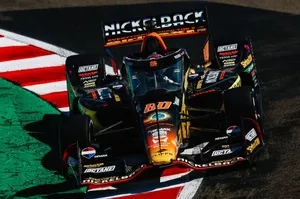
IndyCar 2026 season review: Meyer Shank Racing
IndyCar
Indy IndyCar 9 h
IndyCar 2026 season review: Meyer Shank Racing
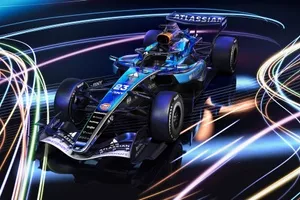
Williams, Aston Martin among new F1 liveries for Las Vegas GP as Acura "replaces" Honda
Formula 1
F1 Formula 1
Las Vegas GP
10 h
Williams, Aston Martin among new F1 liveries for Las Vegas GP as Acura "replaces" Honda
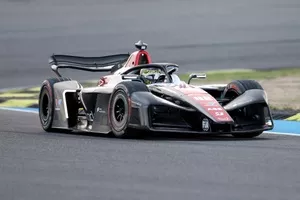
Formula E Jarama test: Mahindra leads Nissan on Day 1 as Gen4 era begins
Formula E
FE Formula E 11 h
Formula E Jarama test: Mahindra leads Nissan on Day 1 as Gen4 era begins
Feature
Discover prime content

Subscribe and access Motorsport.com with your ad-blocker.
From Formula 1 to MotoGP we report straight from the paddock because we love our sport, just like you. In order to keep delivering our expert journalism, our website uses advertising. Still, we want to give you the opportunity to enjoy an ad-free and tracker-free website and to continue using your adblocker.
You have 2 options:
- Become a subscriber.
- Disable your adblocker.
Subscribe now Already subscribed? Sign in here
Already disabled your adblocker?
Reload page
Manage Alerts
Subscribe