General
Ingram's Flat Spot On: NASCAR Factories out?
Flat Spot On by Jonathan Ingram NASCAR Factories Out? If America's manufacturers have to change their role as major players in NASCAR, it wouldn't be the first time. It's happened twice before in the 60-year history of the sanctioning body, but ...
Published: Dec 12, 2008, 4:30 PM
Copy link
Share on Viber

Flat Spot On
by Jonathan Ingram
NASCAR Factories Out?
If America's manufacturers have to change their role as major players in NASCAR, it wouldn't be the first time. It's happened twice before in the 60-year history of the sanctioning body, but never for financial reasons.
It remains to be seen what impact the Big Three's economic woes have on NASCAR's Sprint Cup Series. Surely their participation will be reduced for the short term and possibly cease in the case of bankruptcy. In the long view, is there anything to be gleaned from history?
Having seen the lowly Hudson Hornet suddenly become "Fabulous," the big nameplates in Detroit like Ford, Mercury, Chrysler and Chevrolet first saw the benefits of NASCAR racing as an advertising vehicle in the early 1950's. After introducing the small block V-8, for instance, Chevy dubbed its team the "Hot Ones" in advertising campaigns.
But the shadow cast by the tragedy at Le Mans in 1955 when a car sailed into a throng of fans on the front straight resulted in the departure from racing by the American Automobile Association the same year Chevy's small block was introduced. Two years later, the American Manufacturers Association also pulled out and the factories left NASCAR on relatively short notice.
Because the teams involved in the Grand National series, as it was known, had enough parts and pieces to carry on, and because the overhead was low for a series comprised of relatively short dirt track events, NASCAR's premier series survived. Charismatic drivers like Lee Petty, Junior Johnson, Curtis Turner and then Fireball Roberts carried the day until the Daytona International Speedway was complete.
Daytona ushered in the Roaring Sixties and the factories returned as major players. This time, they stayed for a decade. Once again, the companies' image when it came to safety was a stake when the factories withdrew a second time in 1970-1971. In an era when spectacular -- and sometimes deadly -- accidents were occurring on superspeedways, the factories were simultaneously under pressure from Congress, Ralph Nader and insurance companies on issues of safety.
This time, after the factory withdrawal NASCAR went into a major depression. The timing could not have been worse. Few teams had major sponsors in an era when expensive 500-mile races on superspeedways were a significant part of the schedule. Then the fuel crisis hit in October of 1973, creating more image problems for a sport dependent on gasoline. Chrysler was on the cusp of bankruptcy as well.
Once again, the ingenuity of teams making due with parts and pieces often sourced from drag racing teams or junkyards, plus the popularity of drivers like Richard Petty, David Pearson, Cale Yarborough and Bobby Allison carried the day. If these stars helped fill the grandstands, the independent drivers like Richard Childress, Buddy Arrington, Elmo Langley, J.D. McDuffie and many others helped keep the fields full. These independents, as they were called, built and maintained their own race cars.
At the end of the decade, when things began to look up due to increasing TV coverage and sponsorship, it wasn't the money from R.J. Reynolds Tobacco Co. that NASCAR's leader Bill France Jr. cited as crucial to the sport's survival, even though RJR's participation was a major reason behind sustaining what became known as the Winston Cup.
But was it sufficient? France Jr. pointed to the steady supply of performance parts from GM, which enabled NASCAR to sustain full fields, as the most significant reason why stock car racing was able to weather its depression. For its part, GM had not contravened its agreement to stay out of racing; rather it had declined to stop selling its performance parts and pieces designated for off-road use.
Eventually, Chevy's success with its "back door" operation, which sometimes included special efforts for racing teams, encouraged Ford to return to active participation through its Special Vehicle Operations, launched in 1980 under Michael Kranefuss. But it was not until 2001 that Chrysler eventually returned.
In the present scheme, a far more financially mature NASCAR is likely to resemble any market segment where there has been a bubble caused by rapid expansion. Some teams will go out of business. The teams with deeper pockets will consolidate by merging with those in need of lower overhead and combined operations. Everybody will learn to survive on less overhead, i.e. fewer employees and fewer company planes.
The worst case scenario would be all the factories -- including Toyota -- agreeing to withdraw from active participation in racing. Then overheads would really be drawn down.
NASCAR has done its job anticipating smaller budgets by banning testing on all Sprint Cup tracks (other than tire tests conducted by Goodyear). At the request of NASCAR, Goodyear has already installed a leasing procedure to prevent teams from hoarding tires for testing. That has steadily reduced the benefits of testing at non-Sprint Cup tracks.
The biggest step by NASCAR has been the introduction of the Car of Tomorrow. It's likely to become a matter of practicality as well as theory that teams will be able to use fewer cars. (NASCAR also slowed down the introduction of the COT to the Nationwide Series, which should also be helpful in the face of economic problems.)
Will the Sprint Cup weather the current recession? As in the past, the guys behind the wheel are most likely to have the biggest role in sustaining the sport. Never before has NASCAR's premier series had as many popular and talented drivers. If the past is any indicator, they will carry the sport to better days ahead.
Jonathan Ingram can be reached at jonathan@jingrambooks.com.
We want your opinion!
What would you like to see on Motorsport.com?
Take our 5 minute survey.
- The Motorsport.com Team
Read and post comments
Read also :
Share Or Save This Story
Copy link
Share on Viber
Previous article 2009 World of Outlaws Sprint Car Series tentative schedule
Next article Loeb wins Race of Champions at Wembley
Top Comments
There are no comments at the moment. Would you like to write one?
View More & Comment
More from
Richard Petty
Unprecedented: How every Daytona 500 three-peat was derailed
NASCAR Cup
NASCAR Cup
Daytona 500
Unprecedented: How every Daytona 500 three-peat was derailed

Almirola: Wallace can't afford to "screw up" driving Petty's No. 43
NASCAR Cup
NASCAR Cup
Almirola: Wallace can't afford to "screw up" driving Petty's No. 43

Appalachian State houses one of stock car racing’s premier collections
NASCAR Cup
NASCAR Cup
Appalachian State houses one of stock car racing’s premier collections
Latest news
F1 Las Vegas GP: George Russell pips Pierre Gasly in tricky FP2
Formula 1
F1 Formula 1
Las Vegas GP
1 h
F1 Las Vegas GP: George Russell pips Pierre Gasly in tricky FP2
Five drivers set for grid penalties for engine changes at F1 Las Vegas GP
Formula 1
F1 Formula 1
Las Vegas GP
2 h
Five drivers set for grid penalties for engine changes at F1 Las Vegas GP
Cadillac scraps V6 F1 engine, delays entry as PU manufacturer
Formula 1
F1 Formula 1
Las Vegas GP
3 h
Cadillac scraps V6 F1 engine, delays entry as PU manufacturer
LIVE: F1 Las Vegas GP updates - George Russell jumps to top of FP2 times at session end
Formula 1
F1 Formula 1
Las Vegas GP
3 h
LIVE: F1 Las Vegas GP updates - George Russell jumps to top of FP2 times at session end
Feature
Discover prime content
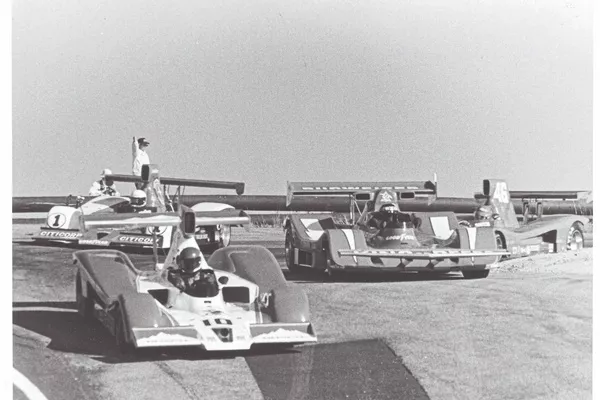
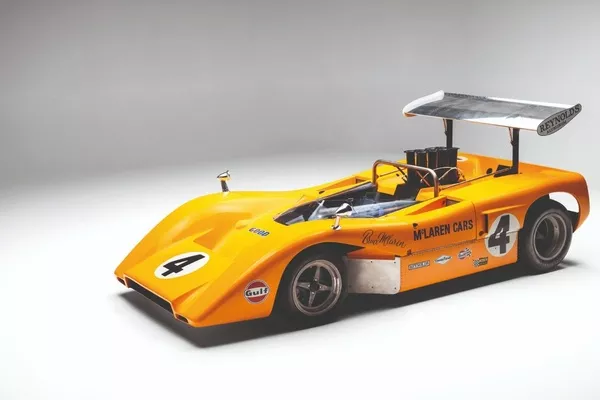
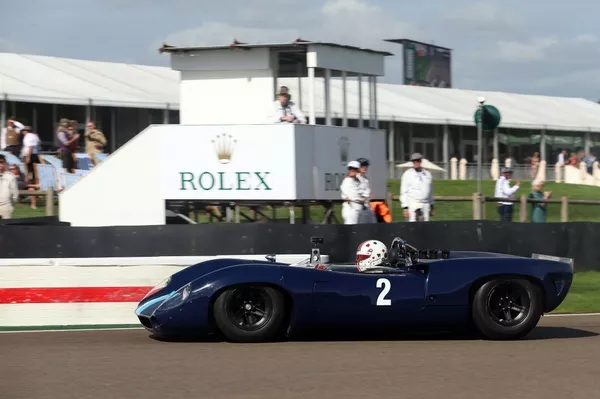

Top 10 Can-Am drivers
General
By Kevin Turner
Top 10 Can-Am drivers
Subscribe and access Motorsport.com with your ad-blocker.
From Formula 1 to MotoGP we report straight from the paddock because we love our sport, just like you. In order to keep delivering our expert journalism, our website uses advertising. Still, we want to give you the opportunity to enjoy an ad-free and tracker-free website and to continue using your adblocker.
You have 2 options:
- Become a subscriber.
- Disable your adblocker.
Subscribe now Already subscribed? Sign in here
Already disabled your adblocker?
Reload page
Manage Alerts
Subscribe