General
Racing in El Lay (review)
[Thanks to Phil Rider--eds] >From OPEN WHEEL, July 1997 If you have ever hoped that you could curl up on a cold winter's night with a good college thesis, here's your chance. As part of the requirement for a master's degree in geography at ...
Edited: May 8, 2001, 12:19 PM
Copy link
Share on Viber

[Thanks to Phil Rider--eds]
>From OPEN WHEEL, July 1997
If you have ever hoped that you could curl up on a cold winter's night with a good college thesis, here's your chance. As part of the requirement for a master's degree in geography at California State University, Northridge, Harold L. Osmer wrote a thesis on the relationship between race tracks and the land they occupied in the Los Angeles area during this century. "Where They Raced: Auto Racing Venues in Los Angeles, 1900-1990" (1996, Osmer Publishing P.O. Box 4741, Chatsworth, CA 91313, 64 pages, softbound. $25, two for $45) is a revision of that thesis, and, despite its formal academic genesis, "Where They Raced" is both readable and interesting.
Osmer's book deals with three primary subjects, divided by type of track and chronology. There were three road courses, the Pasadena-Altadena Hill Climb (which operated between 1906 and 1909) the circular street circuit within the town of Corona (1913-1916), and the Santa Monica road course (1909-1919).
These early races through the streets gave the throngs of spectators an up-close (up-very-close!) look at the speed, endurance, and romance of the still-new automobile. Although racing hastened the paving and improvement of the roads (both the courses themselves and the access roads), its departure from public highways was inevitable. City officials worried about crowd control and safety. Spectators were injured and killed at these events. Pickpockets and other rascals were drawn to the large crowds, and spectator admissions were difficult to collect. By 1920, the novelty of the automobile had been replaced by the novelty of the airplane, and the logistics of staging street races had become too difficult.
The second major section of "Where They Raced" deals with the three board tracks in Los Angeles County. Differing from the casual, county-fair atmosphere of the road courses, the board tracks showcased big-time racing with professional drivers and purpose-built cars.
The first such track in the nation operated between 1910 and 1913 at Playa del Rey. Its first race, on April 8, 1910, was won by Ray Harroun, who went on to more enduring fame at Indianapolis a year later. The Los Angeles Speedway (1920-1924) in Beverly Hills was the most luxurious of the board tracks, with its tree-lined approach roads, box seats, a covered grandstand, and movie stars in the crowd. The third board track, Culver City Speedway (1924-1927), was also the fastest, with a track record of over 144 mph set during its final race.
In the third part, Osmer treats small oval tracks: Ascot Park (1904-1919), Legion Ascot (1924-1936), Mines Fields (1932-1936), Gilmore Stadium (1934-1950), Carrell Speedway (1940-1954), Gardena Speedway (1954-1967), and Ascot Park (1957-1990). Except for the original Ascot Park, which was built as a horse-racing facility, these were built specifically for auto racing, capitalizing on the immense popularity of midgets, roadsters, and "jalopies" in the immediate pre- and post-World War II era.
As with the board tracks, the short tracks closed primarily because of soaring land values. In the early years of this century, civic leaders saw auto racing as a means to help attract visitors to Southern California, but rapid urbanization served to put all of these tracks out of business.
Although Osmer has not written about every track in the Los Angeles area, he has covered those representative of racing in the area. An appendix lists all of the tracks. This large-format paperback includes many photos of racing at these early venues as well as before-and-after aerial photos of many of the sites. The book is an interesting study of a facet of auto racing that few of us ever pause to consider, but as tracks continue to close because of encroaching land development, it is one that we must be aware of. The history of our sport may have something to tell us about its future. -- Phil Rider
We want your opinion!
What would you like to see on Motorsport.com?
Take our 5 minute survey.
- The Motorsport.com Team
Read and post comments
Read also :
Share Or Save This Story
Copy link
Share on Viber
Previous article ATCC: Round 3 results
Next article This Week in Racing History (June 29-July 5)
Top Comments
There are no comments at the moment. Would you like to write one?
View More & Comment
Latest news

Zane Smith fined $50,000 by NASCAR for ramming Carson Hocevar after Phoenix Cup race
NASCAR Cup
NAS NASCAR Cup
Phoenix II
15 min
Zane Smith fined $50,000 by NASCAR for ramming Carson Hocevar after Phoenix Cup race
FIA expects F1 races in Qatar and Abu Dhabi to continue as planned
Formula 1
F1 Formula 1
United States GP
4 h
FIA expects F1 races in Qatar and Abu Dhabi to continue as planned
TDS Racing doubles down on IMSA program with two-car LMP2 return
IMSA
IMSA IMSA 4 h
TDS Racing doubles down on IMSA program with two-car LMP2 return
Why Isack Hadjar doesn’t like F1 sprints anymore
Formula 1
F1 Formula 1
Singapore GP
5 h
Why Isack Hadjar doesn’t like F1 sprints anymore
Feature
Discover prime content
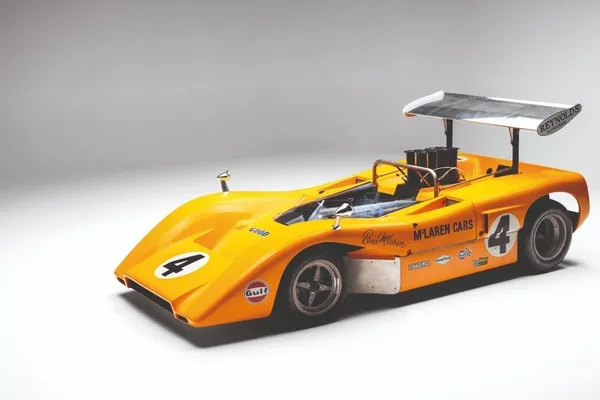
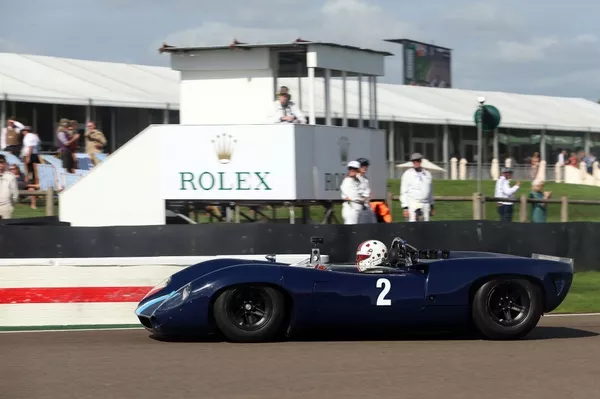

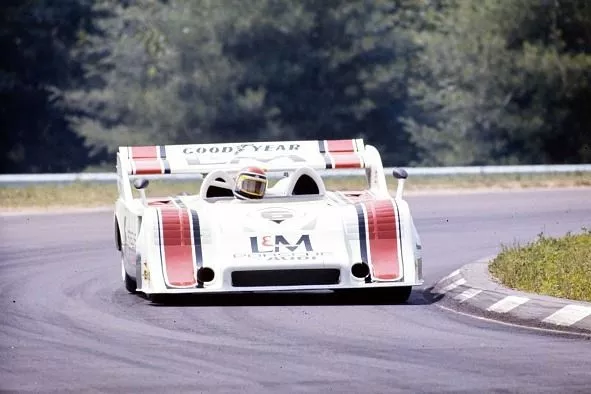
Top 10 Can-Am drivers
General
By Kevin Turner
Top 10 Can-Am drivers
Subscribe and access Motorsport.com with your ad-blocker.
From Formula 1 to MotoGP we report straight from the paddock because we love our sport, just like you. In order to keep delivering our expert journalism, our website uses advertising. Still, we want to give you the opportunity to enjoy an ad-free and tracker-free website and to continue using your adblocker.
You have 2 options:
- Become a subscriber.
- Disable your adblocker.
Subscribe now Already subscribed? Sign in here
Already disabled your adblocker?
Reload page
Manage Alerts
Subscribe