Breaking news
IndyCar
Firestone assessing short-oval tire options for 2017
Following tests at Gateway and Phoenix, Firestone is evaluating which tires will be most suitable for the three short ovals on the 2017 Verizon IndyCar schedule.

David Malsher-Lopez
Edited: Oct 23, 2016, 6:30 PM
Copy link
Share on Viber
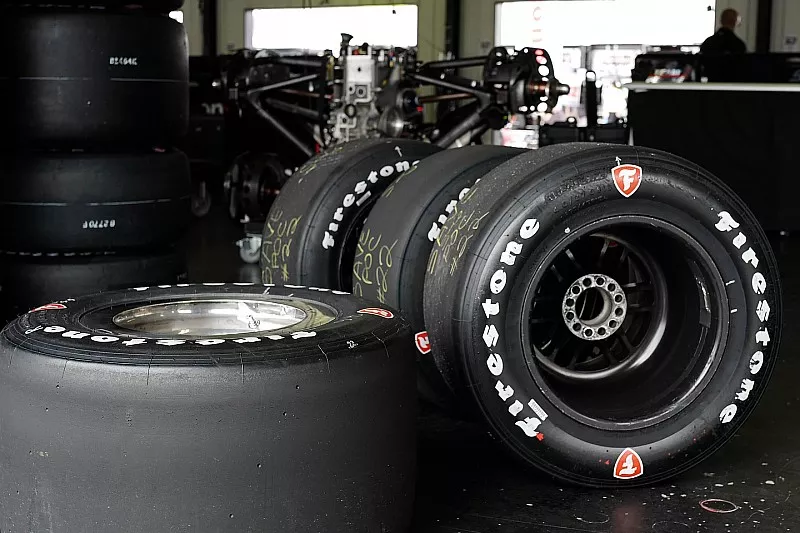

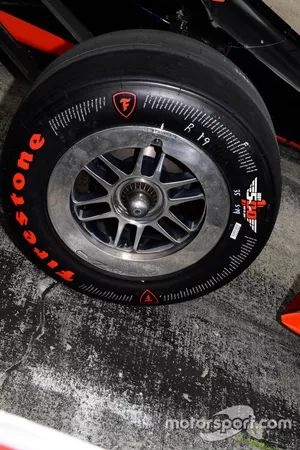


The 1.25-mile Gateway Motorsports Park returns to the IndyCar calendar next year after a 14-year absence, and Firestone has discovered there is some overlap in tire compounds with 1.022-mile Phoenix International Raceway. The banking on Phoenix’s turns vary between eight and 11 degrees, while Gateway’s are between nine and 11.
However despite this commonality, the very different track surfaces means there is a 16mph difference in average speeds around the two ovals, obliging Firestone to investigate the options available.
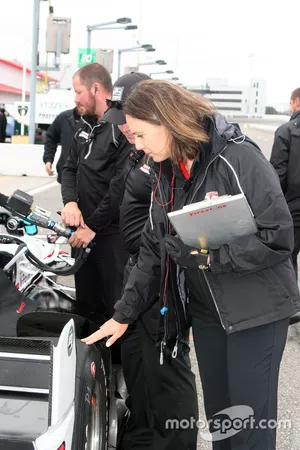
Cara Adams, Firestone’s chief engineer and manager of race tire development, told Motorsport.com: “We tested various tire constructions and compounds at both Phoenix and Gateway, and the right-side compound will be the same as what we ran at Phoenix this year.
“Then we evaluated several left-side compounds – two at Gateway, three at Phoenix – and we’re still looking at the tires we got back afterward and doing some analysis. They may end up being the same left-side compound for each, but we’re waiting for the results.
“There is not a lot of grip at Gateway; it’s a very open-aggregate surface, but we usually use a very soft compound on the left side of the car for short ovals anyway. We were significantly quicker at Gateway last week than when we tested [with Ed Carpenter Racing] in October 2015, when we were at about 166mph. This time around we were doing about 176.”
Adams said data extrapolation was required for the Gateway data due to the different temperatures between the test and next summer’s race.
She said: “It was a bit colder than what we’d expect to see on race weekend next August, and also the downforce levels haven’t quite been finalized yet. So we just have to make the best possible tires for the conditions and then we’ll work with IndyCar to do what’s best for the series.
“There wasn’t a lot of tire dropoff at Gateway, and even when we ran with different boost settings, there wasn’t much difference in tire wear, so we have the situation covered.”
No intermediate road/street course tires
Adams also confirmed that Firestone and IndyCar were no longer considering an intermediate tire for damp or drying track conditions that don’t require full wets.
There had been suggestions that having an additional tire option might open up tactics between teams and drivers in inclement weather at road and street venues, but this talking point was now off the table.
“It was under discussion at IndyCar a few years ago,” said Adams, “and it really seems like that for IndyCar and the speeds we go and the tracks we’re on, the full-depth rain tire is what the drivers preferred.
“Instead we designed a wet tire that wears evenly, even on a drying surface, and as it wears, it turns into more of an intermediate tire.”
Adams also observed that although intermediates would be suitable for damp conditions on natural road courses, of which there are six on next year’s Verizon IndyCar Series schedule, they are less advisable for IndyCar's five street circuits.
“The smooth surfaces that you find on IndyCar’s road courses are very different from the street courses,” she commented. “A street course will always have an uneven surface, with areas where rain pools and puddles, and therefore evaporates much slower.
“In those circumstances you want as much void, as much open area on the tread as possible, to get the water away from the center of the contact patch. The drivers would prefer a tire with a fuller depth on a street course for when they hit those extra-wet patches.
“And then there is a cost factor for the teams, too. We already bring two types of slick tire [a softer, red-walled tire, and the harder, black-walled primary tire]. If we had two different types of wet tire, it would have cost implications for the teams, and that’s something we’re always trying to keep under control.”
We want your opinion!
What would you like to see on Motorsport.com?
Take our 5 minute survey.
- The Motorsport.com Team
Read and post comments
Read also :
Share Or Save This Story
Copy link
Share on Viber
Previous article Castroneves – Young at heart, hungry for more glory
Next article Schmidt confirms Aleshin’s return in 2017
Top Comments
There are no comments at the moment. Would you like to write one?
View More & Comment

More from
David Malsher-Lopez

Alex Zanardi: The man whose name is a synonym for “hero”
IndyCar
IndyCar
Alex Zanardi: The man whose name is a synonym for “hero”
Remembering Michele Alboreto: F1 ace, Le Mans winner and a good man
Formula 1
Formula 1
Remembering Michele Alboreto: F1 ace, Le Mans winner and a good man

IMSA Laguna Seca: Ganassi Cadillac holds off Porsche for victory
IMSA
IMSA
Laguna Seca
IMSA Laguna Seca: Ganassi Cadillac holds off Porsche for victory
Latest news
Why Cadillac F1 boss provoked fresh intrigue by dodging driver question
Formula 1
F1 Formula 1
United States GP
17 min
Why Cadillac F1 boss provoked fresh intrigue by dodging driver question
Lamborghini World Finals | PRO-PRO/AM Qualifying: Pole position for Lind, Bamber, Van der Drift and Marcelli
Lamborghini Super Trofeo
LBST Lamborghini Super Trofeo
World Finals - Monza 2026
32 min
Lamborghini World Finals | PRO-PRO/AM Qualifying: Pole position for Lind, Bamber, Van der Drift and Marcelli
Jorge Martin's endless ordeal since signing for Aprilia
MotoGP
MGP MotoGP
Australian GP
47 min
Jorge Martin's endless ordeal since signing for Aprilia
Johann Zarco retires from Australian GP sprint: It was “dangerous” to continue
MotoGP
MGP MotoGP
Australian GP
1 h
Johann Zarco retires from Australian GP sprint: It was “dangerous” to continue
Feature
Discover prime content

Inside AJ Foyt Racing’s transition: Hauger’s arrival, Ferrucci’s future, and the Pierson waiting game
Feature
IndyCar
Feature
IndyCar
By Joey Barnes
Inside AJ Foyt Racing’s transition: Hauger’s arrival, Ferrucci’s future, and the Pierson waiting game

You Ask The Questions: David Malukas
IndyCar
By Joey Barnes
You Ask The Questions: David Malukas


Subscribe and access Motorsport.com with your ad-blocker.
From Formula 1 to MotoGP we report straight from the paddock because we love our sport, just like you. In order to keep delivering our expert journalism, our website uses advertising. Still, we want to give you the opportunity to enjoy an ad-free and tracker-free website and to continue using your adblocker.
You have 2 options:
- Become a subscriber.
- Disable your adblocker.
Subscribe now Already subscribed? Sign in here
Already disabled your adblocker?
Reload page
Manage Alerts
Subscribe