Breaking news
IndyCar
IndyCar introduces new I-PAS system for evaluating concussion
I-PAS, a clinical eye-tracking computer test wearing goggles similar to a virtual reality headset, has been introduced by IndyCar with immediate effect as part of the sanctioning body's concussion evaluation protocol.

David Malsher-Lopez
Edited: May 17, 2018, 6:15 PM
Copy link
Share on Viber

All drivers competing in the Indianapolis 500 and drivers on the Mazda Road to Indy have been tested by the innovative system known as I-PAS which has been created by Pittsburgh-based Neuro Kinetics, Inc.
The I-Portal Portable Assessment System runs diagnostic tests to evaluate patients with symptoms of dizziness and/or balance disorders, especially those associated with medical conditions such as concussions, migraines or BPPV (benign paroxysmal positional vertigo).
The device integrates clinical eye tracking with a digital display allowing medical professionals to run a series of non-invasive oculomotor, vestibular and reaction time tests. As part of IndyCar’s concussion evaluation protocol, I-PAS provides clinicians with objective measures to help determine when drivers can safely return to competition.
The triggers for concussion evaluation can be clinical symptoms noted by the physician at the scene of an incident, driver descriptions of concussion symptoms and/or ear accelerometer data.
Dr. Terry Trammell, legendary safety consultant to IndyCar, said: "IndyCar’s medical staff has used a number of tools to help improve its evaluation of concussions. I-PAS has proven to be an important part of the decision-making process as to if and when a driver with the possibility of having had a concussion may return to competition."
IndyCar was introduced to the I-PAS technology in March 2016, after Will Power's shunt in practice at St. Petersburg. Although the Penske driver next day set a new track record to win pole position, he later started suffering concussion-like symptoms, and on Sunday morning he was kept out of the race as a precaution.
With aspects of the incident not correlating, Power was sent to be examined by Dr. Steve Olvey, a former IndyCar medical director, at the University of Miami's concussion program. After extensive tests that included I-PAS, it was revealed that an inner ear infection, not a concussion, had triggered the symptoms.
IndyCar began administering I-PAS tests in preparation for the 2017 season and, as part of standard protocol, tested a handful of drivers subjected to forces sufficient to potentially cause a concussion during the season. None of those drivers were found to be outside the normal parameters and were allowed to continue to compete.
I-PAS became a part of the required IndyCar driver physical regimen prior to the 2018 season, according to Dr. Geoffrey Billows, IndyCar medical director.
He said: “IndyCar is particularly well-suited to partner with Neuro Kinetics in the introduction of the I-PAS system, given the sanctioning organization's long history of ongoing data collection. Each IndyCar carries a ‘black box’ that collects chassis G-force data during a crash and there are accelerometers tracking head movement in the earpieces of all drivers.
“This data collection allows analysis of forces that produce injury, and the information is used for real-world reconstruction of the crash to further safety advancements.
"I think the benefit of this device is it doesn't replace anything we're already doing, it's another tool, another piece of the puzzle. It will help us detect concussions in patients that have very subtle findings. We do see that. People call us the next day, 'I feel foggy, not processing information well'. We can bring them back and test them on the I-PAS."
Underway is a project to compare testing of drivers who have sustained an impact with ear resultant averages of at least 50G. The purpose of the project is to attempt to determine if there are detectable changes in drivers who were exposed to one or more potentially concussive events over the course of a season but were not diagnosed with a concussion.
J. Howison Schroeder, president and CEO of Neuro Kinetics said: "IndyCar has taken a unique leadership role with regard to head health and in the safety of its drivers, their teams and their fans. The collaboration with IndyCar, and motorsports in general, has been without peer.
"I think it's impressive that IndyCar has chosen to take this lead and promote what I believe is the first significant addition to a concussional protocol in a pro sport in the last 10- or 15-plus years. We're just ecstatic, flattered, honored, to be the ones that have been able to cross that Rubicon."
We want your opinion!
What would you like to see on Motorsport.com?
Take our 5 minute survey.
- The Motorsport.com Team
Read and post comments
Read also :
Share Or Save This Story
Copy link
Share on Viber
Previous article Andretti, Dixon say passing is tougher at Indy this year
Next article Coyne outlines likely revised Fittipaldi plan
Top Comments
There are no comments at the moment. Would you like to write one?
View More & Comment
More from
David Malsher-Lopez

Alex Zanardi: The man whose name is a synonym for “hero”
IndyCar
IndyCar
Alex Zanardi: The man whose name is a synonym for “hero”
Remembering Michele Alboreto: F1 ace, Le Mans winner and a good man
Formula 1
Formula 1
Remembering Michele Alboreto: F1 ace, Le Mans winner and a good man
IMSA Laguna Seca: Ganassi Cadillac holds off Porsche for victory
IMSA
IMSA
Laguna Seca
IMSA Laguna Seca: Ganassi Cadillac holds off Porsche for victory
Latest news
Colton Herta savours "super special" Austin homecoming as 2027 uncertainty remains
Formula 1
F1 Formula 1
United States GP
5 min
Colton Herta savours "super special" Austin homecoming as 2027 uncertainty remains
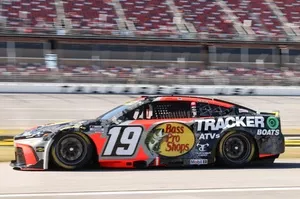
NASCAR Cup Talladega starting lineup: Chase Briscoe beats Austin Hill for pole
NASCAR Cup
NAS NASCAR Cup
Talladega II
1 h
NASCAR Cup Talladega starting lineup: Chase Briscoe beats Austin Hill for pole
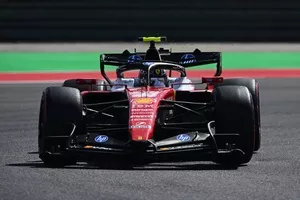
F1 United States GP: Lewis Hamilton pips Max Verstappen in FP3
Formula 1
F1 Formula 1
United States GP
1 h
F1 United States GP: Lewis Hamilton pips Max Verstappen in FP3
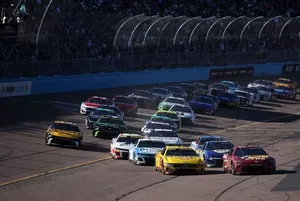
NASCAR plans to modify Phoenix dogleg to lessen driver loads
NASCAR Cup
NAS NASCAR Cup
Phoenix II
1 h
NASCAR plans to modify Phoenix dogleg to lessen driver loads
Feature
Discover prime content

Inside AJ Foyt Racing’s transition: Hauger’s arrival, Ferrucci’s future, and the Pierson waiting game
Feature
IndyCar
Feature
IndyCar
By Joey Barnes
Inside AJ Foyt Racing’s transition: Hauger’s arrival, Ferrucci’s future, and the Pierson waiting game
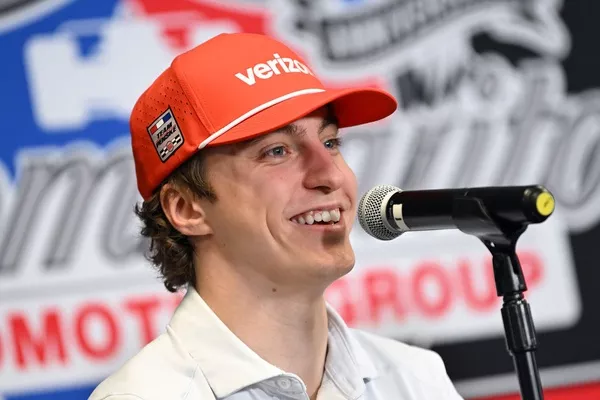
You Ask The Questions: David Malukas
IndyCar
By Joey Barnes
You Ask The Questions: David Malukas


Subscribe and access Motorsport.com with your ad-blocker.
From Formula 1 to MotoGP we report straight from the paddock because we love our sport, just like you. In order to keep delivering our expert journalism, our website uses advertising. Still, we want to give you the opportunity to enjoy an ad-free and tracker-free website and to continue using your adblocker.
You have 2 options:
- Become a subscriber.
- Disable your adblocker.
Subscribe now Already subscribed? Sign in here
Already disabled your adblocker?
Reload page
Manage Alerts
Subscribe