Analysis
NASCAR Cup Texas
Where the rubber meets the road
NASCAR EVP Steve O'Donnell explains why bleeder valves are not on the sanctioning body's radar.

Lee Spencer
Edited: Apr 13, 2015, 9:40 PM
Copy link
Share on Viber


In the advent of Richard Childress Racing’s appeal on Thursday, NASCAR Executive Vice President Steve O’Donnell discussed alternatives to tampering with tires.
Tires were just one of the topics O'Donnell tackled Monday on SiriusXM NASCAR Radio. Although O’Donnell does not appear to be a fan of bleeder valves, he says a tire pressure monitoring system could be an option for teams in the future.
We’d rather go that way than a bleeder valve which potentially creates all kinds of safety issues.
Steve O'Donnell
“That is something that we’re working on that could be part of the digital dash and basically showcase to a driver,” O’Donnell said. “If a driver does have a problem, it would alert them on the dash. Ultimately, what would that do? Hopefully, it will save a car from being wrecked.
“We’d rather go that way than a bleeder valve which potentially creates all kinds of safety issues. That’s why we’re taking the action we’re taking right now with tires. It’s an area that we don’t want to have to police but when we see something we’re going to do that.”
Innovations or excuses?
There were discussions last season that NASCAR was looking into tire sensors to take some of the onus off of Goodyear and place it on teams that were using pressures well below what was recommended. This season, however, NASCAR announced there would be no minimum air pressures.
“I think longer term,” O’Donnell added, “we would go to tire pressure monitoring if we could and could find the right solution with Goodyear.”
In addition to warning a driver when a tire was going flat - similar to on a passenger car - tire monitors could also indicate whether air pressure increased or released at a normal rate.
The next step?
However, a monitor would not solve the continual increase in air pressure that builds over the course of a run as tires heat up.
Before the No. 31 RCR team was penalized for modifications to tires, several drivers and crew chiefs advocated using bleeder valves as a possible solution. Rather than poking microscopic holes in the tires, a bleeder valve would relieve the tire of pressure.
At Martinsville Speedway last month, Jeff Gordon acknowledged that bleeder valves would improve the racing, particularly on a track such as the half-mile paper clip.
So it makes sense to me that we should have bleeder valves. But because we don't, it’s pushing the teams to do things.
Jeff Gordon
“We need bleeder valves,” Gordon said. “We just do. I came from sprint cars where they’re built into the wheel. You set them. They may not be advanced enough for what we need in a Cup car and Cup tire, but it just makes sense.
“It’s crazy what we do with air pressures. These big heavy cars build the air pressures up so much that we’re always trying to start them real low, which causes issues for Goodyear and the teams. Then they just increase, increase, increase. So it makes sense to me that we should have bleeder valves. But because we don't, it’s pushing the teams to do things.”
An explanation
Saturday’s winning crew chief Chad Knaus agrees. When Knaus was honing his skills on short tracks, using bleeder valves were common practice.
“It would definitely be a good thing if the teams were able to do it,” crew chief Chad Knaus said during an interview on SiriusXM NASCAR Radio. “There’s an operating range that these tires work the best at…let’s say the tires work the best at 60 pounds of air pressure. If you start the tire at 60 pounds of air pressure, it’s going to be at the proper operating range immediately. If it bleeds off, as soon as it goes above that 60 pounds of air pressure that means you will maintain that air pressure and you’ll be able to go faster for a longer period of time.
“Obviously, the tires have a certain amount of life and you want to optimize getting as much out of those tires through that life cycle as you possibly can. Right now, what you do is you start lower than that 60psi in hopes that you’re going to get to that 60psi for the meat of the run. For the latter stages of the run, you want to be above 60 psi, right?
“So you’re not going to be as good at the beginning. Hopefully, in the middle portion of the run, that’s where your tires are at the proper operating pressure and then at the end of the run, when the cars aren’t handling as good, it’s because they’re over the operating pressure. So if we could bleed them off and maintain that 60 psi your car will go faster for longer periods of time.”
Knaus believes that on some of the larger tracks such as Auto Club Speedway and Pocono Raceway, teams take a great risk by continually running the tires at lower pressures for extended periods of time.
If we could come up with a safe way to bleed off the tires, that NASCAR is comfortable with, I think that’s a good thing.
Chad Knaus
“From a tire safety standpoint, it could be a good thing," Knaus said of bleeder valves. "That being said, poking a hole in the tire is not a good thing for the integrity of the tire, so that’s going the opposite direction.
"If we could come up with a safe way to bleed off the tires, that NASCAR is comfortable with, I think that’s a good thing.”
Not so fast…
Last week at Texas, Gordon also proposed eliminating the timing lines on pit road.
At Martinsville, the driver of the No. 24 was penalized for speeding entering the pits on Lap 462 while he was leading the race. Admittedly, Gordon was attempting to “take advantage” of the lines – which provide officials with electronic speed traps all along pit road and vary in number depending on the size of the track.
Gordon believes it would simplify the officiating to have a fixed speed limit from the entrance to the exit of the pits.
“We’ve got to get rid of these speed lines,” Gordon said. “It doesn’t make any sense. The speed limit is the speed limit. You should never be able to break the speed limit. You should carry the speed limit all the way down pit road.
“What we do is find pit stalls to try to get around that. So we’re ramping up and slowing down and that’s what got us in Martinsville. We were just too aggressive with it.”
O’Donnell said NASCAR was considering Gordon’s suggestion as something “we could look at in the future.”
“At the time, it was the best system we thought to put in place,” O’Donnell added. “As you see the new digital dash come in in the future and a lot more technology take place at the race track, I think that is something we could look at.
“Jeff has a valid point in terms of where the pit strategies fall out and pit selection, so it is something we’ll look going forward at for sure.”
O’Donnell added NASCAR is working on being more transparent with teams and more “black and white” with their calls. Last weekend was the first race where NASCAR provided video to teams within moments of their infractions.
Gordon is a proponent of NASCAR’s new electronic officiating system where cameras detect violations on pit road across the board.
“I think the camera system speaks for itself,” Gordon added. “When things roll out of the box or guys leave over the wall too soon or you drive through too many boxes, it’s going to bust you. And so it’s made all of us have to be that much cleaner and do our jobs that much better and pay more attention to more things than we used to.
“Before, it was sort of a judgment call on everybody. It’s no longer a judgment call. It’s nice to know that they still look at each stop to verify what the computer or monitors or cameras are telling them. But I like it. I prefer it that way.”
We want your opinion!
What would you like to see on Motorsport.com?
Take our 5 minute survey.
- The Motorsport.com Team
Read and post comments
Read also :
Share Or Save This Story
Copy link
Share on Viber
Previous article Dale Earnhardt Jr. is optimistic after Texas turnaround
Next article It's baby steps for Roush Fenway Racing
Top Comments
There are no comments at the moment. Would you like to write one?
View More & Comment

More from
Lee Spencer

Harvick reflects on career after Atlanta win, honors Dale Earnhardt
NASCAR Cup
NASCAR Cup
Atlanta
Harvick reflects on career after Atlanta win, honors Dale Earnhardt

Chase Elliott: "We have a lot of work to do" after Atlanta showing
NASCAR Cup
NASCAR Cup
Atlanta
Chase Elliott: "We have a lot of work to do" after Atlanta showing

Harvick leads veteran charge at Atlanta Motor Speedway
NASCAR Cup
NASCAR Cup
Atlanta
Harvick leads veteran charge at Atlanta Motor Speedway

More from
Jeff Gordon
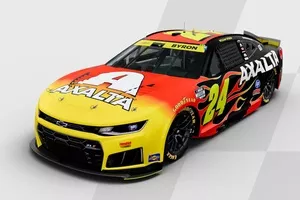
William Byron to run Jeff Gordon throwback Axalta scheme at Phoenix
NASCAR Cup
NASCAR Cup
Charlotte II
William Byron to run Jeff Gordon throwback Axalta scheme at Phoenix
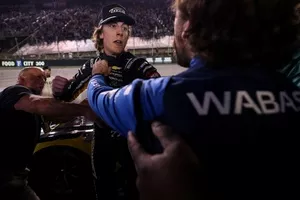
The wildest fights in modern NASCAR Cup history
NASCAR Cup
NASCAR Cup
Bristol II
The wildest fights in modern NASCAR Cup history

Jeff Gordon can relate to Denny Hamlin's Kansas disappointment
NASCAR Cup
NASCAR Cup
Kansas II
Jeff Gordon can relate to Denny Hamlin's Kansas disappointment
Latest news
George Russell has lost 90 points to Max Verstappen in F1 2026 runner-up battle
Formula 1
F1 Formula 1
Sao Paulo GP
37 min
George Russell has lost 90 points to Max Verstappen in F1 2026 runner-up battle

Aprilia: “Marco Bezzecchi couldn’t avoid the collision; Marc Marquez moved in on him"
MotoGP
MGP MotoGP
Qatar GP
1 h
Aprilia: “Marco Bezzecchi couldn’t avoid the collision; Marc Marquez moved in on him"

How the Racing Bulls pendulum is swinging back towards undeniable Liam Lawson
Formula 1
F1 Formula 1
Sao Paulo GP
2 h
How the Racing Bulls pendulum is swinging back towards undeniable Liam Lawson

Subscribe and access Motorsport.com with your ad-blocker.
From Formula 1 to MotoGP we report straight from the paddock because we love our sport, just like you. In order to keep delivering our expert journalism, our website uses advertising. Still, we want to give you the opportunity to enjoy an ad-free and tracker-free website and to continue using your adblocker.
You have 2 options:
- Become a subscriber.
- Disable your adblocker.
Subscribe now Already subscribed? Sign in here
Already disabled your adblocker?
Reload page
Manage Alerts
Subscribe