NHRA
Del Worsham Indianapolis Preview
INDIANAPOLIS (August 24, 1999) The 45th annual U.S. Nationals is rapidly approaching and Del Worsham hopes that his past performances at Indianapolis Raceway Park along with his recent win in Seattle will bolster his chances at this year's Labor ...
Edited: Apr 15, 2002, 11:45 PM
Copy link

Share on Viber

INDIANAPOLIS (August 24, 1999) The 45th annual U.S. Nationals is rapidly approaching and Del Worsham hopes that his past performances at Indianapolis Raceway Park along with his recent win in Seattle will bolster his chances at this year's Labor Day Classic. In 1992, the Checker/Schuck's/Kragen Firebird driver advanced to the final round before losing to Cruz Pedregon, and at last year's event, Worsham advanced to the semifinals before losing to eventual race winner John Force. After a season that has had its share of ups and downs for the California native, Worsham is hoping that a recent spark of performance in the Chuck Worsham-tuned Pontiac can be maintained through the final seven races of the year. He is currently fourth in the Winston points standings with an eye on a top-five Funny Car finish. Earlier this season at Houston, Worsham blasted to a new career-best elapsed-time at 4.967 seconds, qualified fifth and advanced to the semifinal round of eliminations. At Dallas, he reset his personal-best top-speed at 308.32 mph. Del Worsham's professional drag racing career began in 1991 when at age 21, he became the youngest Funny Car driver in NHRA history to win a national event at the Southern Nationals in Atlanta. He capped his rookie season with a second victory at the Summer Nationals in Englishtown, N.J., and Rookie of the Year honors. Although only 29 years old, Worsham has collected a lifetime of experience in his nine years behind the wheel of a nitro-powered race car. He's driven in both fuel classes and in 1993-94 raced in both Top Fuel and Funny Car. He has three career wins in ten final rounds, including last month's victory at the Prolong Northwest Nationals in Seattle. Worsham has finished in the top-10 of the Winston standings four times (1991-92, 1996, 1998) with his best finish coming in 1992 when he ended the season in fourth place.
The 45th annual U.S. Nationals at Indianapolis Raceway Park on September 1 - 6 is the 16th race on the 22-event NHRA Winston championship tour. TNN will carry the final round of eliminations on Monday, September 6, beginning at 5 p.m. Eastern. First-round coverage can be seen beginning at 12:00 Eastern. The Big Bud Shootout for Funny Cars will be telecast on TNN on Saturday, September 5, beginning at 4:30 p.m. Eastern. Del Worsham will compete in the Big Shootout as the No. 8 qualifier and will race John Force in the first round of Big-Bud eliminations.
How is the season going so far? I would say that before Seattle our performance for the year was below average, but after Seattle it rose to above average. The Seattle win really turned things around for us. Up to that point, we really hadn't done anything spectacular, but going into the Northwest Nationals and getting our first win in eight years helped to turn our whole season around.
After final eliminations began at Seattle did you feel that it was going to be your day? Once we beat John Force in the semifinals and got over that hump, then we felt that we just might have a shot and that there was actually a good chance that we could win the race. But it doesn't matter how good your car is running, if you're not meant to win you're not going to. At least now we feel that we do have the capability to go into any racetrack and get a win. Standing in the winner's circle is a nice confidence booster for myself and a real morale booster for the whole team. I think that anytime someone gets a win, somewhere along the way there was a little luck involved. (continued) Del Worsham 2-2-2-2
What has the low point been this season? Englishtown has to be the low point. We were coming off of Atlanta where we made seven runs down the racetrack and our Checker/Schuck's/Kragen Firebird definitely looked like it had turned around from a performance standpoint. We went into Englishtown and absolutely failed. We brought the new Parallax chassis out in Gainesville, went right to the semifinals with it at Houston, made some nice runs with it in Dallas and were competitive in Atlanta. We went to Englishtown thinking that since we were racing on a good track we would continue to improve, but as it turns out we ran awful. We qualified 15th and lost in the first round. That's nothing to write home about.
What is the origin and some of the advantages of the Parallax chassis? It started out as an in-house project with the objective being to build the best chassis possible. Grant Downing is the crew member responsible for building the Parallax and now it's available to the rest of the race teams as well. Having a crew member on our team who builds it gives us the advantage of working closely with him to find the best setup, so it definitely helps. Right now I would have to say that it's one of the best chassis available. If nothing else it's just a lot more comfortable than other cars I've raced. Grant does a nice job building it and you can sit in the car the way you want to sit. It's an awesome car, and when you combine it with the Firebird body it makes for a very formidable racecar. It went right down the track at Seattle under conditions that were considerably less than great and won the race. Since then we've been very competitive.
Going into the final part of the season what are some of the goals you would like to accomplish? At the beginning of the year our three primary goals were to have a top-five finish in the Winston Funny Car standings, race in the Big Bud Shootout and win a race. Seattle gave us the win, and we've been flirting with the top-five for the last month, so if we could get into the Big Bud Shootout, 1999 would rank as a successful season. Obviously we would also like to win some more races and every race we go to we arrive with that objective in mind.
How badly would you like to win the U.S. Nationals? It would be incredible. I was runner-up there in 1992, and we've gone to the semi-finals there on several occasions including last year, so to win at Indianapolis would be a tremendous accomplishment.
What are some of the areas as a driver you feel you need to improve upon? My reaction times could be better, but I think a big part of that comes with the five-disc clutch and the way they work. The reaction times all around have fallen way off, but with a little work in that area, I think my performance can improve considerably. Right now I probably average somewhere around .515 or .520, so that needs to come down. I can also do a better job of pedaling the race car; knowing when I should pedal and when I shouldn't.
How did you get your start as a Funny Car driver? My dad (Chuck Worsham) was part-owner of an Alcohol Funny Car beginning in 1975 when I was just five years old. So I basically just grew up around the sport. It seems that we've been involved in Funny Car racing for as long as I can remember. Through the 1980s we had various partners and different drivers. Towards the end of the decade Art Hendy was our partner, but when everyone went their separate ways, the opportunity came along for me to get into the car so I gave it a shot. I started driving the car in 1990 and was fortunate enough to be rookie of the year in 1991. I'm 29 years old and all I've ever done is race Funny Cars. I wouldn't trade this for anything in the world and I feel very lucky to be able to compete against some of the greatest drivers in the world.
How long would you like to continue? I'd like to continue racing as long as I'm competitive. I'd like to think that I would be able to continue well into my 50s, still be competitive, still do a good job and continue to win races on the circuit. I'd definitely like to be a Winston champion and when it's all said and done, that's my primary goal as a racer. (continued) Del Worsham 3-3-3-3
What are some of the changes you have observed during the last decade in the sport? When I started out driving nine years ago it was just my dad and myself and we pretty much did everything ourselves. Now having a good sponsor and being able to sell their products has become imperative. Hopefully with the new marketing and advertising programs being launched by the NHRA, more companies will become interested in the opportunities in our sport. It would be nice to see every car out there running with a major sponsor on the side of their race cars. A lot of people have put their whole lives into this sport, and I would like nothing more than to see those kind of racers get the proper funding needed to be competitive. We worked hard at it for years, and worked at it, and worked at it with a tiny bit of success. Along the way we made a lot of great friends and good contacts. After all the work we put into it Checker/Schuck's/Kragen called us with a fantastic opportunity which has turned our program into a major contender. Without a great sponsor like them and the help we get from other sponsors like Pontiac and Texas Stagecoach, it would be hard to be out here racing from week to week. In 1996, we were running out of our own pockets with partner John Fink and were able to finish seventh in the points standings. But in just three years, the costs have escalated so much that it's raised the ante. You now have Ron Capps with Copenhagen, Scotty Cannon with Oakley, and others, and with the recent infusion of that kind of money into the sport, 1996 was probably the last year that an independent could do as well as we did.
Is it new technology that drives the price up? It's technology and the fact that the race cars are just a lot faster. When they run faster, the parts get beat up harder, and when that happens they need to be replaced more often and that costs money. To go faster you break more parts and have to spend more money. Plus there are 23 races now instead of 19, and that makes it difficult to negotiate long-term with your sponsor because you're never sure how many races there will be three years from now. An additional three races can cost you an extra $100,000.
How do good sponsors like Checker/Schuck's/Kragen and Pontiac raise your program to the next level? We have plenty of engines in our pits now and each time we go out to make a pass, we don't have to worry about burning up pistons or how we're going to make our next run. I know there are eight more behind that, and another eight behind that, and if needed, another eight behind that. If we were to do that every week it would create a problem, but right now if we blow one up it's not the end of the world. We just reload and go on to the next round.
We want your opinion!
What would you like to see on Motorsport.com?
Take our 5 minute survey.
- The Motorsport.com Team
Read and post comments
Read also :
Share Or Save This Story
Copy link
Share on Viber
Previous article Indianapolis Preview
Next article Indianapolis Ron Capps ready for U.S. Nationals
Top Comments
There are no comments at the moment. Would you like to write one?
View More & Comment
More from
Del Worsham

Good, bad and ugly dominate Gatornationals memories
NHRA
NHRA
Good, bad and ugly dominate Gatornationals memories

Courtney Force, Leah Pritchett lead nitro Spring Training
NHRA
NHRA
Courtney Force, Leah Pritchett lead nitro Spring Training
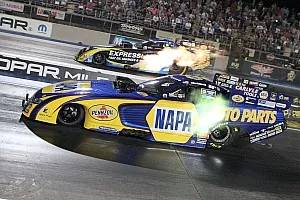
Testing times for NHRA’s elite
NHRA
NHRA
Testing times for NHRA’s elite
Latest news
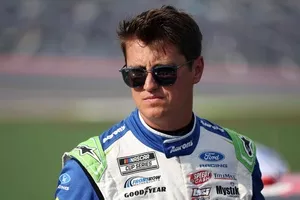
Zane Smith fined $50,000 by NASCAR for ramming Carson Hocevar after Phoenix Cup race
NASCAR Cup
NAS NASCAR Cup
Phoenix II
4 h
Zane Smith fined $50,000 by NASCAR for ramming Carson Hocevar after Phoenix Cup race
FIA expects F1 races in Qatar and Abu Dhabi to continue as planned
Formula 1
F1 Formula 1
United States GP
9 h
FIA expects F1 races in Qatar and Abu Dhabi to continue as planned
TDS Racing doubles down on IMSA program with two-car LMP2 return
IMSA
IMSA IMSA 9 h
TDS Racing doubles down on IMSA program with two-car LMP2 return
Why Isack Hadjar doesn’t like F1 sprints anymore
Formula 1
F1 Formula 1
Singapore GP
9 h
Why Isack Hadjar doesn’t like F1 sprints anymore
Subscribe and access Motorsport.com with your ad-blocker.
From Formula 1 to MotoGP we report straight from the paddock because we love our sport, just like you. In order to keep delivering our expert journalism, our website uses advertising. Still, we want to give you the opportunity to enjoy an ad-free and tracker-free website and to continue using your adblocker.
You have 2 options:
- Become a subscriber.
- Disable your adblocker.
Subscribe now Already subscribed? Sign in here
Already disabled your adblocker?
Reload page
Manage Alerts
Subscribe