Formula 1
Explained: How F1’s new driver cooling device will work
An exclusive look into how the new cooling device approved for 2025 will work

Alex Kalinauckas
Edited: Nov 19, 2024, 9:24 AM
Copy link
Share on Viber

The FIA’s prototype method for its new Formula 1 cooling device involves cooled water being pumped around driver overalls, with different design approaches permitted in future rules, Motorsport.com can reveal.
Last week, the results of the latest meeting of the F1 Commission declared that a new driver cooling provision will be added to F1’s rules from 2025, following the extreme heat encountered in the 2023 Qatar Grand Prix.
Motorsport.com revealed back in July that the FIA was working on such a system, with initial designs aiming to implement a simplified form of air-conditioning.
This followed an urgent allowance being added to the 2024 technical rules that means a second cooling inlet scoop can be placed at the front of a car’s cockpit to improve airflow towards drivers.
But while this is not mandatory – and indeed not all teams even have such a part to be fitted this year – the new system must be attached to all cars if the temperatures at an F1 event from 2025 onwards hit an extreme heat threshold the FIA is yet to publicly define.
This will likely to be when ambient temperatures are consistently above 30°C across a session, as in such conditions cockpit temperatures can quickly go north of 50°C.
While the F1 Commission announcement did not contain any details of the new system’s design, Motorsport.com can now reveal how the prototype works, when it was tested and what may change ahead of the full implementation in 2025.
Oscar Piastri, McLaren MCL38, in his cockpit
Photo by: Glenn Dunbar / Motorsport Images
How it currently works
The FIA initially intended its new driver cooling system to be tested in a practice session at the 2024 Dutch GP, but this was beset by wet weather, while additional changes to the system’s design by the FIA’s engineers were concurrently in the works.
It is understood that the first on-track proof-of-concept experiment was therefore pushed back to first practice in last month’s Mexico City GP, involving a so-far-unknown team and a single driver.
While the initial plan for the device featured a simplified AC unit, it is understood this element was dropped as during development work engineers encountered problems with its implementation that could not have been solved ahead of 2025.
The system tested in Mexico therefore involved a block of ice providing a heat exchange to fluid that was sent to a vest in the driver’s overalls via a piping system, with the cooled liquid then pumped around the vest.
It is understood that the entire system weighed no more than 5kg, although an increase during the ongoing development work – which is set to involve further on-track testing over 2024’s final F1 events – has not been ruled out.
To compensate for additional weight at races where the extreme temperature threshold is reached, it is likely that the minimum weight requirement for car and driver would increase accordingly, with the limit currently set at 798kg but set to rise to 800kg in 2025.
The device can be fitted in either the cockpit side structure and bodywork or in the cockpit itself.
It is understood that the driver involved in the test reported that the system did indeed produce the intended results in terms of providing cooling, although it is not known how long the test lasted across what was a truncated one-hour session in Mexico.
How the system may be produced differently in the future
As well as the development of the prototype system, a Motorsport.com analysis of F1’s current and upcoming technical rules suggests teams will be allowed to develop their own versions of the FIA prototype.
Sources have also suggested that specifications could be released via patents for cooling systems to be made by outside suppliers and then purchased to be fitted when required by the teams.
Carlos Sainz, Scuderia Ferrari, puts on a cooling vest in the garage
Photo by: Mark Sutton / Motorsport Images
The current F1 regulations actually already provide for a driver cooling system that “may make use of the latent heat of vaporisation, or of sublimation, of a substance".
Stored thermal energy is also set to be permitted in designs for the new systems, so long as a device cannot in some way be used as an additional form of engine cooling.
Therefore, in theory, F1 teams could fit a refrigeration tank containing an already cooled substance that is pumped through pipes to a driver’s cooling vest, instead using the ice block method already tested.
Motorsport.com understands that the teams could also deploy a different system altogether that would instead feed cooled air into a driver’s race suit via a fan system to achieve the same cooling effect.
Teams will also be able to make use of a fan to provide air for the condenser required in the refrigeration tank for the liquid cooling pump system.
Whatever system a team chooses will be required by the rules to only use air, water, or certain chemicals diluted in water to improve thermal conductivity. Dry ice is expressly banned.
From 2025, the teams will also be allowed to open an additional hole to direct air directly to a driver – either via the floor around the cockpit or the nose – that must not exceed a total area of area of 1000mm².
Additionally, F1’s rules already include a proviso for the use of “cooling suits or balaclavas” under Article 14.6.3 of the current regs, which is also included for those upcoming in 2026.
But these must meet the FIA’s existing codes on wearable equipment and “may only use coolants that are shown to be safe for exposure to skin”, per the rule in question.
Why the device is needed
The development of the prototype driver cooling system follows the FIA’s vow to adapt its safety rules following the 2023 Qatar event, where drivers suffered considerably over the full GP distance that took place in night temperatures between 31-32°C.
Daytime temperatures were also sweltering at a track where its technical and high-speed layout means the drivers are also subjected to sustained high G-forces, which place a particular pressure on their stomachs when strapped into an F1 cockpit.
Then Williams driver Logan Sargeant withdrew from the 2023 Qatar race with heatstroke, Alpine driver Esteban Ocon vomited in his helmet and Aston Martin racer Lance Stroll briefly passed out.
The FIA immediately promised “material action now to avoid a repeat of this scenario” in a statement released last October, when the 2023 event was held at a time of year significantly hotter than the temperatures expected for the re-positioned 2024 Qatar race that will take place early next week.
When the inaugural F1 race at the Losail circuit took place in 2021 on 21 December that year, the temperature was 26°C throughout.
The initial idea for air-con to be included in the mandated cooling system was declared “not needed” by Mercedes driver Lewis Hamilton, when he was quizzed on the idea following the 2024 Hungarian GP.
“This is Formula 1,” the seven-time world champion added. “It's always been like this. It's tough in these conditions.
“We're highly-paid athletes. And you've got to train your arse off to make sure you can withstand the heat, ultimately.
“It's tough. It's not easy, especially when you go to places like Qatar and Singapore. But I don't think we need an AC unit in the car.”
Although the expected cooler conditions in Qatar will reduce the demand on racers there, the development of such a system represents a positive step for the FIA during a period where the drivers have consistently suggested their feedback is not being incorporated in how F1 is run.
We want your opinion!
What would you like to see on Motorsport.com?
Take our 5 minute survey.
- The Motorsport.com Team
Read and post comments
Read also :
Share Or Save This Story
Copy link
Share on Viber
Previous article F1 announces Canadian GP date change to “rationalise” 2026 calendar
Next article F1 stance to ban third-party tickets from livery event "unfairly targets fans"
Top Comments
There are no comments at the moment. Would you like to write one?
View More & Comment

More from
Alex Kalinauckas

Who is Kimi Antonelli, F1 sprint polesitter at just 18?
Formula 1
Formula 1
Who is Kimi Antonelli, F1 sprint polesitter at just 18?

Why Bottas has the edge over Perez in 2026 F1 return race
Formula 1
Formula 1
Japanese GP
Why Bottas has the edge over Perez in 2026 F1 return race

What if Red Bull solved its second-car problem with a paint job?
Formula 1
Formula 1
Japanese GP
What if Red Bull solved its second-car problem with a paint job?
Latest news
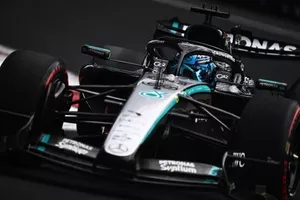
“We let him down” – Mercedes takes blame for George Russell’s Mexico GP heartbreak
Formula 1
F1 Formula 1
Mexican GP
27 min
“We let him down” – Mercedes takes blame for George Russell’s Mexico GP heartbreak

NASCAR VP explains Carson Hocevar, Josh Berry penalties
NASCAR Cup
NAS NASCAR Cup
Martinsville II
11 h
NASCAR VP explains Carson Hocevar, Josh Berry penalties

Colton Herta to run Cadillac FP1 in Brazil as FIA superlicence quest continues
Formula 1
F1 Formula 1
Mexican GP
11 h
Colton Herta to run Cadillac FP1 in Brazil as FIA superlicence quest continues

NASCAR issues penalties to Carson Hocevar and Josh Berry for Martinsville brake-checks
NASCAR Cup
NAS NASCAR Cup
Martinsville II
12 h
NASCAR issues penalties to Carson Hocevar and Josh Berry for Martinsville brake-checks
Feature
Discover prime content



Subscribe and access Motorsport.com with your ad-blocker.
From Formula 1 to MotoGP we report straight from the paddock because we love our sport, just like you. In order to keep delivering our expert journalism, our website uses advertising. Still, we want to give you the opportunity to enjoy an ad-free and tracker-free website and to continue using your adblocker.
You have 2 options:
- Become a subscriber.
- Disable your adblocker.
Subscribe now Already subscribed? Sign in here
Already disabled your adblocker?
Reload page
Manage Alerts
Subscribe