Formula 1
Bigger engine means less revs
The new regulation for 2004 that an engine has to last a whole weekend means a bigger unit and a compensatory drop in revs. Needing to run reliably for approximately 800km means the engine has to be stronger and BMW motorsport director Mario ...
Published: Jan 8, 2004, 7:21 PM
Copy link
Share on Viber

The new regulation for 2004 that an engine has to last a whole weekend means a bigger unit and a compensatory drop in revs. Needing to run reliably for approximately 800km means the engine has to be stronger and BMW motorsport director Mario Theissen said the components would have to be bigger.
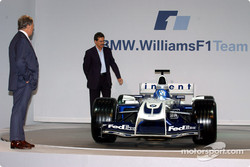
WilliamsF1 Technical Director Patrick Head and BMW Motorsport Director Dr Mario Theissen with the new WilliamsF1 BMW FW26.
Photo by BMW PressClub.
"The benchmark of having to use only one engine for the entire Grand Prix weekend is actually a massive technical challenge," he explained. "It doubles the running time to nearly 800 kilometres and means every component has to be designed to be more robust."
"This may require new conceptual solutions, and at the very least means changing the dimensions of existing components. There will be a trend for all components to get rather bigger and heavier."
The effect this will have on the revs produced will result in a loss of power but only a negligible drop. "If the moving parts become bigger and heavier, the engine speed attainable falls and with it falls the power," said Theissen. "Our development goal is to keep these effects to a minimum. However, I am anticipating a slight reduction in revs."
The extension of engine life regulation was part of the cost-cutting measures introduced by the FIA and Theissen believes it will be an effective one, although the initial monetary layout will be the same.
"It is a correct step in this direction," he said of reducing financial overheads. "Although it isn't the case for development costs, and the costs of manufacturing an engine certainly won't get any cheaper. However, as far as the bottom line is concerned, the lower number of engines for a race and test season should bring down the costs."
We want your opinion!
What would you like to see on Motorsport.com?
Take our 5 minute survey.
- The Motorsport.com Team
Read and post comments
Read also :
Share Or Save This Story
Copy link
Share on Viber
Previous article Montoya tops Jerez test in new Williams
Next article BAR signs partnership with Alcon
Top Comments
There are no comments at the moment. Would you like to write one?
View More & Comment
More from
Patrick Head

Opinion: If Vettel is right, who can save 'lost' F1?
Formula 1
Formula 1
Opinion: If Vettel is right, who can save 'lost' F1?

Sir Frank Williams to receive Bernie Ecclestone Award
Formula 1
Formula 1
Sir Frank Williams to receive Bernie Ecclestone Award

Stewart, Prost moved from front of Senna's coffin
Formula 1
Formula 1
Stewart, Prost moved from front of Senna's coffin

More from
Williams
James Vowles explains request for review of F1 cost cap
Formula 1
Formula 1
Singapore GP
James Vowles explains request for review of F1 cost cap
Williams Racing is suing a local garage owner for £1million
Formula 1
Formula 1
Bahrain GP in Malaysia
Williams Racing is suing a local garage owner for £1million
Latest news
Spy shots of 2027 NASCAR Ford Mustang testing at Charlotte, but what's different?
NASCAR Cup
NAS NASCAR Cup
Charlotte II
2 h
Spy shots of 2027 NASCAR Ford Mustang testing at Charlotte, but what's different?

Five key takeaways from F1's big African Grand Prix reveal in Rwanda
Formula 1
F1 Formula 1 3 h
Five key takeaways from F1's big African Grand Prix reveal in Rwanda

Niels Koolen makes switch to Abel Motorsports ahead of 2027 Indy NXT campaign
Indy NXT
IndL Indy NXT 5 h
Niels Koolen makes switch to Abel Motorsports ahead of 2027 Indy NXT campaign

GT World Challenge Portimao: All you need to know about season finale featuring Max Verstappen
GT World Challenge Europe Endurance
WCEE GT World Challenge Europe Endurance 5 h
GT World Challenge Portimao: All you need to know about season finale featuring Max Verstappen
Feature
Discover prime content


Subscribe and access Motorsport.com with your ad-blocker.
From Formula 1 to MotoGP we report straight from the paddock because we love our sport, just like you. In order to keep delivering our expert journalism, our website uses advertising. Still, we want to give you the opportunity to enjoy an ad-free and tracker-free website and to continue using your adblocker.
You have 2 options:
- Become a subscriber.
- Disable your adblocker.
Subscribe now Already subscribed? Sign in here
Already disabled your adblocker?
Reload page
Manage Alerts
Subscribe