Breaking news
Formula 1
Pirelli could widen working range of tyres for 2020
Pirelli says it is open to widening the working window of its Formula 1 tyres for 2020 if it helps make life easier for teams.
Jonathan Noble Oleg Karpov
Edited: Jun 6, 2019, 8:07 AM
Copy link
Share on Viber
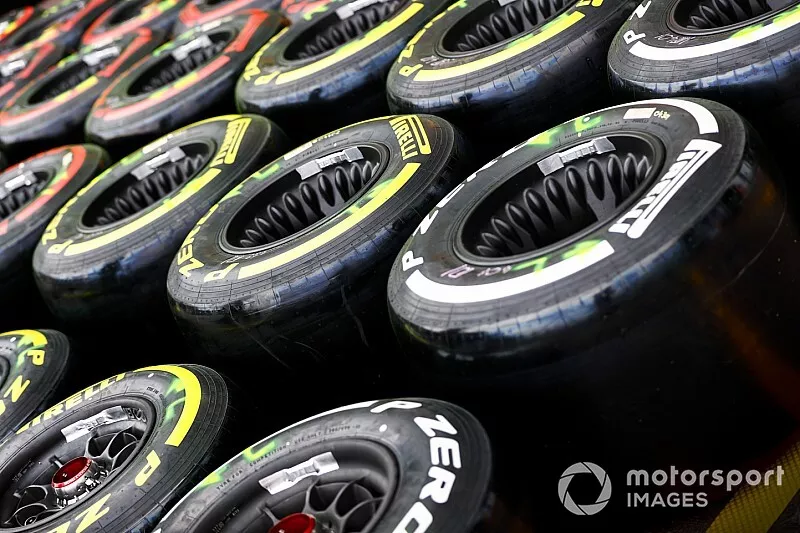
A number of outfits are struggling this year to get tyres up to the right operating temperature, with Pirelli’s 0.4mm thinner tread having moved the ideal temperature range higher.
Ferrari believes that its failure to challenge Mercedes this season is down to the new tyre situation, which is why it is working on fresh ideas to help boost its performance in this area.
Pirelli's F1 racing manager Mario Isola is aware that teams have faced some headaches hitting the sweet spot with regards tyre temperatures this year, which is why he says thoughts will be given to making things easier for 2020.
Read Also:
“What we are trying to do for next year is to focus on the working range, to make it wider,” explained Isola.
“In 2021 we will have 18-inch tyres, but without blankets, so we need to design compounds that are working without them. You need something that generates grip from 20 degrees to 120 degrees.
“This is giving us the opportunity to develop new compounds for 2021, so if we find something good in this research phase, then we can introduce in 2020, why not?
“If we find a new family of compounds with a new philosophy, that is making the working range much wider, then we can introduce this new family also in 2020 with 13-inch [tyres] and with blankets.
“It’s not that blankets will create an issue. They just start from a higher temperature.”
Isola believes that the increased focus this year on tyre working ranges is the result of the competitiveness of F1, where tyre performance can now make a big difference to positions.
“If you consider the midfield, we have five or six teams that are within 0.2 seconds of each other,” he said. “It has become very, very important to find any thousandths of a second. It can create a difference in qualifying position or in the race pace or whatever.
“That's why they [the teams] are so focused on the tyres, because probably if you are able to use the tyre in the best possible way you find performance. To find such performance with the powerunit, or downforce is a bit more difficult.”
How the working ranges have changed
Pirelli’s thinner tread tyres, introduced to prevent blistering and overheating, have shifted the working ranges slightly higher.
Here is a run down of how the operating windows compare this year to last season (2018 equivalent temperatures are in brackets).
C1 – 110-140C (Hard 105-135C)
C2 – 110-135C (Medium 110-140C)
C3 – 105-135C (Soft 105-135C)
C4 – 90-120C (Ultrasoft 90-110C)
C5 – 85-115C (Hypersoft 85-105C)
Read Also:
We want your opinion!
What would you like to see on Motorsport.com?
Take our 5 minute survey.
- The Motorsport.com Team
Read and post comments
Read also :
Share Or Save This Story
Copy link
Share on Viber
Previous article Canada could provide key answer over "confusing" F1 tyres
Next article Kvyat: Canada will be "good test" of Honda progress
Top Comments
There are no comments at the moment. Would you like to write one?
View More & Comment

More from
Jonathan Noble

Brundle awarded OBE in King’s New Year’s honours
Formula 1
Formula 1
Brundle awarded OBE in King’s New Year’s honours
The new rules dilemma that will define the 2025 F1 season
Formula 1
Formula 1
The new rules dilemma that will define the 2025 F1 season

Verstappen issues Red Bull title warning in push for RB21 progress
Formula 1
Formula 1
Australian GP
Verstappen issues Red Bull title warning in push for RB21 progress
Latest news
Manthey acknowledges IMSA to be "tougher than expected" despite two wins
IMSA
IMSA IMSA 8 h
Manthey acknowledges IMSA to be "tougher than expected" despite two wins

How a philosophy shift brought BMW to new heights in 2026
IMSA
IMSA IMSA 8 h
How a philosophy shift brought BMW to new heights in 2026

Fred Vasseur reveals two costly moments that denied Ferrari US GP double podium
Formula 1
F1 Formula 1
United States GP
8 h
Fred Vasseur reveals two costly moments that denied Ferrari US GP double podium

Cleetus McFarland set to compete full-time for 2027 ARCA championship
ARCA
ARCA ARCA 9 h
Cleetus McFarland set to compete full-time for 2027 ARCA championship
Feature
Discover prime content

Subscribe and access Motorsport.com with your ad-blocker.
From Formula 1 to MotoGP we report straight from the paddock because we love our sport, just like you. In order to keep delivering our expert journalism, our website uses advertising. Still, we want to give you the opportunity to enjoy an ad-free and tracker-free website and to continue using your adblocker.
You have 2 options:
- Become a subscriber.
- Disable your adblocker.
Subscribe now Already subscribed? Sign in here
Already disabled your adblocker?
Reload page
Manage Alerts
Subscribe