Breaking news
Formula 1
F1 bans teams from developing 2022 cars this year
Formula 1 teams have been banned from developing their cars for the new regulations due in 2022 for the remainder of the year following a World Motor Sport Council ruling.

Luke Smith
Edited: Mar 31, 2020, 12:51 PM
Copy link
Share on Viber
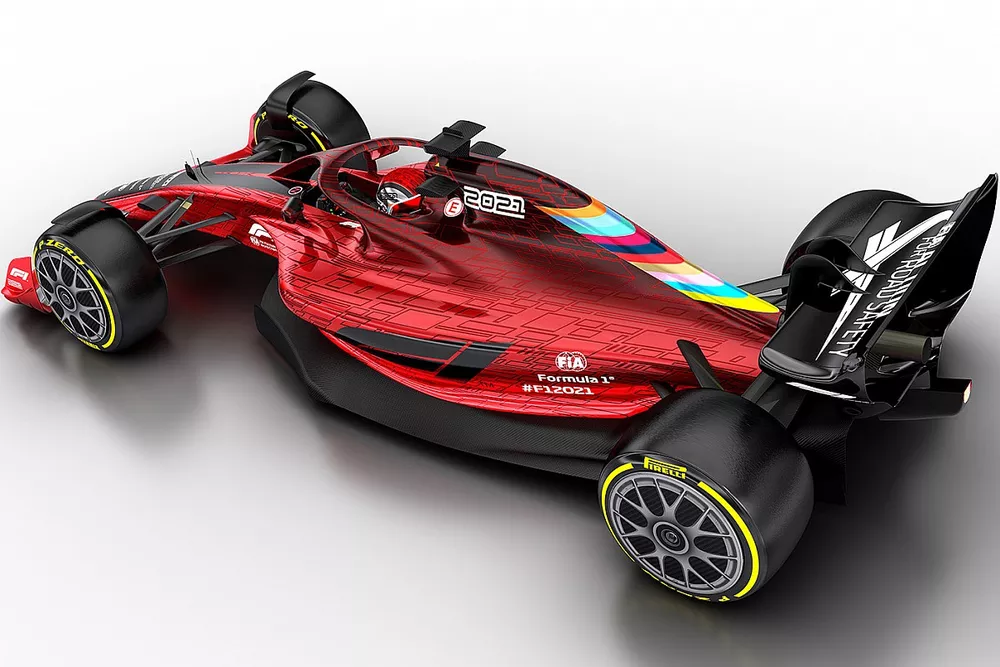
As F1 continues to be impacted by the ongoing COVID-19 pandemic, the WMSC issued a statement on Tuesday confirming it had approved a number of changes to the regulations in response to the ever-changing global situation.
Among the changes was a ban on “aerodynamic” development for the 2022 regulations during 2020, which came into force on Saturday March 28.
The move comes in a bid to reduce costs through 2020 for teams after the new regulations had already been postponed from 2021 to ’22, which received formal WMSC approval at the meeting.
Teams are braced for a predicted fall in income from F1 following the cancellation or postponement of the opening eight races of the season, the hosting fees for which fund much of the sport’s revenue.
F1 CEO and chairman Chase Carey said recently he envisaged a calendar comprising 15-18 races for 2020, starting in the summer.
Read Also:
The WMSC also confirmed changes had been made to the sporting regulations that would allow the FIA and Formula 1 to “react to the crisis and organise a race calendar that best safeguards the commercial value of the championship and contains costs as much as possible".
The FIA and F1 now have the power to change the calendar without a vote, while certain articles of the regulations now only require majority support from teams instead of unanimous backing.
FIA president Jean Todt has also been given extraordinary powers “to take any decisions in connection with the organisation of international competitions for the 2020 season, which may be required as a matter of urgency".
A new shutdown period has been introduced for power unit manufacturers, moving in line with the enforced three-week break all F1 teams are currently taking. Engine arms such as Mercedes-AMG High Performance Powertrain were previously exempt from the shutdown.
The FIA also confirmed the current shutdown period can be extended “in the event that public health concerns or government restrictions continue beyond the shutdown period initially envisaged".
Changes have also been made to the number of power unit elements teams are allowed to use in a season should the calendar drop to 14 races or less.
“Should the number of races in the Championship drop to 14 or less, each driver may use no more than 2 engines (ICE), 2 motor generator units-heat (MGU-H), 2 turbochargers (TC), 2 energy stores (ES), 2 control electronics (CE) and 2 motor generator units-kinetic (MGU-K),” the updated regulations read.
“Should the number of races in the Championship drop to 11 or less, each driver may use no more than 2 engines (ICE), 2 motor generator units-heat (MGU-H), 2 turbochargers (TC), 1 energy store (ES), 1 control electronics (CE) and 2 motor generator units-kinetic (MGU-K).”
A new young driver test has also been added to the regulations for the final round of the championship, giving teams the opportunity to run two cars instead of one. The drivers must still have not competed in any more than two F1 world championship races to be eligible for the test.
We want your opinion!
What would you like to see on Motorsport.com?
Take our 5 minute survey.
- The Motorsport.com Team
Read and post comments
Read also :
Share Or Save This Story
Copy link
Share on Viber
Previous article How Schumacher and Todt transformed Ferrari
Next article Mercedes agrees plan to outlaw DAS for 2021
Top Comments
There are no comments at the moment. Would you like to write one?
View More & Comment

More from
Luke Smith
1998 Belgian GP: When the Schumachers went to war
Formula 1
Formula 1
1998 Belgian GP: When the Schumachers went to war

The race that transformed perceptions of Red Bull
Formula 1
Formula 1
The race that transformed perceptions of Red Bull

Hamilton in the process of selecting Brad Pitt’s co-star for F1 movie
Formula 1
Formula 1
Hamilton in the process of selecting Brad Pitt’s co-star for F1 movie
Latest news
"Just undriveable" – Isack Hadjar looking for answers after "massive" struggles in Austin practice
Formula 1
F1 Formula 1
United States GP
28 min
"Just undriveable" – Isack Hadjar looking for answers after "massive" struggles in Austin practice
Maverick Vinales: “If I stay at home, I don’t get paid”
MotoGP
MGP MotoGP
Australian GP
57 min
Maverick Vinales: “If I stay at home, I don’t get paid”
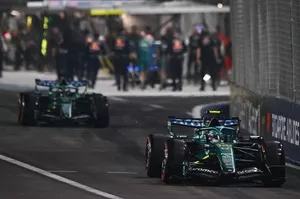
The unexpected problem Honda encountered despite its second F1 power unit upgrade
Formula 1
F1 Formula 1
United States GP
1 h
The unexpected problem Honda encountered despite its second F1 power unit upgrade
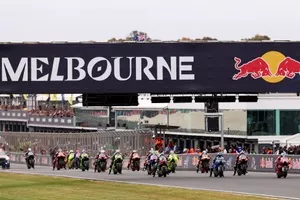
MotoGP Australian GP: Full starting grid as four riders forced out of Phillip Island race
MotoGP
MGP MotoGP
Australian GP
1 h
MotoGP Australian GP: Full starting grid as four riders forced out of Phillip Island race
Feature
Discover prime content



Subscribe and access Motorsport.com with your ad-blocker.
From Formula 1 to MotoGP we report straight from the paddock because we love our sport, just like you. In order to keep delivering our expert journalism, our website uses advertising. Still, we want to give you the opportunity to enjoy an ad-free and tracker-free website and to continue using your adblocker.
You have 2 options:
- Become a subscriber.
- Disable your adblocker.
Subscribe now Already subscribed? Sign in here
Already disabled your adblocker?
Reload page
Manage Alerts
Subscribe