Formula 1
Alpine investigating hydrogen power as F1’s future
Alpine has launched an evaluation study to determine whether or not hydrogen power could be the best direction for Formula 1’s long-term future.

Jonathan Noble
Edited: Aug 26, 2022, 9:56 AM
Copy link
Share on Viber
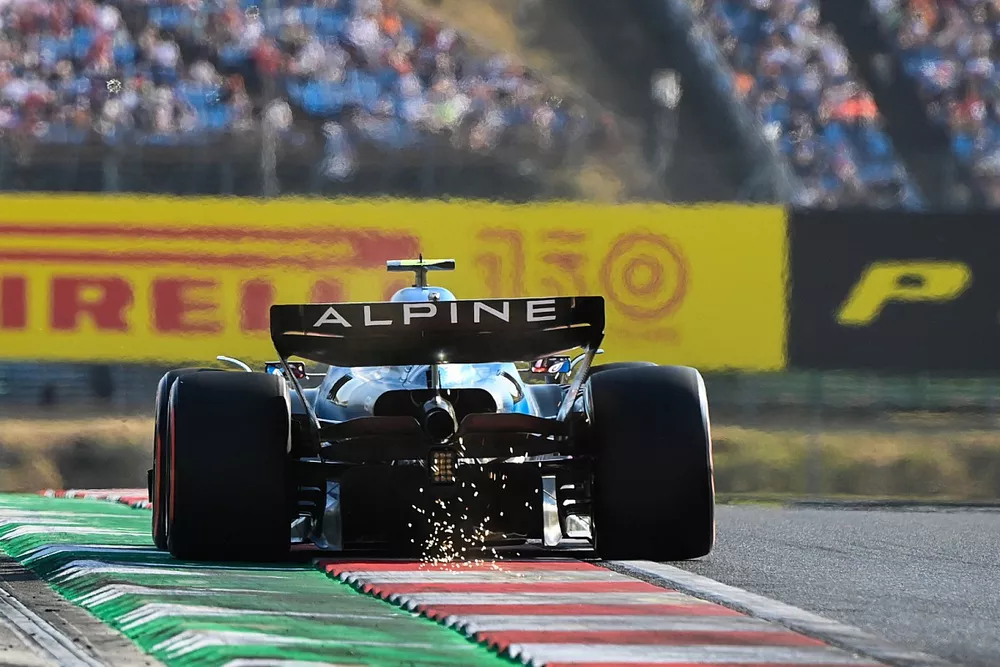
While the FIA recently signed off on plans for the next generation of F1 engines from 2026-2030 to be turbo hybrids run on fully sustainable fuels, there remains debate about where grand prix racing should position itself longer term as road cars transition to electric.
It is unlikely that electric motors and batteries will be strong enough by 2031 to power F1 cars at their current performance levels, which means the championship will have to make a call about where it heads then.
But one option that Alpine believes could be viable is a switch to hydrogen power, which is why the French manufacturer has begun a detailed look into the pros and cons of using such a power unit in F1.
Speaking exclusively to Motorsport.com, Alpine CEO Laurent Rossi said that, with fully electric engines not an option for F1 for a while, that evaluating hydrogen as a long-term solution had it merits.
“I don't think the full electric [engine] is ready,” he said. “It might be perhaps in 15 years from now, but I don't see that happening in the next one or two iterations of the regulations.
“That's why we are investigating, because I believe manufacturers and especially PU manufacturers have the duty to shape regulations and to bring solutions to the table, hydrogen as a fuel.
“To me, and to us, it's kind of like a good way to kill a lot of birds with one stone. It's cleaner, for sure. It's not fully clean, granted, but it's much more improved compared to traditional fuel for sure.
“It's abundant, that's for sure, whereas organic or synthetic fuel can be limited in terms of supply and or cost of producing.
“Plus it preserves one thing, which is the noise. Okay perhaps in like 20 years people will forget about that, because the new generations couldn't care less and they'll be used to cars being silent in the street, but at the moment, this is what makes that show as well.
“We must not forget that F1 is a sport i.e. entertainment. It's a business for sure. But that business is built on people loving it and watching it and enjoying it. I can't not think about that. So we are pursuing that path.”
Laurent Rossi, CEO, Alpine F1 talks to press
Photo by: Carl Bingham / Motorsport Images
Rossi said that the aim of Alpine’s study was to properly understand if hydrogen power could deliver the necessary performance levels F1 requires.
And, if it’s work did reach that conclusion, he hoped it could then showcase the technology – potentially by using the new-technology Garage 56 option at the Le Mans 24 Hours – to prove to racing championships what a good option it is.
“We are going to play our role to inspire others, governing bodies for sure,” he said. “We would love to be able to showcase, but first prove to ourselves, that it works, because we still need to investigate that it's more than a belief or a prophecy.
“If it does [work], then we want to possibly demonstrate that either, say at Garage 56 in Le Mans or around the Nurburgring with one of our road cars that will be fitted with a hydrogen fuelled internal combustion engine.
“This will then perhaps inspire the governing bodies that there is a path there.
“If Porsche, Ferrari and others are following other leads, so be it. But it's even better because we will bring to the table more options than just one.”
Read Also:
- How energy price move helped boost Alpine's F1 development push
- Alpine has "absolutely no worries" of trouble with Alonso during 2022
- Eau Rouge remains flat out for F1 at "faster" revamped Spa
We want your opinion!
What would you like to see on Motorsport.com?
Take our 5 minute survey.
- The Motorsport.com Team
Read and post comments
Read also :
Share Or Save This Story
Copy link
Share on Viber
Previous article Gasly: Too early to think about F1 future options
Next article Shock of F1 2022 struggles has done team "no harm", says Mercedes
Top Comments
There are no comments at the moment. Would you like to write one?
View More & Comment

More from
Jonathan Noble

Brundle awarded OBE in King’s New Year’s honours
Formula 1
Formula 1
Brundle awarded OBE in King’s New Year’s honours
The new rules dilemma that will define the 2025 F1 season
Formula 1
Formula 1
The new rules dilemma that will define the 2025 F1 season
Verstappen issues Red Bull title warning in push for RB21 progress
Formula 1
Formula 1
Australian GP
Verstappen issues Red Bull title warning in push for RB21 progress
More from
Alpine

Belgian firm to take over Renault/Alpine engine facility in Viry
WEC
WEC 8 h
Belgian firm to take over Renault/Alpine engine facility in Viry
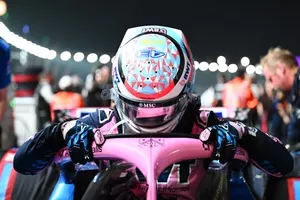
'Lines were crossed' – Franco Colapinto speaks out after online abuse targeting Alpine F1 staff
Formula 1
Formula 1
United States GP
21 h
'Lines were crossed' – Franco Colapinto speaks out after online abuse targeting Alpine F1 staff

Latest news
F1 United States GP live commentary and updates - FP1
Formula 1
F1 Formula 1
United States GP
43 min
F1 United States GP live commentary and updates - FP1
Max Papis announces departure as IndyCar chief steward
IndyCar
Indy IndyCar 56 min
Max Papis announces departure as IndyCar chief steward

Lamborghini Super Trofeo | Asia Race 2: Victory for Li/Sherlock, but Tregurtha crowned champion over Sceats/Wisniewski
Lamborghini Super Trofeo
LBST Lamborghini Super Trofeo
World Finals - Monza 2026
1 h
Lamborghini Super Trofeo | Asia Race 2: Victory for Li/Sherlock, but Tregurtha crowned champion over Sceats/Wisniewski
Rackley W.A.R. to immediately shut down NASCAR Truck Series team
NASCAR Truck
NSTR NASCAR Truck
Talladega
1 h
Rackley W.A.R. to immediately shut down NASCAR Truck Series team
Feature
Discover prime content


Subscribe and access Motorsport.com with your ad-blocker.
From Formula 1 to MotoGP we report straight from the paddock because we love our sport, just like you. In order to keep delivering our expert journalism, our website uses advertising. Still, we want to give you the opportunity to enjoy an ad-free and tracker-free website and to continue using your adblocker.
You have 2 options:
- Become a subscriber.
- Disable your adblocker.
Subscribe now Already subscribed? Sign in here
Already disabled your adblocker?
Reload page
Manage Alerts
Subscribe