Formula 1
Belgian GP Ferrari preview
Maranello, 29th August - Rain is a regular feature of the Belgian Grand Prix and Scuderia Ferrari Marlboro driver Rubens Barrichello is considered something of a specialist in wet conditions. We asked him to let us into the secrets of controlling ...
Edited: Apr 15, 2002, 11:45 PM
Copy link
Share on Viber

Maranello, 29th August - Rain is a regular feature of the Belgian Grand Prix and Scuderia Ferrari Marlboro driver Rubens Barrichello is considered something of a specialist in wet conditions. We asked him to let us into the secrets of controlling a Formula 1 car in the wet.
"I think a lot of people can be good in the rain, but I reckon my strength lies in being able to improvise, depending on the conditions," began the Brazilian. "In modern day Formula 1, if it starts to rain in the middle of a race, you only have a few seconds to change tyres and that's about it. You don't have much time to change the set-up for example. It can happen if the rain arrives with just ten laps to go to the flag, or in qualifying, when you have a situation like the one in Magny Cours in 1999. So, the important thing is being able to improvise; to go out on the track and find out what the conditions are. For example, you might have to consider taking a different line to the usual one through the corner. I feel I am good at that. Perhaps it's because, from the age of six, I was driving go-karts in all conditions on slick tyres at the Interlagos track. That gave me a feeling for driving in the rain."
Being able to judge just how wet is the track is another key factor. "You have to calculate the risks and make a quick decision before each corner about where you are going to brake and what line you will take through the corner, to be quick," explained Rubens. "You have to sense the difference, because on one lap the track might be just wet, but next time round you can face an aquaplaning situation. It's much easier to draw the line if the race has been wet since the start. In those circumstances, you have usually had time to alter the car's set-up before the start and in those conditions a lot of people can do well. But what I like the best, is when you have to flexible, when conditions change after the race has begun."
Races have been won and lost on timing a change from dry to wet tyres or vice versa.
"When the track is only greasy, the one good point is that you can see the car in front, because there is less spray, but these are also the most slippery conditions you can experience," continued the Brazilian. "Probably the most dangerous time is when the conditions are almost good enough for dry weather tyres but the ambient and track temperatures are very cold. You leave the pits with dry weather tyres that have been heated in the blankets and you have to go flat out to try and keep their temperature up."
With no mudguards, F1 cars create a lot of spray, which brings its own worries.
"The biggest problem with rain is not the loss of grip, it is the lack of visibility," admitted Barrichello. "I remember Magny Cours again in 1999 when visibility was very bad. You have to rely on seeing the back light on other cars. So many times I have had to look to the side of the track to find something I recognise to use as a braking point. It's a dilemma, because if you go quickly you might crash into the back of someone and if you go slowly, someone might crash into the back of you! In the end, it's all down to having the right feeling for the car. Driving in the rain is physically a lot less tiring, because there are less forces on the car, but mentally it is much more tiring and more hard work."
Barrichello was pleased with last week's Mugello test session. "It was a good test and it was nice to have other teams working at Mugello, " he said.normally we test there by ourselves, so it was good to be able to compare ourselves. Some of our testing was aimed specifically at this weekend as Mugello has certain similarities with Spa-Francorchamps."
-Ferrari
We want your opinion!
What would you like to see on Motorsport.com?
Take our 5 minute survey.
- The Motorsport.com Team
Read and post comments
Read also :
Share Or Save This Story
Copy link
Share on Viber
Previous article Niki Lauda on his new role
Next article M. Schumacher leads Friday practice at Belgian GP
Top Comments
There are no comments at the moment. Would you like to write one?
View More & Comment

More from
Rubens Barrichello
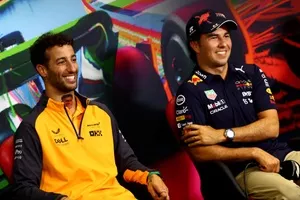
Which modern Formula 1 driver raced for the most teams?
Formula 1
Formula 1
Which modern Formula 1 driver raced for the most teams?

How ex-F1 racer Rubens Barrichello is still winning races at 52
Formula 1
Formula 1
Emilia Romagna GP
How ex-F1 racer Rubens Barrichello is still winning races at 52
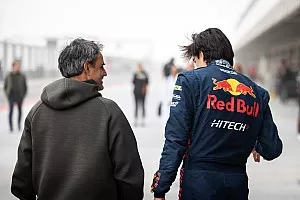
Why illustrious racing dads aren't always an advantage for F1 hopefuls
FIA F3
FIA F3
Why illustrious racing dads aren't always an advantage for F1 hopefuls

More from
Ferrari
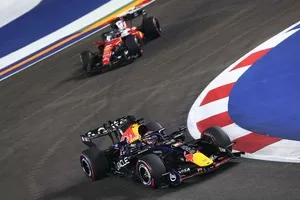
Fred Vasseur "not sure" if Red Bull is currently F1's best team
Formula 1
Formula 1
Singapore GP
3 h
Fred Vasseur "not sure" if Red Bull is currently F1's best team
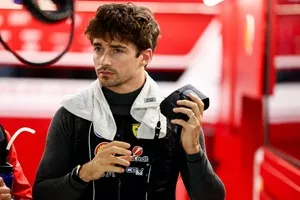
Charles Leclerc admits he missed a chance against Max Verstappen – but not the obvious one
Formula 1
Formula 1
Singapore GP
19 h
Charles Leclerc admits he missed a chance against Max Verstappen – but not the obvious one
Latest news

Toyota: BMW has advantage in Barcelona WEC after private test
WEC
WEC WEC
Barcelona
30 min
Toyota: BMW has advantage in Barcelona WEC after private test

Preining jokes about why he let team-mate Feller through
DTM
DTM DTM
Hockenheim
47 min
Preining jokes about why he let team-mate Feller through
MotoGP riders oppose fines for missing fan events
MotoGP
MGP MotoGP
Indonesian GP
1 h
MotoGP riders oppose fines for missing fan events
Feature
Discover prime content

Subscribe and access Motorsport.com with your ad-blocker.
From Formula 1 to MotoGP we report straight from the paddock because we love our sport, just like you. In order to keep delivering our expert journalism, our website uses advertising. Still, we want to give you the opportunity to enjoy an ad-free and tracker-free website and to continue using your adblocker.
You have 2 options:
- Become a subscriber.
- Disable your adblocker.
Subscribe now Already subscribed? Sign in here
Already disabled your adblocker?
Reload page
Manage Alerts
Subscribe