Nostalgia
Formula 1
When Ron Dennis took over the McLaren F1 team
At the end of the 1980 season, a young and ambitious owner of a Formula 2 team made the news by taking control of the prestigious McLaren Formula 1 team.
René Fagnan
Edited: Feb 8, 2018, 3:57 PM
Copy link
Share on Viber

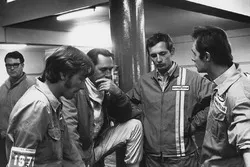


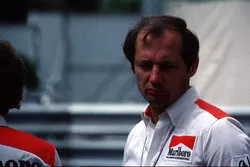

This 33-year-old entrepreneur was the determined, strong-minded Ron Dennis; a man known for his professionalism and attention-to-detail. For him, motorsport was a lot more than just a sport, it was a way to do business.
Ron Dennis started in life in Formula 1 as a mechanic with the Cooper team before he went to work for Brabham and Lotus. Getting his hands dirty was not his goal in life. He wanted to run his own organisation.
Dennis found a business partner in his friend Neil Trundle and they created their own team, Rondel Racing in 1971. The team ran cars in the Formula 2 Championship and in Sportscar racing with major sponsorship from oil company Motul.
Rondel then launched a Formula 1 project. Ray Jessop designed the F1 car, but the timing was wrong as the 1973 oil crisis forced Motul to withdraw its financial support.
Ron Dennis returned to Formula 2 racing, running cars under the Marlboro banner, including one for a wealthy young Italian, Andrea de Cesaris. Dennis’ Project Four team also prepared and ran a Marlboro-sponsored car for Niki Lauda in the Procar series, which ran identically modified BMW M1s for top, professional drivers of different categories.
Simultaneously, the McLaren F1 team was facing tough times. After James Hunt’s title in 1976, the team, led by Teddy Mayer, an American lawyer, was going from disappointment to frustration as the team’s designer, Gordon Coppuck, did not produce a good ground effects car.
The help of Marlboro
There was a strong link between Project Four and McLaren: Marlboro. Ron Dennis had regular meetings with John Hogan, the marketing director at Philip Morris. Hogan was not longer convinced that Teddy Mayer was the man for the job and was persuaded by Dennis that Project Four should take over control of the F1 team with the financial backing of Marlboro.
The change of ownership happened in the fall of 1980. McLaren Racing was renamed McLaren International and the team was moved from Colnbrook to Woking. There are two versions about what happened during the following months.
One story says that it was an aggressive takeover. The long standing Teddy Mayer and Gordon Coppock apparently were totally against it, and sold their shares and angrily left the team.
The other story comes from Ron Dennis in an interview published on Formula1.com: “Initially it was a 50:50 deal – but, after 18 months, and to my surprise, Teddy [Mayer] said he was becoming increasingly concerned about the prohibitive cost of turbocharged engines and was ready to step away, so the opportunity arose for me to acquire a controlling interest in the company, which I immediately did.”
The first carbon fibre F1 chassis
Ron Dennis was determined that McLaren should utilise every available technology - including some that had never before been considered in F1. He hired British engineer John Barnard, the man who had designed the Chaparral 2K, a highly successful Indy car; a copy of the Lotus 79. In F1, the ever-increasing forces generated by ground effects required much stronger and stiffer chassis. Aluminum was no longer strong enough and for Barnard and Dennis, carbon fibre was the solution.
However, no one outside the aeronautic and military industries had experience of this space-age composite material. Barnard, who had worked in the United Stated, found a company based in Salt Lake City that had massive experience in carbon composites: Hercules Aerospace.
The McLaren MP4/1 consisted of a Barnard carbon fibre chassis manufactured by Hercules and powered by a Ford Cosworth DFV V8 engine. In 1981, John Watson and Andrea de Cesaris drove the MP4/1, and the first victory came at Silverstone when Watson won the British Grand Prix. Ron Dennis savoured his first F1 World Championship three years later, in 1984 when Niki Lauda captured the title behind the wheel of the mighty TAG Porsche-powered McLaren.
We want your opinion!
What would you like to see on Motorsport.com?
Take our 5 minute survey.
- The Motorsport.com Team
Read and post comments
Read also :
Share Or Save This Story
Copy link
Share on Viber
Previous article McLaren influence on Renault engine unlikely until 2020
Next article F1 Halo can withstand “weight of a London bus” – Allison
Top Comments
There are no comments at the moment. Would you like to write one?
View More & Comment
More from
René Fagnan

Alex Labbe returns to NASCAR Pinty’s and Xfinity Series
NASCAR O'Reilly
NASCAR O'Reilly
Alex Labbe returns to NASCAR Pinty’s and Xfinity Series

New Canadian Grand Prix pit building revealed in Montreal
Formula 1
Formula 1
Canadian GP
New Canadian Grand Prix pit building revealed in Montreal
Jacques Villeneuve: Zolder track debut will be “important to me”
NASCAR Euro
NASCAR Euro
Jacques Villeneuve: Zolder track debut will be “important to me”
Latest news
The figures that show Mercedes has lost its supremacy in F1 2026
Formula 1
F1 Formula 1
United States GP
20 min
The figures that show Mercedes has lost its supremacy in F1 2026

Mirko Bortolotti risked another disqualification: How Grasser saved second place
DTM
DTM DTM 1 h
Mirko Bortolotti risked another disqualification: How Grasser saved second place
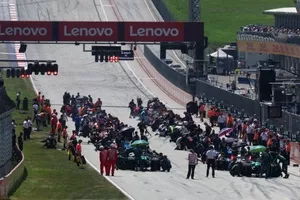
FIA enforces new rule to close F1 cost cap loophole
Formula 1
F1 Formula 1
United States GP
3 h
FIA enforces new rule to close F1 cost cap loophole
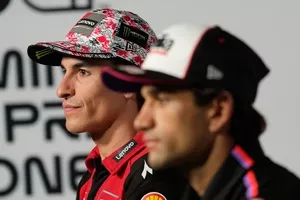
Marc Marquez praises MotoGP title rival Jorge Martín: “He is an incredible talent”
MotoGP
MGP MotoGP 3 h
Marc Marquez praises MotoGP title rival Jorge Martín: “He is an incredible talent”
Feature
Discover prime content


Subscribe and access Motorsport.com with your ad-blocker.
From Formula 1 to MotoGP we report straight from the paddock because we love our sport, just like you. In order to keep delivering our expert journalism, our website uses advertising. Still, we want to give you the opportunity to enjoy an ad-free and tracker-free website and to continue using your adblocker.
You have 2 options:
- Become a subscriber.
- Disable your adblocker.
Subscribe now Already subscribed? Sign in here
Already disabled your adblocker?
Reload page
Manage Alerts
Subscribe