Formula 1
F1 drivers can opt out of wearing FIA-approved cooling vests – but only this year
Wearable-tech devices designed to keep drivers cool in races subject to extreme heat conditions will be optional for the upcoming campaign

Alex Kalinauckas
Edited: Feb 20, 2025, 9:58 AM
Copy link
Share on Viber
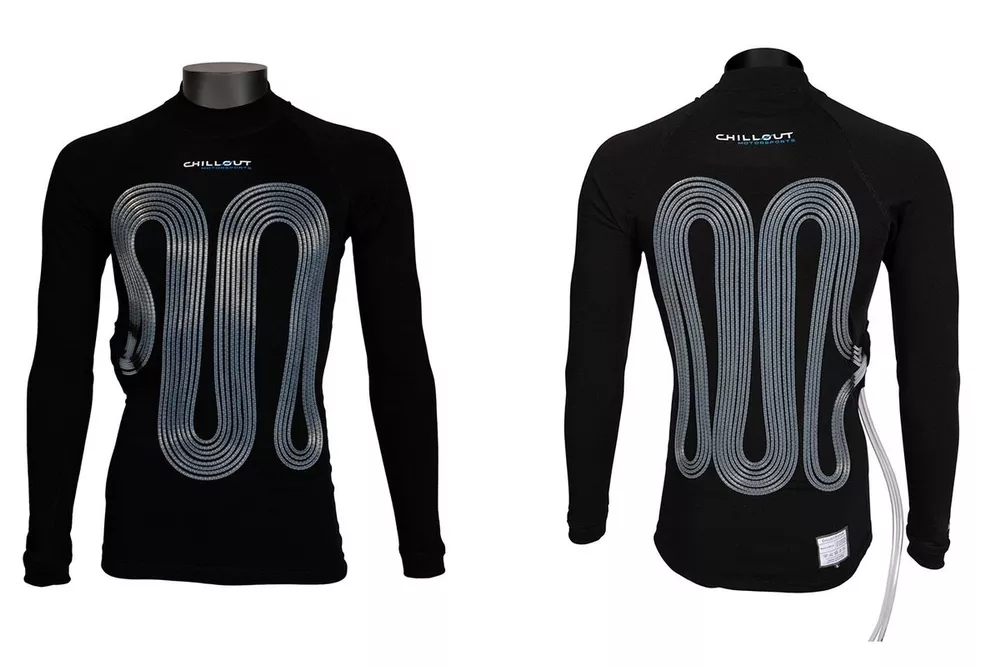
The new wearable-tech shirts designed to keep drivers cool in races in extreme heat will be optional for competitors in the 2025 Formula 1 season, Motorsport.com understands.
The devices are being introduced as part of the FIA’s response to the events of the 2023 Qatar Grand Prix, where Logan Sargeant withdrew for Williams with heatstroke, then Alpine driver Esteban Ocon vomited in his helmet and Aston Martin racer Lance Stroll briefly passed out.
As first reported by Motorsport.com, the initial thinking on the topic was to attempt to introduce an ersatz air-conditioning unit to cool car cockpits.
But this was abandoned due to complexities arising in adapting such kit, and so utilising existing wearable-tech – such as the Cypher Pro Micro Cooler produced by Chillout Motorsports (pictured above) – was deemed to be the FIA’s preferred route.
One of the main challenges to this work was ensuring the cooling devices complied with the governing body’s stringent rules on fire resistance for all driver-worn kit in the event of a crash.
The devices combine a shirt with nearly 50 metres of tubes that pump cooled fluid stored in a dedicated box that houses a micro-processor and the technology needed to keep the relevant temperatures down around a driver’s torso.
Driver Cooling system - Chillout Motorsport
Photo by: Chillout Motorsport
In a statement, the FIA has said the “finalisation of the driver cooling system following work carried out between the FIA and the Formula 1 teams, supported by changes to define when such systems must be used” and so was approved by the F1 Commission in London earlier this week.
This includes defining when the system will need to be used – as its use will only be mandated in the rules for the teams to fit it to their cars when temperatures reach a certain threshold.
This has now been set at 31C ambient temperature on the FIA sensors placed around a typical F1 venue (there are four weather stations erected at each race), rather than being measured on how hot conditions are in car cockpits, which can quickly reach 50-60C.
For the 2026 F1 season, the cooling systems will powered by the differently arranged electrical systems of the new car designs and will therefore be carried at all times.
But for the upcoming campaign, as the system only will be retro-fitted to cars when the 31C mark is reached, drivers have been given the option of not using it.
The added time before it becomes mandatory will also allow further proof of concept studies to be completed and for the systems to potentially be further tweaked ahead of 2026.
Logan Sargeant, Williams Racing
Photo by: Williams F1
But if a driver chooses not to wear a cooling vest in 2025, it is understood they must still carry an extra 500g in ballast within their cockpits to ensure they do not gain a competitive edge by choosing to take this approach.
At the Hungarian GP last year, when this topic first surfaced in the wake of the FIA’s commitment to ensure the Qatar farce would not be repeated, Lewis Hamilton declared “it's not needed”.
Read Also:
Formula 1F1 imposes multiple-pitstop strategies for Monaco GP
Formula 1Hamilton in no doubt Ferrari switch was the right move after SF-25 debut
“This is Formula 1,” he added. “It's always been like this. It's tough in these conditions. We're highly-paid athletes. And you've got to train your arse off to make sure you can withstand the heat, ultimately.
“It's tough. It's not easy, especially when you go to places like Qatar and Singapore. But I don't think we need an AC unit in the car.”
We want your opinion!
What would you like to see on Motorsport.com?
Take our 5 minute survey.
- The Motorsport.com Team
Read and post comments
Read also :
Share Or Save This Story
Copy link
Share on Viber
Previous article Hamilton in no doubt Ferrari switch was the right move after SF-25 debut
Next article What progress looks like for Williams in F1 2025
Top Comments
There are no comments at the moment. Would you like to write one?
View More & Comment

More from
Alex Kalinauckas

Who is Kimi Antonelli, F1 sprint polesitter at just 18?
Formula 1
Formula 1
Who is Kimi Antonelli, F1 sprint polesitter at just 18?

Why Bottas has the edge over Perez in 2026 F1 return race
Formula 1
Formula 1
Japanese GP
Why Bottas has the edge over Perez in 2026 F1 return race

What if Red Bull solved its second-car problem with a paint job?
Formula 1
Formula 1
Japanese GP
What if Red Bull solved its second-car problem with a paint job?
Latest news

Truck Series championship down to two with two to go
NASCAR Truck
NSTR NASCAR Truck 1 min
Truck Series championship down to two with two to go

MotoGP Australian GP: Marc Marquez recovers from crash to take pole at wet Phillip Island
MotoGP
MGP MotoGP
Australian GP
1 h
MotoGP Australian GP: Marc Marquez recovers from crash to take pole at wet Phillip Island

No factory Honda bikes in Australian GP as Luca Marini withdraws due to virus
MotoGP
MGP MotoGP
Australian GP
2 h
No factory Honda bikes in Australian GP as Luca Marini withdraws due to virus
Feature
Discover prime content




Subscribe and access Motorsport.com with your ad-blocker.
From Formula 1 to MotoGP we report straight from the paddock because we love our sport, just like you. In order to keep delivering our expert journalism, our website uses advertising. Still, we want to give you the opportunity to enjoy an ad-free and tracker-free website and to continue using your adblocker.
You have 2 options:
- Become a subscriber.
- Disable your adblocker.
Subscribe now Already subscribed? Sign in here
Already disabled your adblocker?
Reload page
Manage Alerts
Subscribe