Formula 1
F1 planning DRS rule change experiment in sprint races in 2023
Formula 1 is to trial allowing DRS to be used earlier in races next season, in a bid to try to keep the field much closer together.

Jonathan Noble
Edited: Dec 1, 2022, 11:27 AM
Copy link
Share on Viber
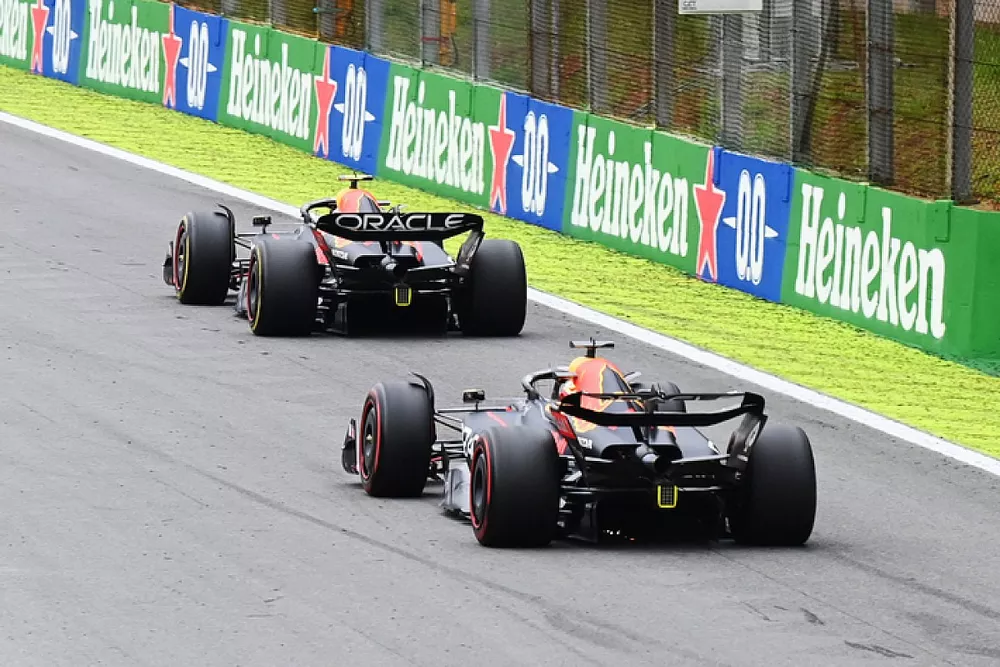
Ever since the overtaking aid was introduced at the start of the 2011 season, drivers have only ever been allowed to activate it from the beginning of the second lap after a start or safety car restart.
It was felt that allowing its use immediately after the lights went out could trigger chaos and potential accidents when the field is bunched too close together.
But with drivers well able to break clear of the one-second DRS zone over two laps, F1 wants to see if the spectacle can be improved with it being allowed one lap earlier than now.
During a meeting of the F1 Commission in Abu Dhabi on Friday, it was agreed that experiments would take place at next year’s sprint races.
For the six Saturday sprints in 2023, the activation of DRS after the start or a safety car restart will now begin following one lap of action, rather than two.
All other aspects of the DRS rules, including the one-second detection limit, will stay as they are currently.
If the experiments prove a success in improving the show without causing any problems, then the idea is to introduce it fully in F1 from 2024.
F1 has long hoped that it may eventually be able to get rid of DRS, but it still feels that the device is necessary to help make the races exciting.
It has also been agreed that for sprint races next year, a different structure will be introduced to deal with paying for accident damage that teams suffer from.
Rather than teams claiming back for repairs, they will now be allowed a fixed amount per team per event.
This means that for each sprint, teams will get an allowance within the cost cap for $300,000, as opposed to the current $150,000 limit. All other allowances for minor and material damage compensation will be removed from the regulations.
The F1 Commission is also looking at potential tweaks to the current parc ferme rules for sprint weekends to simplify matters, where setups are currently fixed from Friday’s qualifying session.
Read Also:
- F1 to consider tougher penalties to prevent tactical power unit changes
- F1 to trial fitting cars with wheel arches in wet races to reduce spray problem
- FIA open to investigating Perez's Monaco crash if complaint is made
We want your opinion!
What would you like to see on Motorsport.com?
Take our 5 minute survey.
- The Motorsport.com Team
Read and post comments
Read also :
Share Or Save This Story
Copy link
Share on Viber
Previous article F1 to trial fitting cars with wheel arches in wet races to reduce spray problem
Next article Why Leclerc’s bid to beat Perez to second looks harder after day one in Abu Dhabi
Top Comments
There are no comments at the moment. Would you like to write one?
View More & Comment

More from
Jonathan Noble

Brundle awarded OBE in King’s New Year’s honours
Formula 1
Formula 1
Brundle awarded OBE in King’s New Year’s honours
The new rules dilemma that will define the 2025 F1 season
Formula 1
Formula 1
The new rules dilemma that will define the 2025 F1 season
Verstappen issues Red Bull title warning in push for RB21 progress
Formula 1
Formula 1
Australian GP
Verstappen issues Red Bull title warning in push for RB21 progress
Latest news
MotoGP Australian GP: Marco Bezzecchi leads Aprilia 1-2-4-5 in Friday Practice
MotoGP
MGP MotoGP
Australian GP
25 min
MotoGP Australian GP: Marco Bezzecchi leads Aprilia 1-2-4-5 in Friday Practice
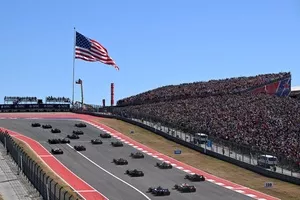
Max Verstappen slams “unacceptable” bumps at Austin F1 track: “It's out of control”
Formula 1
F1 Formula 1
United States GP
7 h
Max Verstappen slams “unacceptable” bumps at Austin F1 track: “It's out of control”

Kimi Antonelli ready to "finish the job" as first F1 title chance beckons at US GP
Formula 1
F1 Formula 1
United States GP
8 h
Kimi Antonelli ready to "finish the job" as first F1 title chance beckons at US GP

How to watch NASCAR at Talladega II: Weekend schedule, start time, entry list, TV
NASCAR Cup
NAS NASCAR Cup
Talladega II
8 h
How to watch NASCAR at Talladega II: Weekend schedule, start time, entry list, TV
Feature
Discover prime content


Subscribe and access Motorsport.com with your ad-blocker.
From Formula 1 to MotoGP we report straight from the paddock because we love our sport, just like you. In order to keep delivering our expert journalism, our website uses advertising. Still, we want to give you the opportunity to enjoy an ad-free and tracker-free website and to continue using your adblocker.
You have 2 options:
- Become a subscriber.
- Disable your adblocker.
Subscribe now Already subscribed? Sign in here
Already disabled your adblocker?
Reload page
Manage Alerts
Subscribe