Nostalgia
Formula 1
Interview: How F1 winter testing was performed 40 years ago
With winter testing for the 2017 Formula 1 season just under a month away, Rene Fagnan spoke to renowned designer Frank Dernie to see how pre-season preparations were done 40 years ago.
René Fagnan
Edited: Jan 29, 2017, 11:01 AM
Copy link
Share on Viber

Nostalgia
Nostalgia


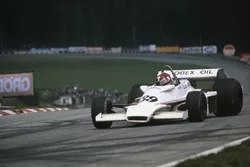
In just a few weeks' time, F1 teams will take their new cars to Circuit de Catalunya near Barcelona, Spain for two, four-day tests in preparation for the opening round the season.
It's a far cry from what happened in the 1970s, when pre-season testing seemed to last forever, with intense travelling around the globe and very long working hours.
Dernie, who retired from the sport in 2010, started his career at Hesketh at the end of 1976. Then, he worked as technical director or consultant for teams such as Williams, Lotus, Ligier, Benetton and Toyota.
“At Hesketh Racing, we were 18 people in the whole company, and the travelling race team used to go to the airport in two cars, because there were eight of us," Dernie told Motorsport.com. "That was because there was no money, and money is the resource in motorsport.
“I remember travelling to the airport on the 3rd or 4th of January, flying down to Argentina to do a week of testing, running the Argentine Grand Prix, then going to Brazil, doing a week of testing, prepare cars on site, running the Brazilian GP and then return home in the middle of February. It’s much easier now.
“Back in those days, all the mechanics who went to the races also did every test as well. You’d work massively more days than the race teams do now,” he added.
Working extra hours
Dernie recalled how the Williams personnel were physically drained by these long tests. “I remember one of the Rio tests we went to, Alan Challis [the chief mechanic] didn’t actually sleep in his hotel bed for the whole trip.
"We did so many all-night shifts that he would come back to hotel, have a drink, fall asleep in a chair, wake up, take a shower and put on a clean team uniform and go back to the circuit! It was so much more difficult back then."
Confirming that two cars used to be standard for winter tests, he continued: "In the early turbo days, one of the test cars was entirely devoted to engine testing, while the other car was used to set-up testing.
“We needed to achieve two things: one was to get the basic set-up to work and the other was durability testing.
"We didn’t have the resources and design capabilities, and stress analysis of the parts, we didn’t have the R&D facilities nor the big test rigs that are common today. The cars were not as reliable as they are now.
“Typically, every evening after the car had run, you’d strip it completely, and you’d crack test everything: the gears, the gearbox casing, the uprights, the suspension mounts, the wishbones, axles, wheels, steering mechanism, etc. And then put the car together for running it the following morning.
"It was the first time these new parts were run, and safety is always on top of your mind. You were scared to death that you’d get to have a life threatening failure with the car.
"Even after the installation lap, the driver would climb out of the cockpit and we would check every component of the car. All those evaluation and tests can now be done on huge rigs and in the wind tunnel, while we had to do them in real tests."
No computers
It may be hard to imagine in modern times, but back in Dernie's early career, cars were designed based on logic, deduction and experience, not using computers.
"Back then, we didn’t wind tunnel computer analysis, so we had to guess cooling on previous experience," he explained. "And most of the stuff had to be guessed.
"We inevitably encountered some problems with each new car. If the rear brakes ran too hot, we had to make new brake ducts overnight. If we needed to cool the water or the oil, we cut holes in the bodywork.
"These days are gone because now you design these parts quite straightforwardly at the factory. It was very useful to test in Brazil because it was very hot. When you go testing now in March in Barcelona, you learn very, very little.”
Dernie also recalled the 1985 winter tests with the new Honda-powered Williams: “We just had a really bad year in 1984. No one at Williams had designed a turbo car and our drivers [Keke Rosberg and Jacques Laffite] had never driven a turbo car before.
"So we arrived in Rio for the first winter test of 1985 with a modified old FW09 to take the new spec Honda engine to perform engine tests. After a few laps we realised that all the handling problems that we tweaked the previous year went away because they were all related to turbo lag.
"Peaky power delivery was the main problem. So we spent the entire 1984 modifying the car to get better handling, and we got rid of all the problems instantly by fitting the new engine!”
We want your opinion!
What would you like to see on Motorsport.com?
Take our 5 minute survey.
- The Motorsport.com Team
Read and post comments
Read also :
Share Or Save This Story
Copy link
Share on Viber
Previous article Barcelona F1 test to feature wet running
Next article Palmer no longer interested in Silverstone takeover
Top Comments
There are no comments at the moment. Would you like to write one?
View More & Comment
More from
René Fagnan

Alex Labbe returns to NASCAR Pinty’s and Xfinity Series
NASCAR O'Reilly
NASCAR O'Reilly
Alex Labbe returns to NASCAR Pinty’s and Xfinity Series

New Canadian Grand Prix pit building revealed in Montreal
Formula 1
Formula 1
Canadian GP
New Canadian Grand Prix pit building revealed in Montreal
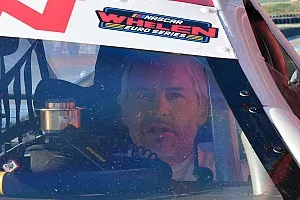
Jacques Villeneuve: Zolder track debut will be “important to me”
NASCAR Euro
NASCAR Euro
Jacques Villeneuve: Zolder track debut will be “important to me”
Latest news

Toyota clinches 2026 NASCAR Cup manufacturer championship early after dominant season
NASCAR Cup
NAS NASCAR Cup
Phoenix II
5 h
Toyota clinches 2026 NASCAR Cup manufacturer championship early after dominant season
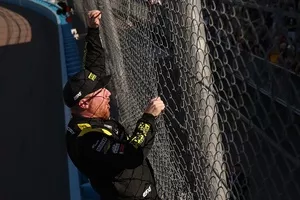
Tyler Reddick really needed NASCAR Phoenix win for several reasons
NASCAR Cup
NAS NASCAR Cup
Phoenix II
5 h
Tyler Reddick really needed NASCAR Phoenix win for several reasons
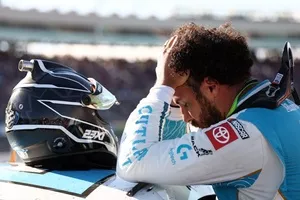
Bubba Wallace laments mistake after heartbreaking Phoenix loss
NASCAR Cup
NAS NASCAR Cup
Phoenix II
6 h
Bubba Wallace laments mistake after heartbreaking Phoenix loss
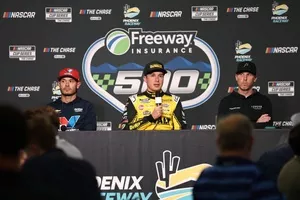
NASCAR is getting the championship finish it has pursued since 1992
NASCAR Cup
NAS NASCAR Cup
Phoenix II
6 h
NASCAR is getting the championship finish it has pursued since 1992
Feature
Discover prime content



Subscribe and access Motorsport.com with your ad-blocker.
From Formula 1 to MotoGP we report straight from the paddock because we love our sport, just like you. In order to keep delivering our expert journalism, our website uses advertising. Still, we want to give you the opportunity to enjoy an ad-free and tracker-free website and to continue using your adblocker.
You have 2 options:
- Become a subscriber.
- Disable your adblocker.
Subscribe now Already subscribed? Sign in here
Already disabled your adblocker?
Reload page
Manage Alerts
Subscribe