Formula 1
Pit stop practice for Renault
One of the effects of this winter's changes to the technical and sporting regulations has been to change the way pit-stops will happen: not only do the strategy experts predict one less stop per race on average, but in dry conditions the tyres will ...
Edited: Feb 22, 2005, 7:56 AM
Copy link
Share on Viber

One of the effects of this winter's changes to the technical and sporting regulations has been to change the way pit-stops will happen: not only do the strategy experts predict one less stop per race on average, but in dry conditions the tyres will not be changed. Make no mistake though -- the mechanics still have a key role to play, and that's why the Renault F1 Team mechanics were hard at work yesterday on pit-stop practice at Enstone.
"The key to a successful pit-stop is training," explains Chief Mechanic Jonathan Wheatley. "No stop is ever perfect: the driver can come in too quickly, or you can have a minor problem aligning the fuel hose. The secret is how well the team recovers from any of those small problems. There is not time to give people instructions during a stop -- so we have to rely on proper training."
This meant the mechanics spent yesterday rehearsing every possible scenario they may encounter during a race, in two one hour sessions at the Whiteways Technical Centre. After a briefing, they completed a one hour session in the morning, conducted a performance evaluation, then another hour in the afternoon. But why bother, if the pit-stops won't even include tyre changes?
"It's true that the stops will look slightly different in the dry," acknowledges Wheatley, "but if conditions change and we need to fit wet tyres, or if it rains through a race, then we will have to change tyres and fuel the car at the same time... which means we have to train for the possibility. The new rules don't actually change our practice that much: we need to prepare for the 90% of likely scenarios we will encounter, and also the 10% of unlikely ones!"
After sacrificing their Sunday, the mechanics will be in action once again at Silverstone on Tuesday, when they conduct live simulations with the race drivers. "People don't always see the teamwork involved in F1," concludes Wheatley. "The pit-stops are a visible symbol of it, and they give the mechanics a role in the race that can mean we win or lose positions. That is a big responsibility, and one we take very seriously."
-renault-
We want your opinion!
What would you like to see on Motorsport.com?
Take our 5 minute survey.
- The Motorsport.com Team
Read and post comments
Read also :
Share Or Save This Story
Copy link
Share on Viber
Previous article So far so good for Monteiro
Next article Dennis wants a level playing field
Top Comments
There are no comments at the moment. Would you like to write one?
View More & Comment

More from
Renault F1 Team

“I went back to the car and cried” – Esteban Ocon opens up about his unexpected year on F1 sidelines
Formula 1
Formula 1
“I went back to the car and cried” – Esteban Ocon opens up about his unexpected year on F1 sidelines
You Ask The Questions: Robert Kubica
Formula 1
You Ask The Questions: Robert Kubica
On this day: Michael Schumacher’s final unsportsmanlike manoeuvre
Formula 1
Formula 1
Monaco GP
On this day: Michael Schumacher’s final unsportsmanlike manoeuvre
Latest news
Gibbs, Spire and Gabehart argue over contempt and injunction
NASCAR Cup
NAS NASCAR Cup
Charlotte II
20 min
Gibbs, Spire and Gabehart argue over contempt and injunction
William Byron to run Jeff Gordon throwback Axalta scheme at Phoenix
NASCAR Cup
NAS NASCAR Cup
Charlotte II
55 min
William Byron to run Jeff Gordon throwback Axalta scheme at Phoenix
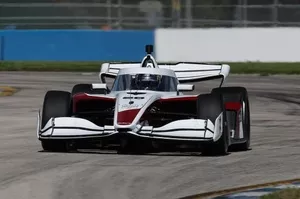
Alexander Rossi takes over IR-28 testing as IndyCar pushes new chassis to the limit at Sebring
IndyCar
Indy IndyCar 1 h
Alexander Rossi takes over IR-28 testing as IndyCar pushes new chassis to the limit at Sebring
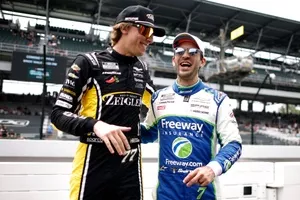
Daniel Suarez will return to Spire Motorsports for 2027 NASCAR Cup season
NASCAR Cup
NAS NASCAR Cup
Charlotte II
1 h
Daniel Suarez will return to Spire Motorsports for 2027 NASCAR Cup season
Feature
Discover prime content

Subscribe and access Motorsport.com with your ad-blocker.
From Formula 1 to MotoGP we report straight from the paddock because we love our sport, just like you. In order to keep delivering our expert journalism, our website uses advertising. Still, we want to give you the opportunity to enjoy an ad-free and tracker-free website and to continue using your adblocker.
You have 2 options:
- Become a subscriber.
- Disable your adblocker.
Subscribe now Already subscribed? Sign in here
Already disabled your adblocker?
Reload page
Manage Alerts
Subscribe