Formula 1
Telemetry with Williams
It's impossible to watch the fortnightly F1 race coverage on television and come away with an understanding of what it feels like to watch the red lights go out and launch off the starting grid in the FW24. Likewise, it would take some sort of ...
Published: Sep 20, 2002, 8:49 PM
Copy link
Share on Viber

It's impossible to watch the fortnightly F1 race coverage on television and come away with an understanding of what it feels like to watch the red lights go out and launch off the starting grid in the FW24. Likewise, it would take some sort of mutant DNA to enable someone, sitting on the sofa with a bag of crisps, to know exactly what the hydraulic pressure happened to be on Juan Pablo's car into that last turn. Impossible? No. There are people that, even though they'll never grab the wheel and experience the intensity of a high-G corner, have the ability to witness exactly what's happening to the FW24 -- each second of every lap -- at a level that no one else can.
Data engineers rely on telemetry data, not the supernatural, to get this insight. Processed and displayed to them by HP computers, telemetry data enables them to see things that would otherwise be impossible to detect. The system that handles this data is a powerful tool that, in the hands of the right person, can make the difference between success and failure on a race weekend.
The telemetry system relies on sensors scattered around the car to constantly measure and monitor what the car is doing. These measurements are managed by a computer on the FW24, which sees to it that key bits of data are wirelessly delivered (in real time) to the pits while the car is on the circuit. Less critical measurements are sent on a once-a-lap basis, and other, non-time-sensitive data is stored and retrieved when the car has finished its job and is back in the garage.
A network of computers in the garage collect, translate, transmit (to WilliamsF1 in the UK and BMW in Germany) and ultimately display this data as highly valuable graphs -- plots that data engineers will constantly review and analyse over the course of a test or GP weekend. Since so many different aspects of the car are monitored, data engineers configure their computers to function for the task at hand -- setting priorities for which information they wish to see, how they want to see it, and initiating notification systems to alert them when the data indicates a problem.
Telemetry enables the entire team to quickly see the performance characteristics of the car at a level of detail that is highly accurate. The collected data allows drivers to compare performances on individual laps, helping them to understand how their cars or driving styles affect their performance. It can also show the pit engineers if there is a problem with a system on the car, and enable them to make alterations, combating the problem before it becomes catastrophic. For getting the most out the car, the measurements display precise cause and effect relationships -- clearly indicating how an altered setting is manifested on the track.
All this information helps. It helps the team to set priorities, improve performance, explore, develop -- it helps them see.
-williams-
We want your opinion!
What would you like to see on Motorsport.com?
Take our 5 minute survey.
- The Motorsport.com Team
Read and post comments
Read also :
Share Or Save This Story
Copy link
Share on Viber
Previous article Fitness important at demanding Indy
Next article US GP: Drivers and teams expect exciting Indy
Top Comments
There are no comments at the moment. Would you like to write one?
View More & Comment

More from
Williams
James Vowles explains request for review of F1 cost cap
Formula 1
Formula 1
Singapore GP
James Vowles explains request for review of F1 cost cap
Williams Racing is suing a local garage owner for £1million
Formula 1
Formula 1
Bahrain GP in Malaysia
Williams Racing is suing a local garage owner for £1million
Latest news

Tom Cruise interested in racing ARCA car, per NASCAR CEO Steve O'Donnell
NASCAR Cup
NAS NASCAR Cup
Charlotte II
1 h
Tom Cruise interested in racing ARCA car, per NASCAR CEO Steve O'Donnell
Gibbs, Spire and Gabehart argue over contempt and injunction
NASCAR Cup
NAS NASCAR Cup
Charlotte II
4 h
Gibbs, Spire and Gabehart argue over contempt and injunction
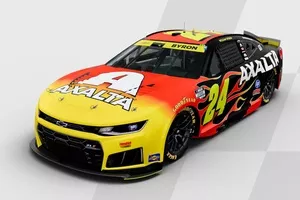
William Byron to run Jeff Gordon throwback Axalta scheme at Phoenix
NASCAR Cup
NAS NASCAR Cup
Charlotte II
5 h
William Byron to run Jeff Gordon throwback Axalta scheme at Phoenix
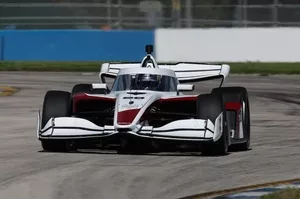
Alexander Rossi takes over IR-28 testing as IndyCar pushes new chassis to the limit at Sebring
IndyCar
Indy IndyCar 5 h
Alexander Rossi takes over IR-28 testing as IndyCar pushes new chassis to the limit at Sebring
Feature
Discover prime content

Subscribe and access Motorsport.com with your ad-blocker.
From Formula 1 to MotoGP we report straight from the paddock because we love our sport, just like you. In order to keep delivering our expert journalism, our website uses advertising. Still, we want to give you the opportunity to enjoy an ad-free and tracker-free website and to continue using your adblocker.
You have 2 options:
- Become a subscriber.
- Disable your adblocker.
Subscribe now Already subscribed? Sign in here
Already disabled your adblocker?
Reload page
Manage Alerts
Subscribe