Formula 1
Australian GP: Renault engineers' preview
Renault's Pat Symonds, executive director of engineering, and Denis Chevrier, head of engine operations, look ahead to the Australian Grand Prix. Pat Symonds: "Melbourne has something of a reputation as a car-breaker and, no doubt, the ...
Published: Mar 2, 2004, 11:15 PM
Copy link
Share on Viber

Renault's Pat Symonds, executive director of engineering, and Denis Chevrier, head of engine operations, look ahead to the Australian Grand Prix.
Pat Symonds:
"Melbourne has something of a reputation as a car-breaker and, no doubt, the regulation changes for 2004 will increase speculation over the possible numbers of retirements."
"However, in light of the engine rules for this season, it is interesting to note that engine failures in Melbourne are actually a relatively infrequent cause of retirement, as the graphic below illustrates."
"Partly, this can be explained by the environmental factors of the engine: the ambient temperatures are not usually sufficient for overheating to be an issue, and while the percentage of the lap spent at full throttle is among the highest of the year (67%), the longest period of full throttle is similar to that at Budapest, and it is prolonged periods at high revs that really endanger reliability."
"Modern transient dynamometers also now allow engine manufacturers to run extremely realistic race simulations, reproducing the profile of engine speed and load recorded from a car on a circuit in the most severe operating conditions."
"If an engine on the transient dyno can complete a full simulation in this configuration, then the ability to survive Melbourne should be well proven."
"However, not all failures can be pre-empted by such simulations, as there are many supporting systems for the engine based around the chassis, such as oil, water or electrical systems.These will not always have been subjected to as much load and vibration as the engine will have been, and all too often, the engine can find itself blamed for failures whose origins are in subsystems which are the responsibility of chassis designers."
"Furthermore, we can see that the most common cause of retirement at Melbourne is actually driver error. As a temporary circuit, it can be quite slippery, but the other thing to bear in mind is that while the drivers have been testing since December, they have not been practicing their racecraft. As we saw in 2002, I think it's fair to say that a number of the accidents are often the result of over-optimism and excitement on their part."
Denis Chevrier:
"At Melbourne, the principal challenges for the engine come from a high number of periods of acceleration from low speed. This is why the percentage of the lap spent at full throttle is high, in spite of the fact it comes in short bursts. The flip-side of these numerous bursts of acceleration is of course high demands placed on the brakes as well."
"None of the corners are particularly tight, and as such do not require very low revs, but the power curve from medium revs is very important in order to give the driver good acceleration on the corner exit. With conditions often low in grip, managing power delivery is also important."
"Although temperatures are usually higher than the European winter - indeed, recent testing has been in near-freezing conditions - the ambients are still not particularly high, registering at around 20°C.These are conditions at which our engines operate comfortably, and our winter tests at a range of temperatures means we can accurately predict necessary cooling at higher values. The main influence of the ambient temperature is actually on the intake acoustics, and this can be checked during practice and using specific simulations."
-renault-
We want your opinion!
What would you like to see on Motorsport.com?
Take our 5 minute survey.
- The Motorsport.com Team
Read and post comments
Read also :
Share Or Save This Story
Copy link
Share on Viber
Previous article Australian GP: Renault preview
Next article Minardi to launch at Albert Park
Top Comments
There are no comments at the moment. Would you like to write one?
View More & Comment
Latest news

Tom Cruise interested in racing ARCA car, per NASCAR CEO Steve O'Donnell
NASCAR Cup
NAS NASCAR Cup
Charlotte II
20 min
Tom Cruise interested in racing ARCA car, per NASCAR CEO Steve O'Donnell
Gibbs, Spire and Gabehart argue over contempt and injunction
NASCAR Cup
NAS NASCAR Cup
Charlotte II
3 h
Gibbs, Spire and Gabehart argue over contempt and injunction
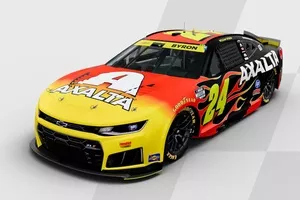
William Byron to run Jeff Gordon throwback Axalta scheme at Phoenix
NASCAR Cup
NAS NASCAR Cup
Charlotte II
3 h
William Byron to run Jeff Gordon throwback Axalta scheme at Phoenix
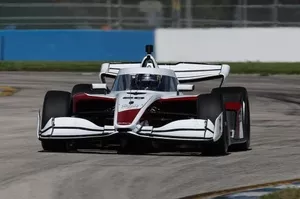
Alexander Rossi takes over IR-28 testing as IndyCar pushes new chassis to the limit at Sebring
IndyCar
Indy IndyCar 4 h
Alexander Rossi takes over IR-28 testing as IndyCar pushes new chassis to the limit at Sebring
Feature
Discover prime content

Subscribe and access Motorsport.com with your ad-blocker.
From Formula 1 to MotoGP we report straight from the paddock because we love our sport, just like you. In order to keep delivering our expert journalism, our website uses advertising. Still, we want to give you the opportunity to enjoy an ad-free and tracker-free website and to continue using your adblocker.
You have 2 options:
- Become a subscriber.
- Disable your adblocker.
Subscribe now Already subscribed? Sign in here
Already disabled your adblocker?
Reload page
Manage Alerts
Subscribe