Breaking news
Formula 1
Slashing downforce could leave F1 "no better off" - Symonds
Formula 1 technical expert Pat Symonds has warned it would be “all too easy” for rulemakers to slash downforce levels and fail to improve racing.

Scott Mitchell
Published: Jan 12, 2019, 3:14 PM
Copy link
Share on Viber

As F1 evaluates ways to create a better spectacle following criticism that cars are too downforce-dependent and overtaking is too difficult, Toro Rosso team boss Franz Tost suggested downforce levels should be cut by “at least 40-50%”.
He argued that only the drivers benefit from the current generation of cars that have immensely high cornering speeds.
Countering Tost’s suggestion at the Autosport International Show, title-winning technical boss-turned-F1 employee Symonds said removing downforce is “certainly doable” but a misguided solution.
“Often when you’re trying to get your head around an argument you should take it to an extreme and see what answer you get,” he acknowledged.
“If you go to the extreme of having no downforce, you’d say well that’s got to be better because you can’t lose something that isn’t there.
“So there’s some logic in the argument.
“However, it’s much more complex than that. You could produce a car with half the downforce of a current Formula 1 car but with much, much worse weight characteristics.
“It would be all too easy to do. Then you’d be no better off than you are now.”
Tost’s point was that reducing downforce levels would make it easier for cars to follow, harder to drive through the corners and increase braking distances to promote overtaking.
Symonds agrees that high levels of downforce were negative, and also lamented the lack of entertainment inspired by the emergence of the teams’ tactic of running much slower than is possible during races to complete a one-stop strategy.
“I want the cars to be quick, but I want them to be spectacular,” said Symonds, who is overseeing several projects with F1, one of which is to fundamentally improve overtaking for 2021.
“If they are really nailed to the ground I don’t think they are particularly spectacular.
“A rally car is spectacular. That’s something where you see the thing is absolutely on the edge of stability, it looks difficult to drive, it is difficult to drive.
“A Formula 1 car doesn’t always look too difficult to drive. Particularly at the moment where we’ve got the teams are strategically running at below the maximum performance to reduce the number of pitstops they do.
“Then the cars looking anything but spectacular.”
From the editor, also read:
We want your opinion!
What would you like to see on Motorsport.com?
Take our 5 minute survey.
- The Motorsport.com Team
Read and post comments
Read also :
Share Or Save This Story
Copy link
Share on Viber
Previous article Redundancy plans will be "major distraction" for top F1 teams
Next article Verstappen: Day of public service with stewards was “constructive”
Top Comments
There are no comments at the moment. Would you like to write one?
View More & Comment

More from
Scott Mitchell

Alfa Romeo must do better in "chaotic" races - Vasseur
Formula 1
Formula 1
Alfa Romeo must do better in "chaotic" races - Vasseur
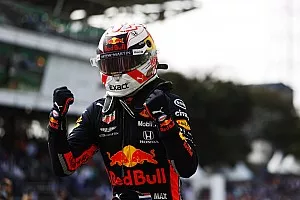
Honda: Verstappen relationship 'like a young Senna'
Formula 1
Formula 1
Honda: Verstappen relationship 'like a young Senna'

Key team personnel shouldn't be F1 boss - Ferrari
Formula 1
Formula 1
Key team personnel shouldn't be F1 boss - Ferrari

More from
Williams
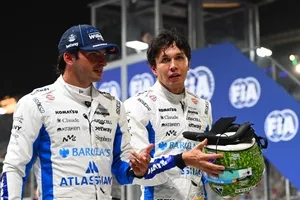
Williams has better cooling vests than anyone – Alex Albon
Formula 1
Formula 1
Williams has better cooling vests than anyone – Alex Albon
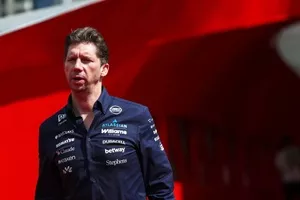
James Vowles explains request for review of F1 cost cap
Formula 1
Formula 1
Singapore GP
James Vowles explains request for review of F1 cost cap
Latest news
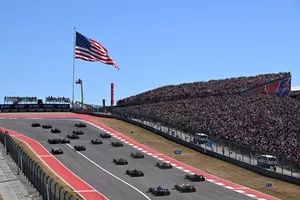
Max Verstappen slams “unacceptable” bumps at Austin F1 track: “It's out of control”
Formula 1
F1 Formula 1
United States GP
6 h
Max Verstappen slams “unacceptable” bumps at Austin F1 track: “It's out of control”
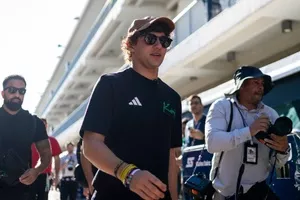
Kimi Antonelli ready to "finish the job" as first F1 title chance beckons at US GP
Formula 1
F1 Formula 1
United States GP
7 h
Kimi Antonelli ready to "finish the job" as first F1 title chance beckons at US GP

How to watch NASCAR at Talladega II: Weekend schedule, start time, entry list, TV
NASCAR Cup
NAS NASCAR Cup
Talladega II
7 h
How to watch NASCAR at Talladega II: Weekend schedule, start time, entry list, TV
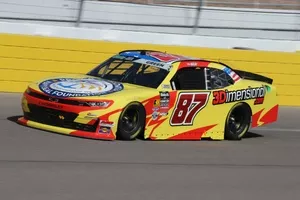
Peterson Racing addresses online abuse after parting ways with Austin Green
NASCAR O'Reilly
NOAP NASCAR O'Reilly
Talladega II
7 h
Peterson Racing addresses online abuse after parting ways with Austin Green
Feature
Discover prime content


Subscribe and access Motorsport.com with your ad-blocker.
From Formula 1 to MotoGP we report straight from the paddock because we love our sport, just like you. In order to keep delivering our expert journalism, our website uses advertising. Still, we want to give you the opportunity to enjoy an ad-free and tracker-free website and to continue using your adblocker.
You have 2 options:
- Become a subscriber.
- Disable your adblocker.
Subscribe now Already subscribed? Sign in here
Already disabled your adblocker?
Reload page
Manage Alerts
Subscribe