Breaking news
Formula 1
F1 expects 2021 cars to be 3.5s slower
Formula 1 chiefs expect the new 2021 cars to be around three seconds per lap slower than the current machines, but believe that is a price worth paying for allowing better racing.

Jonathan Noble
Edited: Nov 1, 2019, 3:39 PM
Copy link
Share on Viber
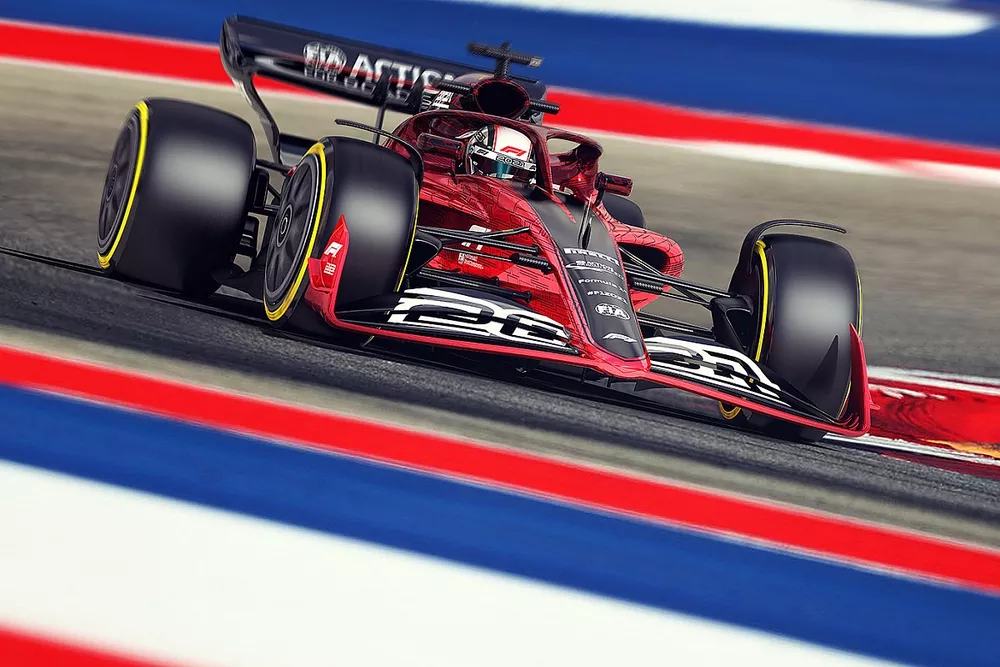
The move towards the new ground effect designs – which are aimed at allowing drivers to follow each other better – mean that there will be a reduction in downforce and an increase in minimum weight.
Speaking ahead of the United States Grand Prix, the FIA's head of single-seater matters Nikolas Tombazis said that current predictions were that there would be a noticeable increase in laptimes as a result, but insists that performance was not the key issue.
"We are expecting cars to be approximately 3-3.5 seconds slower per lap," he said. "But we don't think that is the key parameter of the spectacle. We feel the raceability is the main target.
"We haven't been focusing on an exact level of performance. We cannot predict exactly where the downforce will end up compared to the current cars, it will be a bit less after the development has been carried out.
"But even the car that has been developed in CFD and developed in the wind tunnel has already got a respectable amount of performance. It has been developed by a relatively small number of aerodynamicists and hours in the wind tunnel compared to a normal team."
Read Also:
- Ferrari: 2021 regs "good starting point", veto not ruled out
- F1's new 2021 rules finally approved
- Gallery: F1’s ‘futuristic’ 2021 car design from all angles
F1 managing director of motorsport Ross Brawn believed the sport had made a mistake for 2017 when it put its focus on delivering the fastest ever cars.
He says that a return to the kind of performance that F1 machinery had in 2016 will not be a retrograde step if the racing is improved.
"These cars from 2016 to 2017 had a huge increase in downforce, and it is worth thinking back on that experience because it was done for reasons I don't understand," he explained.
"The huge increase in downforce was 'let's make the cars go faster, let's make F1 better'. But what we have actually done is made it worse because the cars can't race each other.
"The cars are very quick now but they are not raceable. The reality is the performance of these new cars is about where we were in 2016 and I don't think anyone was complaining about the cars being slow."
The new 2021 regulations were published by the FIA on Thursday after they were unanimously approved by the World Motor Sport Council.
The new cars feature a simpler front wing with weaker vortices and a long diffuser under the sidepod to produce ground effect. Bargeboards have been outlawed.
Suspension will be simplified and hydraulic suspension will be banned. Tyre blankets are remaining for 2021 and 2022.
As the result of bigger 18-inch wheels, further safety steps and a heavier power unit, because of a bid to reduce costs, the minimum weight of the car is increasing from 743kg to 768kg.
The gearbox rules have been changed to restrict how much teams can develop their transmissions, with only one full redesign allowed over a five-year period.
F1's engine rules will be largely unchanged beyond cost reduction moves, which include an increased weight, restrictions on some materials being used and non-exclusivity for energy storage and turbocharger suppliers.
We want your opinion!
What would you like to see on Motorsport.com?
Take our 5 minute survey.
- The Motorsport.com Team
Read and post comments
Read also :
Share Or Save This Story
Copy link
Share on Viber
Previous article Brawn warns cost cap breach could cost F1 team title
Next article Verstappen says Hamilton, Vettel comment "disrespectful"
Top Comments
There are no comments at the moment. Would you like to write one?
View More & Comment

More from
Jonathan Noble

Brundle awarded OBE in King’s New Year’s honours
Formula 1
Formula 1
Brundle awarded OBE in King’s New Year’s honours
The new rules dilemma that will define the 2025 F1 season
Formula 1
Formula 1
The new rules dilemma that will define the 2025 F1 season
Verstappen issues Red Bull title warning in push for RB21 progress
Formula 1
Formula 1
Australian GP
Verstappen issues Red Bull title warning in push for RB21 progress
Latest news
Kimi Antonelli delivers Austin surprise pole in tricky Mercedes: "Finally we're seeing the results"
Formula 1
F1 Formula 1
United States GP
1 h
Kimi Antonelli delivers Austin surprise pole in tricky Mercedes: "Finally we're seeing the results"
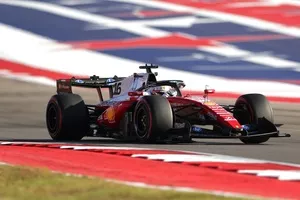
Why Ferrari failed to deliver on its hype in F1's United States GP qualifying
Formula 1
F1 Formula 1
United States GP
1 h
Why Ferrari failed to deliver on its hype in F1's United States GP qualifying
Jorge Martin planning MotoGP return at Malaysian GP
MotoGP
MGP MotoGP
Australian GP
1 h
Jorge Martin planning MotoGP return at Malaysian GP
Lando Norris laments "very bad job" in qualifying for F1 United States GP
Formula 1
F1 Formula 1
United States GP
2 h
Lando Norris laments "very bad job" in qualifying for F1 United States GP
Feature
Discover prime content



Subscribe and access Motorsport.com with your ad-blocker.
From Formula 1 to MotoGP we report straight from the paddock because we love our sport, just like you. In order to keep delivering our expert journalism, our website uses advertising. Still, we want to give you the opportunity to enjoy an ad-free and tracker-free website and to continue using your adblocker.
You have 2 options:
- Become a subscriber.
- Disable your adblocker.
Subscribe now Already subscribed? Sign in here
Already disabled your adblocker?
Reload page
Manage Alerts
Subscribe