Breaking news
Formula 1
Revealed: What Ferrari is changing on its engine for F1 2021
Ferrari is under no illusions that it needs to make gains on the power unit front if it is going to return to the front of the Formula 1 grid.

Franco Nugnes
Edited: Jan 16, 2021, 5:49 PM
Copy link
Share on Viber
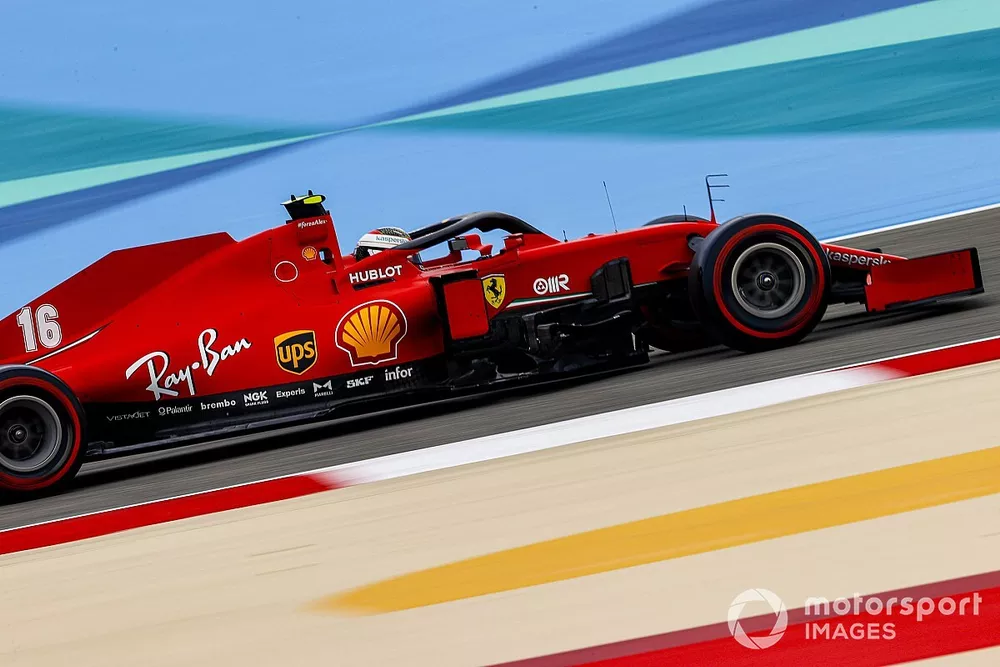
Its 2020 campaign was derailed by a combination of a too draggy car being further hampered by an engine that was less powerful than the 2019 version.
That performance deficit was the result of a raft of technical directives issued by the FIA ahead of the season to stop teams using clever tricks to get around fuel flow measurement regulations.
The extent of Ferrari’s engine struggles came to light in 2020 pre-season testing, but any hopes of introducing major upgrades to the power unit during the campaign were derailed by a development freeze introduced in response to the coronavirus pandemic.
It meant Ferrari had to live through the entire season with the same power unit, with changes only possible over the winter.
Read Also:
- Sainz recalls first Ferrari contact: "I tried not to believe it"
- Verstappen: Red Bull could have dominated F1 like Mercedes
The team's 2021 engine is now in the advanced design stages, and it is understood features some interesting developments that it hopes will deliver a good power boost.
Rather than going for anything revolutionary, Ferrari is understood to be looking at making incremental changes to all aspects of the thermal properties and electric power train, which it believes will add up to a sizeable gain overall.
It is understood that Ferrari did evaluate a change of concept in going down the Mercedes route of splitting the turbine and compressor to sit at either side of the internal combustion engine.
However, while the evaluation of that idea is continuing under a project group led by Wolff Zimmermann, who has been commissioned the look at innovative longer term solutions with Graz-based AVL, for now the two turbo components will remain where they have been previously.
Instead, the key change that Ferrari engine chief Enrico Gualtieri will introduce is the debut of a ‘superfast’ cylinder head – which had originally been anticipated for introduction in 2022.
The new design will help achieve greater fuel atomisation and a higher pressure in the combustion chamber, as teams to try to get close to the 500 bar limit laid down in the regulations.
As well as a newly designed piston crown (which remains constructed in steel), and intake ducts on the camshaft, it is believed Ferrari has looked at the use of new alloys that will help ensure reliability is not compromised by the boost in performance.
Read Also:
- Sainz relishing "tough" challenge of limited Ferrari F1 testing
- The hidden tech fight that will define F1 2021
- In defence of Luca Badoer
The new Ferrari engine will also not give up the wastegate valve (which can be removed this year for the first time), in order to exploit as much as possible the aerodynamic effect of the blown exhaust.
Reliability problems with the narrow exhausts also appear to have been resolved, as, thanks to a new gearbox, the Coca Cola-bottle area of the car will be larger and therefore the pipework has to be crammed into a smaller space.
Engine cooling systems have also been revised, in a bid to change the radiator design used in 2020 that ended up producing too much drag in the sidepods and further hampering the straightline speed of the SF1000.
The new Ferrari power unit is also believed to have a slightly smaller turbine than the one used on the 065/2, in an attempt to improve electrical charging.
The idea is to have a more efficient energy recovery system, so that the delivery of about 160 hp of the MGU-K can last longer throughout the lap. This will be important in trying to reduce the overall deficit to Mercedes.
We want your opinion!
What would you like to see on Motorsport.com?
Take our 5 minute survey.
- The Motorsport.com Team
Read and post comments
Read also :
Share Or Save This Story
Copy link
Share on Viber
Previous article Sainz recalls first Ferrari contact: "I tried not to believe it"
Next article New Williams owner wants to keep team's 'family feel'
Top Comments
There are no comments at the moment. Would you like to write one?
View More & Comment

More from
Franco Nugnes
This is the new tail section that Marco Bezzecchi debuted on the Aprilia
MotoGP
MotoGP
Austrian GP
This is the new tail section that Marco Bezzecchi debuted on the Aprilia

Why Charles Leclerc isn't using latest ADUO2 engine in the Spanish GP
Formula 1
Formula 1
Spanish GP
Why Charles Leclerc isn't using latest ADUO2 engine in the Spanish GP
Charles Leclerc to avoid F1 Spanish GP engine penalty despite Monza crash
Formula 1
Formula 1
Italian GP
Charles Leclerc to avoid F1 Spanish GP engine penalty despite Monza crash
More from
Scuderia Ferrari

Charles Leclerc and Pecco Bagnaia: From kings to princes
MotoGP
MotoGP
Charles Leclerc and Pecco Bagnaia: From kings to princes

Sainz blasts "most unfair penalty ever", seeks stewards' explanation
Formula 1
Formula 1
Australian GP
Sainz blasts "most unfair penalty ever", seeks stewards' explanation

Calado: "Difficult" for WEC Hypercar newcomers "to win straight off"
WEC
WEC
Calado: "Difficult" for WEC Hypercar newcomers "to win straight off"
Latest news

Tom Cruise interested in racing ARCA car, per NASCAR CEO Steve O'Donnell
NASCAR Cup
NAS NASCAR Cup
Charlotte II
55 min
Tom Cruise interested in racing ARCA car, per NASCAR CEO Steve O'Donnell

Gibbs, Spire and Gabehart argue over contempt and injunction
NASCAR Cup
NAS NASCAR Cup
Charlotte II
3 h
Gibbs, Spire and Gabehart argue over contempt and injunction
William Byron to run Jeff Gordon throwback Axalta scheme at Phoenix
NASCAR Cup
NAS NASCAR Cup
Charlotte II
4 h
William Byron to run Jeff Gordon throwback Axalta scheme at Phoenix
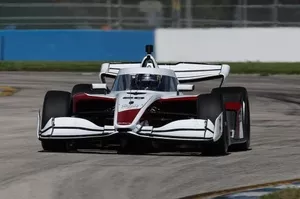
Alexander Rossi takes over IR-28 testing as IndyCar pushes new chassis to the limit at Sebring
IndyCar
Indy IndyCar 4 h
Alexander Rossi takes over IR-28 testing as IndyCar pushes new chassis to the limit at Sebring
Feature
Discover prime content

Subscribe and access Motorsport.com with your ad-blocker.
From Formula 1 to MotoGP we report straight from the paddock because we love our sport, just like you. In order to keep delivering our expert journalism, our website uses advertising. Still, we want to give you the opportunity to enjoy an ad-free and tracker-free website and to continue using your adblocker.
You have 2 options:
- Become a subscriber.
- Disable your adblocker.
Subscribe now Already subscribed? Sign in here
Already disabled your adblocker?
Reload page
Manage Alerts
Subscribe