Analysis
Formula 1
How F1's new aero handicap system will work
After weeks of talks between Formula 1's stakeholders over steps to safeguard's the series' future, the final green light was received on Wednesday evening for some important changes.

Luke Smith
Published: May 28, 2020, 10:21 AM
Copy link
Share on Viber
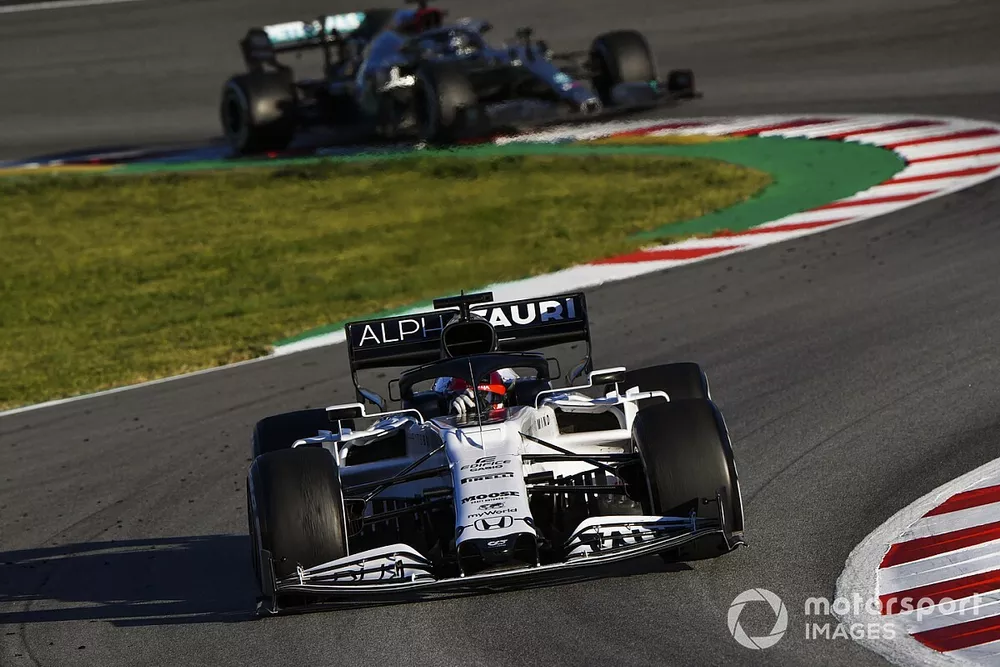
The World Motor Sport Council voted to approve the planned changes to the sporting, technical and financial regulations for 2021 and beyond, pushing to cut costs and pave the way for a more sustainable and competitive F1.
The budget cap has been the biggest element of these discussions, dropping from $175 million to $145 million for 2021 in a move that will not only reduce spending, but also aims to create a more level-playing field and help remove some of the big performance gaps between teams.
An additional, more immediate measure, is a clampdown on the amount of aerodynamic testing teams will be permitted to do in their wind tunnels, coming into force from 2021. It is the first time a weighted system aimed at balancing performance will be used in F1.
Teams are currently allowed to conduct 65 runs per week in their wind tunnels, but this figure is set to be cut to a rough base level of 40 runs per week from 2021.
Read Also:
- The floor tweaks aimed to slow down F1 cars in 2021
- F1 teams now obliged to test new tyres on race weekends
- World Council approves lower cost cap and other F1 rule changes
The sporting regulations split the year into a series of Aerodynamic Testing Periods (ATPs), each of week are around eight weeks long.
In each ATP, there is a base level of 320 runs during 400 hours of wind tunnel occupancy, with 80 hours of 'wind on' time.
This equates to 40 runs per week in 50 hours of occupancy, and 10 hours of wind on time.
However, the base level will only initially apply to the team that finishes fifth in the constructors' championship in 2020. The teams ahead in the standings each lose 2.5% of that time, leaving the champion with 90% of that total - or 36 runs per week.
Each team finishing lower than fifth in the standings gains additional time and running, again in 2.5% increments. The team that finishes 10th in the standings will have 112.5% of that base figure, equalling 45 runs per week.
The weighting will be based off the previous year's constructors' championship until the end of June. At that point, it will be shifted to reflect the order of the championship, meaning a team dropping a position year-on-year would gain 2.5% of running.
The cuts for the leading teams are even greater for 2022-25. The constructors' champion will only receive 70% of the current base allocation, equivalent to 28 runs per week.
This then rises in 5% increments per position, leaving the seventh-placed team with the current full allocation of 40 runs. The team finishing last in the constructors will have 115% of the allocation, or 46 runs per week.
Based on the 2019 constructors' championship, the new rules mean Williams would receive nine more wind tunnel runs per week than Mercedes in 2021, and 18 additional runs per week in 2022-25.
The hope is the additional development time will give the teams lower down the order an increased opportunity to cut the performance gap to the frontrunners.
Constructors Pos
% of base runs per ATP in 2021
Average number of runs per week 2021
% of base runs per ATP in 2022-25
Average number of runs per week 2022-25
1st
90%
36
70%
28
2nd
92.5%
37
75%
30
3rd
95%
38
80%
32
4th
97.5%
39
85%
34
5th
100%
40
90%
36
6th
102.5%
41
95%
38
7th
105%
42
100%
40
8th
107.5%
43
105%
42
9th
110%
44
110%
44
10th or lower
112.5%
45
115%
46
We want your opinion!
What would you like to see on Motorsport.com?
Take our 5 minute survey.
- The Motorsport.com Team
Read and post comments
Read also :
Share Or Save This Story
Copy link
Share on Viber
Previous article The floor tweaks aimed to slow down F1 cars in 2021
Next article How F1 has stopped "insane" engine spending war
Top Comments
There are no comments at the moment. Would you like to write one?
View More & Comment

More from
Luke Smith
1998 Belgian GP: When the Schumachers went to war
Formula 1
Formula 1
1998 Belgian GP: When the Schumachers went to war

The race that transformed perceptions of Red Bull
Formula 1
Formula 1
The race that transformed perceptions of Red Bull

Hamilton in the process of selecting Brad Pitt’s co-star for F1 movie
Formula 1
Formula 1
Hamilton in the process of selecting Brad Pitt’s co-star for F1 movie
Latest news

Winners and losers from F1's United States Grand Prix
Formula 1
F1 Formula 1
United States GP
1 h
Winners and losers from F1's United States Grand Prix

Kyle Larson all but clinches NASCAR championship with Dega win
NASCAR Cup
NAS NASCAR Cup
Talladega II
1 h
Kyle Larson all but clinches NASCAR championship with Dega win

Ricky Stenhouse Jr. explains why he lost Talladega Cup race
NASCAR Cup
NAS NASCAR Cup
Talladega II
1 h
Ricky Stenhouse Jr. explains why he lost Talladega Cup race

Denny Hamlin blasts Next Gen as "sports car not meant to be running 200mph”
NASCAR Cup
NAS NASCAR Cup
Talladega II
2 h
Denny Hamlin blasts Next Gen as "sports car not meant to be running 200mph”
Feature
Discover prime content


Subscribe and access Motorsport.com with your ad-blocker.
From Formula 1 to MotoGP we report straight from the paddock because we love our sport, just like you. In order to keep delivering our expert journalism, our website uses advertising. Still, we want to give you the opportunity to enjoy an ad-free and tracker-free website and to continue using your adblocker.
You have 2 options:
- Become a subscriber.
- Disable your adblocker.
Subscribe now Already subscribed? Sign in here
Already disabled your adblocker?
Reload page
Manage Alerts
Subscribe