Breaking news
Formula 1
Zero-tolerance track limits would "demean" F1 - Whiting
FIA F1 race director Charlie Whiting says that the kerb before the final corner in Abu Dhabi reduced the need for penalties that he believes "demean" the sport.

Adam Cooper
Edited: Nov 29, 2018, 2:56 PM
Copy link
Share on Viber
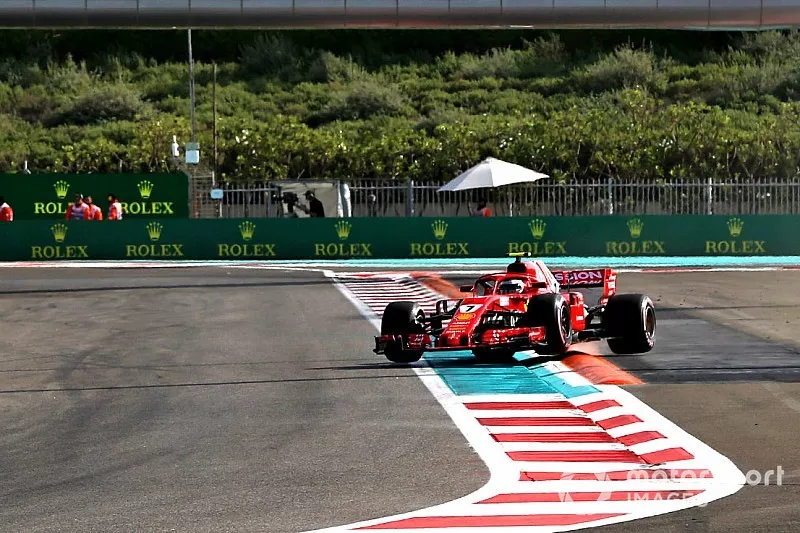
While there was some controversy about the kerb's height – and the way it crumbled when cars ran over it – drivers generally accepted that it did its job.
Whiting said it was a good example of using a kerb to ensure that drivers could not gain by running wide, and thus there was no reason to regularly assess penalties.
"I'm not one for saying every time goes over the white line they should be penalised," Whiting explained when asked by Motorsport.com.
"If that's zero tolerance. Because as I've probably said countless times, leaving the track is not a penalty. Gaining an advantage from leaving the track is.
"We want to try to make sure that every time a driver leaves the track he doesn't gain anything from it, and preferably he loses time doing it.
"I think on that basis that kerb between Turns 20 and 21 has worked very well. I'm pretty sure you can ask any driver if he can gain anything by going onto that kerb, he'd say 'No.' That's exactly the sort of thing I think we should have.
"Generally, what we want to do is make sure the track enforces the limits.
"And we don't have to resort to marshals or judges of fact reporting every time a car goes over the line. It's something that is dreadfully tedious, and I think it demeans the sport."
Read Also:
Whiting said that it wasn't always straightforward to introduce similar kerbs.
"It's not very easy sometimes to implement those things on circuits where you have motorcycle races, and that is why that kerb, unusually, is permanent.
"Normally we have to ask them to put down temporary ones that they can take up for bike racing. These are the sorts of problems we have to face on many different circuits.
"In Barcelona there are four corners with kerbs like that, but they all have to come out for MotoGP.
"It involves a lot of work for the circuits to change it from one spec to the other, and trying to find a solution that works for both is very difficult, but we have managed it with the double kerbs.
"They are quite punishing for cars. The bikes are happy with them. So we've got something the circuits don't have to change."
We want your opinion!
What would you like to see on Motorsport.com?
Take our 5 minute survey.
- The Motorsport.com Team
Read and post comments
Read also :
Share Or Save This Story
Copy link
Share on Viber
Previous article IndyCar-bound Ericsson has doubts over 2019 Sauber role
Next article Vettel: I wasn't "at the top of my game" in 2018
Top Comments
There are no comments at the moment. Would you like to write one?
View More & Comment

More from
Adam Cooper

RB: Tsunoda “mentally on a different level” in 2024
Formula 1
Formula 1
Japanese GP
RB: Tsunoda “mentally on a different level” in 2024

Andretti planning F2 and F3 entries to promote US talent to F1 team
Formula 1
Formula 1
Andretti planning F2 and F3 entries to promote US talent to F1 team

Andretti F1 team formally opens new Silverstone facility
Formula 1
Formula 1
Andretti F1 team formally opens new Silverstone facility
Latest news
Lamborghini World Finals | AM-LC Race 1: An unstoppable Lewandowski dominates to win Race 1
Lamborghini Super Trofeo
LBST Lamborghini Super Trofeo
World Finals - Monza 2026
2 h
Lamborghini World Finals | AM-LC Race 1: An unstoppable Lewandowski dominates to win Race 1
Why Cadillac F1 boss provoked fresh intrigue by dodging driver question
Formula 1
F1 Formula 1
United States GP
3 h
Why Cadillac F1 boss provoked fresh intrigue by dodging driver question
Lamborghini World Finals | PRO-PRO/AM Qualifying: Pole position for Lind, Bamber, Van der Drift and Marcelli
Lamborghini Super Trofeo
LBST Lamborghini Super Trofeo
World Finals - Monza 2026
3 h
Lamborghini World Finals | PRO-PRO/AM Qualifying: Pole position for Lind, Bamber, Van der Drift and Marcelli
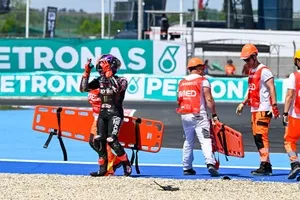
Jorge Martin's endless ordeal since signing for Aprilia
MotoGP
MGP MotoGP
Australian GP
4 h
Jorge Martin's endless ordeal since signing for Aprilia
Feature
Discover prime content




Subscribe and access Motorsport.com with your ad-blocker.
From Formula 1 to MotoGP we report straight from the paddock because we love our sport, just like you. In order to keep delivering our expert journalism, our website uses advertising. Still, we want to give you the opportunity to enjoy an ad-free and tracker-free website and to continue using your adblocker.
You have 2 options:
- Become a subscriber.
- Disable your adblocker.
Subscribe now Already subscribed? Sign in here
Already disabled your adblocker?
Reload page
Manage Alerts
Subscribe