MotoGP
Pit Beirer admits KTM's engine problems “almost killed us”
KTM was deep in an engine crisis at times in 2026, and racing Director Pit Beirer has described it as one of the “worst periods” in the entire MotoGP project
Juliane Ziegengeist Gerald Dirnbeck
Published: Sep 30, 2026, 12:36 PM
Copy link
Share on Viber

Pedro Acosta, Red Bull KTM Factory Racing crash
Photo by: Gold and Goose Photography / Getty Images
KTM motorsport chief Pit Beirer has opened up on the impact of the recurring engine issues that plagued the first half of its 2026 MotoGP campaign.
After emerging out of insolvency proceedings, things were supposed to return to greater normality for KTM. The racing activities had been secured, while the Austrian manufacturer was working on a fresh start under its new ownership.
Looking back on this period as a time of survival, Beirer said. “For us, it was about surviving, getting the company back alive, making sure we stay in racing like we are, and building up again at home."
At the same time, the company had to build trust in the new ownership structure. However, the question of the future of its MotoGP involvement was no longer an issue.
That is precisely why the next crisis hit KTM particularly hard. “This year, I thought we go back to normality. Then this engine issue almost killed us,” he explained, referring to the repeated technical failures over the course of the season.
Three engine failures in a very short period
The decisive turning point came at the Italian Grand Prix in Mugello. That was where the extent of KTM’s problems became obvious.
“We broke an engine in the morning,” Beirer recalled. Initially, they thought that an engine failure could happen with a high-revving MotoGP power unit. But fears grew when two more engines failed.
“And that was the moment when you no longer know what is actually going on,” the Austrian admits. According to Beirer, KTM lost a total of seven engines.
Pedro Acosta came off relatively lightly compared with Brad Binder: “With Pedro, we were actually a little luckier than with Brad. I think in Pedro’s case, we ultimately only lost one.”
The retirement of Acosta’s RC16 at the Catalan Grand Prix in Barcelona is particularly relevant in this context. When the KTM rider suddenly lost power, Alex Marquez ran into him, resulting in a race stoppage.
However, Beirer made it clear that this accident was not caused by the mechanical engine defect that was identified later.
Pit Beirer, Motorsport Director of KTM
Photo by: Gold and Goose Photography / LAT Images / via Getty Images
Tough battle to get permission to open the engines
For KTM, the real problem was not just the engine failures themselves, but the fact that the engineers initially had no way of simply opening the engine and systematically examining it. This was because the so-called Engine Freeze remains in effect during the 2026 season.
Ducati, Aprilia and KTM had to compete with the homologated engine specification from the 2025 season. The engines were sealed and, in principle, could not be modified.
Exceptions were possible for reasons including safety or reliability, provided that they did not result in a performance gain.
According to Beirer, this situation made troubleshooting particularly difficult. “Besides our other problem at home, this for me was the most horrible time in the MotoGP project,” he said. The team had “completely lost control” and initially had no way to react.
“The engines were sealed, and especially after last year's homologation, it was the same engine [spec]. You are not even allowed to touch one part," he explained.
Normally, Beirer said, a single engine failure is not yet a reason to panic. Something like that can happen with a high-revving racing engine.
However, when another engine fails and then a replacement power unit also breaks down, the situation changes.
“You don’t understand it and you don’t know where to start. If you tune and you break things, you want to go one step back. But here, there was no step back," he said.
Component from an external supplier identified as the cause
KTM therefore began bringing back older engines that had already accumulated high mileage. Their mileage provided an important clue: these engines did not have the problem in question, because the failure occurred unusually early.
“So we knew that these engines couldn’t have it,” Beirer said.
“Something must have been like glass or crystal, because it happened after around 50 to 100 kilometers. So it was clear that there is something in there that was not normal,” he continued.
Eventually, KTM was able to trace the cause to a faulty component supplied by an external supplier. Beirer had already spoken publicly at the Sachsenring about a problem with a purchased component. The fault was later described as a quality issue involving a highly stressed component.
But the problem was still not solved. KTM first had to convince the other manufacturers that the engines really needed to be opened for safety and reliability reasons.
Red Bull KTM garage
Photo by: Gold and Goose Photography / LAT Images / via Getty Images
Beirer understands the competition’s skepticism
Initially, not all manufacturers agreed to the request.
The reason was obvious. A competitor asking for permission to open sealed engines during a development freeze has to demonstrate that the purpose is genuinely to fix a problem and not to create a competitive advantage. In mid-July, only Aprilia had initially indicated its support.
"I think it's very normal because you are suspicious somebody wants to open engine. Then you go, 'what do they want to do'," he said, referring to how KTM's rivals would have reacted to the initial request.
KTM therefore had to provide a great deal of information. According to Beirer, this included supplier data, serial numbers, batch numbers and X-rays.
“We had to bring up [information] which we would never normally. So that was a hot topic,” Beirer says. In some cases, information first had to be obtained from the supplier, with time-zone differences adding to the delays.
But Beirer did not see the competition’s scrutiny as an annoyance. “For me, it was completely fine. There was not one stupid question,” he said.
Green light for repairs during the summer break
After several discussions, KTM eventually received permission to open the engines.
“Between the Sachsenring and Silverstone [during the summer break], we got the green light from all the manufacturers,” the Austrian reports.
According to KTM, IRTA was also involved in the process and monitored the work. Beirer explicitly highlights the support within the manufacturers’ association: “I’m really thankful. And this is perhaps the best place to also say thank you to all the manufacturers for giving us the green light.”
The approval did not come immediately, nor did all parties agree at the same time. In the end, however, the group agreed to grant permission, allowing KTM to open the sealed engines and replace the faulty component.
KTM temporarily running with a significant performance deficit
Until then, KTM had at times been forced to operate with reduced engine performance. Simply reducing the revs would not have solved the underlying problem, as Beirer explained: “The problem was too big, so we really had to switch to these older engines where we knew they could go much more. That was more effective than reducing RPM.”
The consequences were nevertheless visible on the track. The lack of engine performance was particularly noticeable for KTM in Mugello. Afterwards, riders and observers reported reduced performance on the straights.
For the riders, the situation was made even more difficult by the fact that not every technical problem had the same cause. In addition to the mechanical issues, there were also electronics and sensor problems. Beirer mentions an unusual ECU failure.
The control unit briefly shut down and then started working again.
KTM received assistance from Magneti Marelli when investigating this problem. Beirer thus makes it clear that the problems of 2026 cannot be attributed exclusively to the manufacturing defect that was eventually identified.
Seven engines opened and overhauled
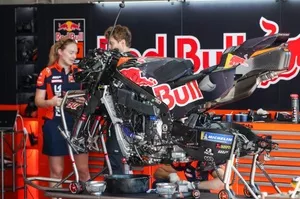
After receiving approval, KTM was able to take action during the summer break. A total of seven engines were opened at KTM’s engine facility in Munderfing. The components identified as problematic were replaced, after which the power units were resealed and returned to the engine pool.
At least this brought an end to the phase in which KTM was essentially unable to intervene despite knowing about the problem. However, the loss of several engines remained a burden for the manufacturer’s plans for the rest of the season. By the end of August, for example, Binder had already lost three engines from his allocation. The other KTM riders also had to manage with reduced reserves.
Nevertheless, Beirer sees signs of a sporting recovery following the repair of the affected engines. Acosta in particular had made a step forward.
“I was really happy that Pedro actually picked up in Aragon, maybe where we left off in Barcelona.”
Until Barcelona, he says, there had been a great deal of hope.
“We were getting closer and closer, and then this whole thing happened,” Beirer says. “I hope that from now on we can return to a normal scenario.”
The results, at least on Acosta’s side, certainly point in that direction: Since Aragon, the Spaniard has finished on the podium at every race. Most recently, he celebrated his maiden victory in Spielberg.
Read Also:
MotoGPHow Pedro Acosta's unique riding style is making the difference at KTM
MotoGPPedro Acosta told KTM he wants to beat Marc Marquez on the same MotoGP bike
We want your opinion!
What would you like to see on Motorsport.com?
Take our 5 minute survey.
- The Motorsport.com Team
Read and post comments
Read also :
Share Or Save This Story
Copy link
Share on Viber
Previous article What has changed in the new Marc Marquez a year after finding “peace” with himself
Next article Yamaha hopes MotoGP race winner Ai Ogura can revive Japan’s “lost” motorcycle passion
Top Comments
There are no comments at the moment. Would you like to write one?
View More & Comment
More from
Juliane Ziegengeist
All the records Marc Marquez can break in MotoGP 2026
MotoGP
MotoGP
All the records Marc Marquez can break in MotoGP 2026
Pushing aero to the limit: The evolution of winglets in MotoGP
MotoGP
MotoGP
Pushing aero to the limit: The evolution of winglets in MotoGP

MotoGP breaks attendance records in 2025; only two circuits see decrease
MotoGP
MotoGP
MotoGP breaks attendance records in 2025; only two circuits see decrease

More from
Brad Binder
The five riders leaving MotoGP in 2027 - and where they are headed next
MotoGP
MotoGP
The five riders leaving MotoGP in 2027 - and where they are headed next
KTM finally gets to 'revitalize' its MotoGP engines
MotoGP
MotoGP
Aragon GP
KTM finally gets to 'revitalize' its MotoGP engines
BMW wants to reunite KTM's only two MotoGP race winners in WSBK
MotoGP
MotoGP
BMW wants to reunite KTM's only two MotoGP race winners in WSBK
More from
Red Bull KTM Factory Racing
KTM sees MotoGP 2027 as a fresh start: “We never had the chance to build a new bike”
MotoGP
MotoGP 23 h
KTM sees MotoGP 2027 as a fresh start: “We never had the chance to build a new bike”
MotoGP to stage demo at F1 United States Grand Prix
MotoGP
MotoGP
MotoGP to stage demo at F1 United States Grand Prix

Latest news
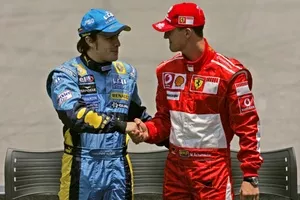
On this day: Fernando Alonso wins the world title, Michael Schumacher retires from F1
Formula 1
F1 Formula 1
Brazilian GP
51 min
On this day: Fernando Alonso wins the world title, Michael Schumacher retires from F1

Raul Fernandez still compromised after Indonesia finger injury: “I’m not at 100%”
MotoGP
MGP MotoGP
Australian GP
1 h
Raul Fernandez still compromised after Indonesia finger injury: “I’m not at 100%”

MotoGP can’t simply copy F1’s Drive to Survive success – Chase Carey
MotoGP
MGP MotoGP
Australian GP
2 h
MotoGP can’t simply copy F1’s Drive to Survive success – Chase Carey
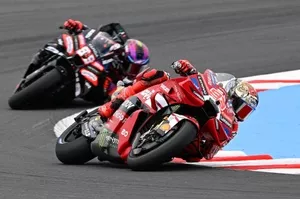
Marc Marquez's mind games with Jorge Martin: "If you're fast, you don't need team orders"
MotoGP
MGP MotoGP
Australian GP
2 h
Marc Marquez's mind games with Jorge Martin: "If you're fast, you don't need team orders"
Feature
Discover prime content


Subscribe and access Motorsport.com with your ad-blocker.
From Formula 1 to MotoGP we report straight from the paddock because we love our sport, just like you. In order to keep delivering our expert journalism, our website uses advertising. Still, we want to give you the opportunity to enjoy an ad-free and tracker-free website and to continue using your adblocker.
You have 2 options:
- Become a subscriber.
- Disable your adblocker.
Subscribe now Already subscribed? Sign in here
Already disabled your adblocker?
Reload page
Manage Alerts
Subscribe